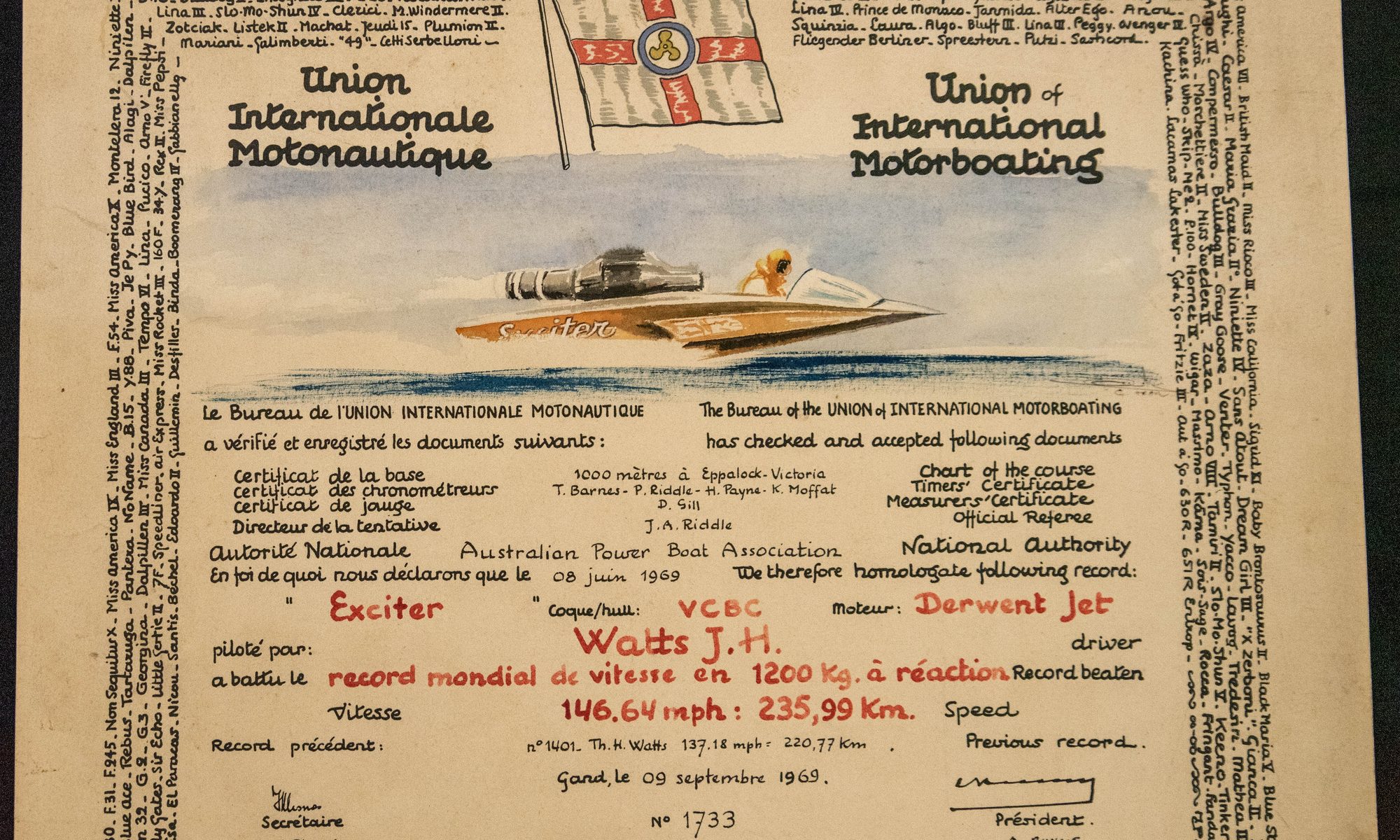
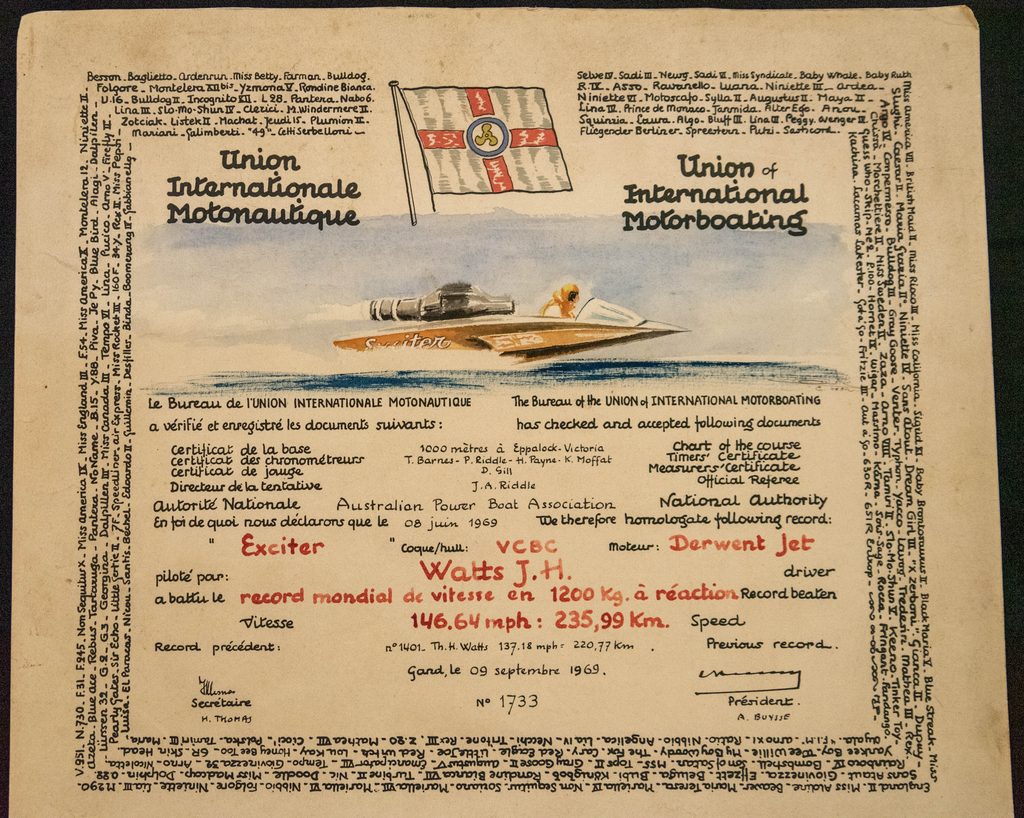
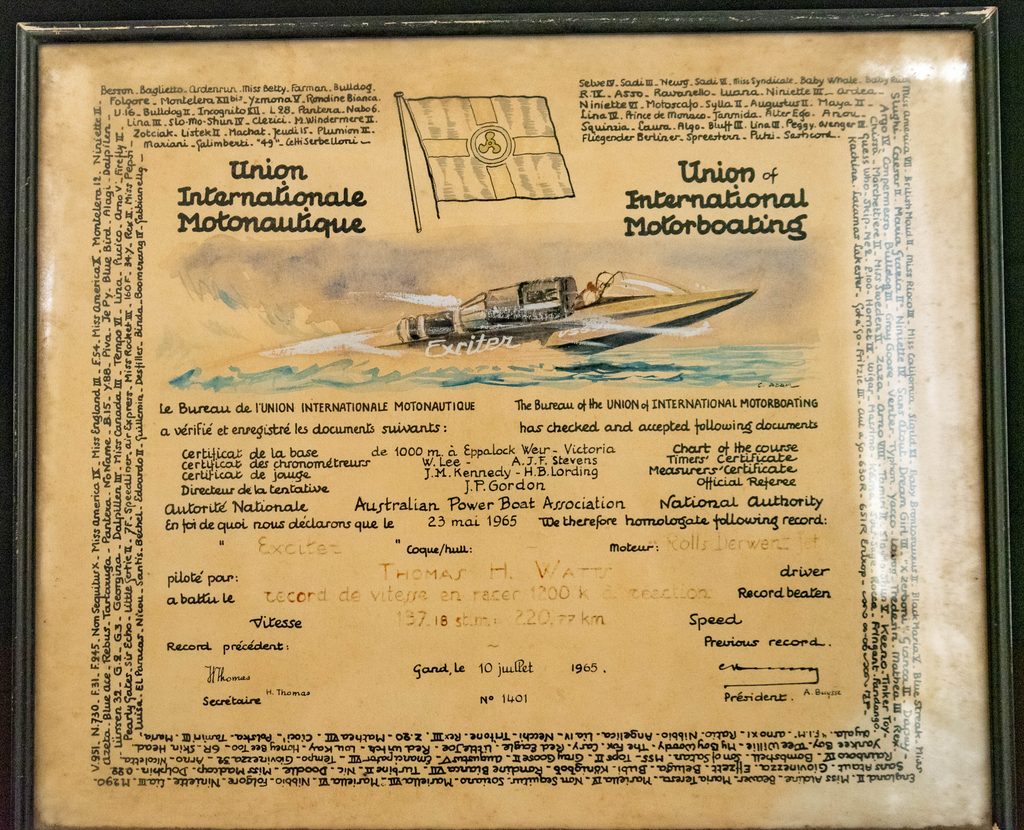
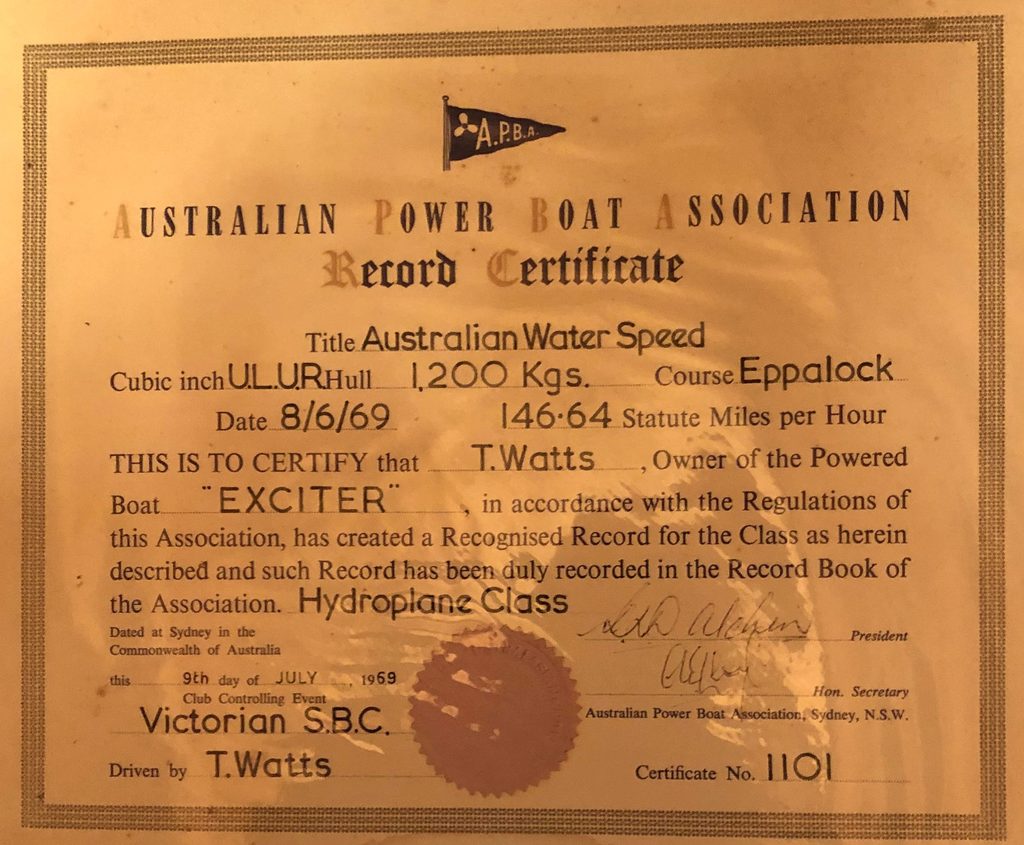
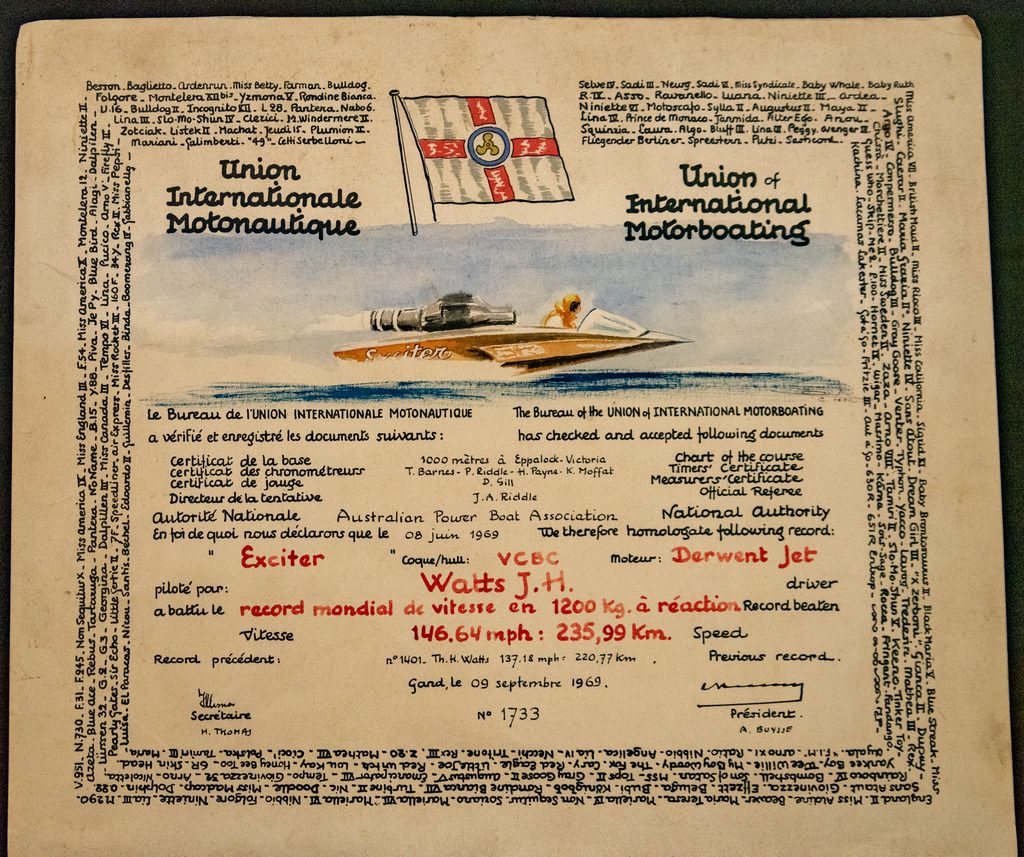
Union Internationale Motonautique (UIM) world speed record certificate, dated 9 September 1969.
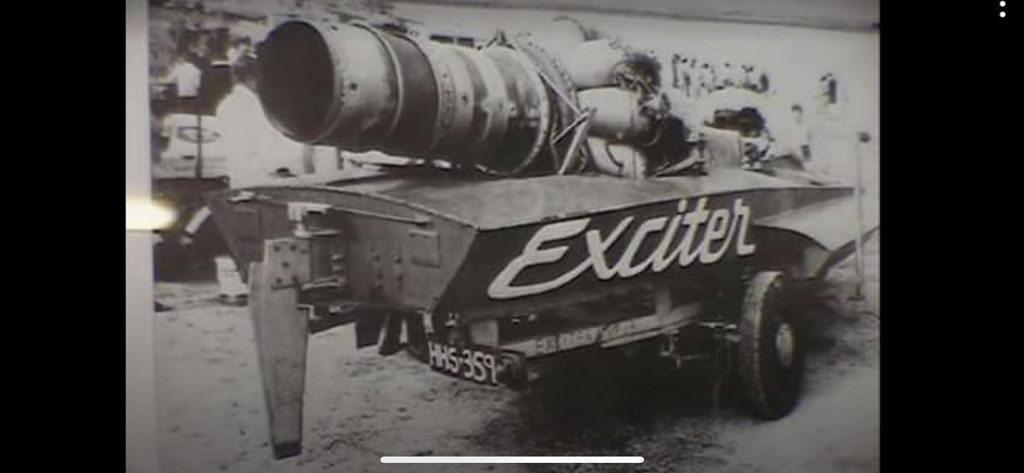
“The official homologation of the world speed record for the boat Exciter, piloted by J.H. Watts. On September 9, 1969, was verified by the Union Internationale Motonautique.
The officials involved in this process included;
D. Gill, T. Barnes, P. Riddle, J.A. Riddle, M. Payne, and K. Moffat.
Each confirmed the accuracy of the measurement certificates, course charts, and timing, ensuring the record’s validity.”
The important details on the certificate include:
Boat: Exciter
Hull:VCBC
Engine:Derwent Jet
Driver:Watts T.H. (A.K.A. Tommy Watts)
Weight class:1200 kg, reaction
Record speed:146.64 mph (235.99 km/h)
Course:1,000 metres at Lake Eppalock, Victoria
Previous record:137.18 mph (220.77 km/h)
The certificate states that Exciter“beat the world speed record” in that class.
National authority: Australian Power Boat Association
Certificate number: 1733
And importantly, this is not merely an Australian record — the wording explicitly says “record mondial de vitesse” / “world speed record.”
In relation to David Gill/GILFLITE(Australian Power Boat Racing History – Volume One – For the Record – collated written and published by GillGirl Media/Paula Gill copyright 2026 – due to be released) and the 1969 Eppalock records, this is a very significant primary document.
The Union Internationale Motonautique (UIM), as the governing body for international motorboating records, traditionally used French as its official language.
French was, and still is, the standard language for many international sporting federations, ensuring consistency and formality in official records. So even though Australia set this record, the UIM certificate followed their formal procedures.
Published by GillGirl Media/Paula Gill – GILFLLITE website Boat Talk copyright 2026
Copy of world record certificate supplied by Steven Watts (son of world record holder Tommy Watts)
Tommy Watts achieved his first world speed record in 1965
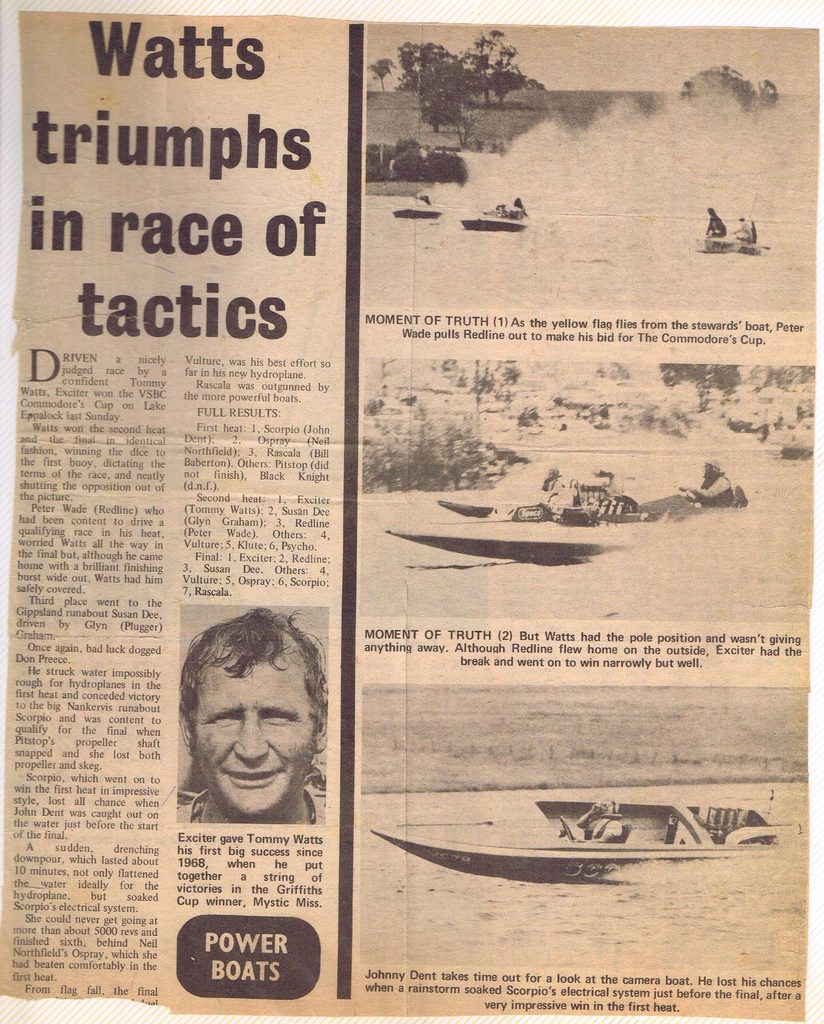
Tom Watts driving Exciter, recorded a speed of 137 MPH (220.5 kph) on the 23rd of May 1965. It was recognized by the Union Of International Motorboating on the 10th of July 1965. This was in a category under 1200 kgs REACTOR.
He was the fastest boat in Australia at that time and also believed to be the fastest in the world for the size and the weight of the boat.
Hull: Under 1200 KGS and 17.5 foot long.
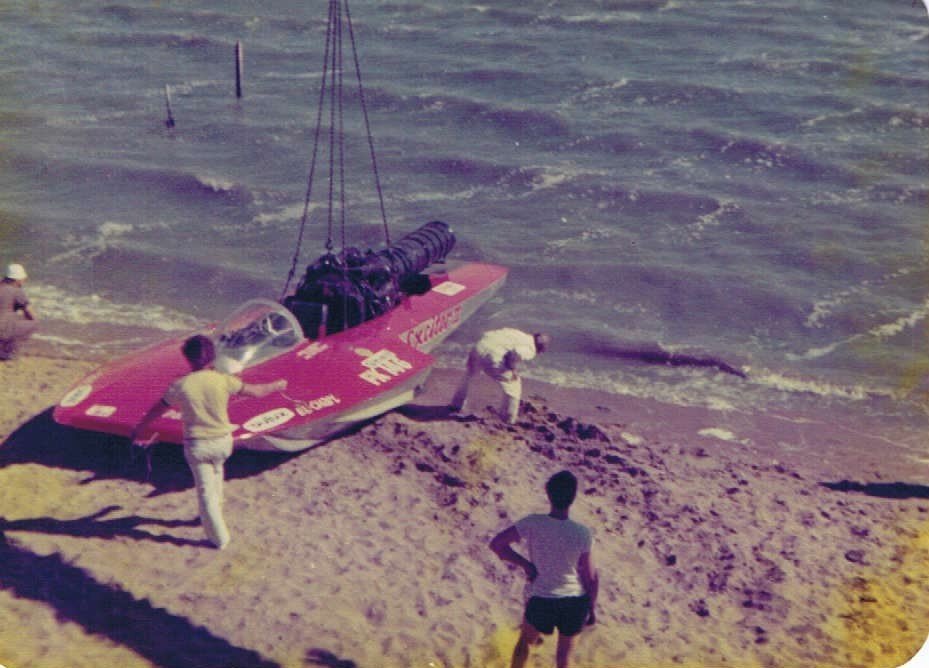
The Derwent Jet Engine came from a 1944 World War 2 Gloster Meteor Fighter Plane and had 3600 lb Thrust.
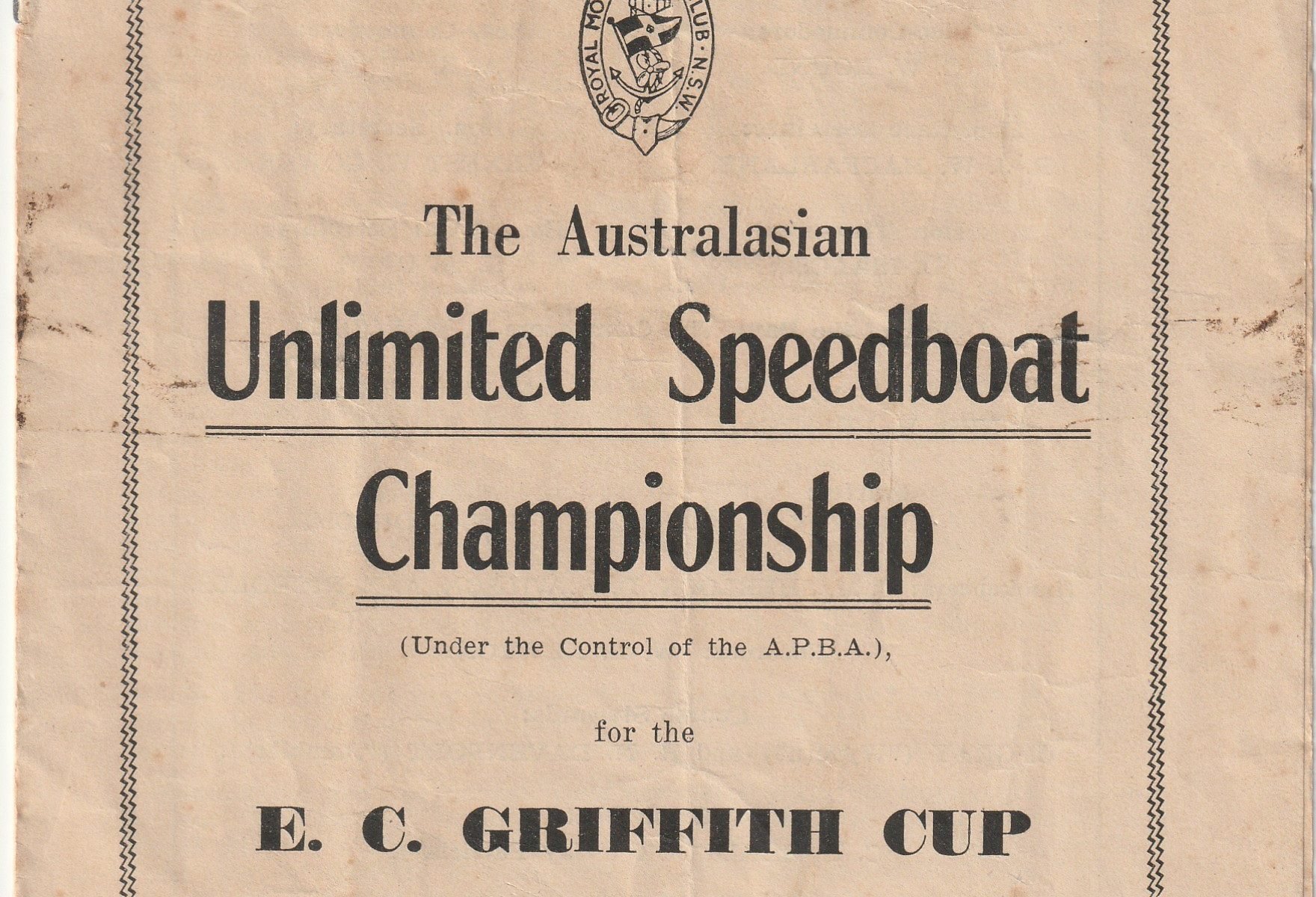
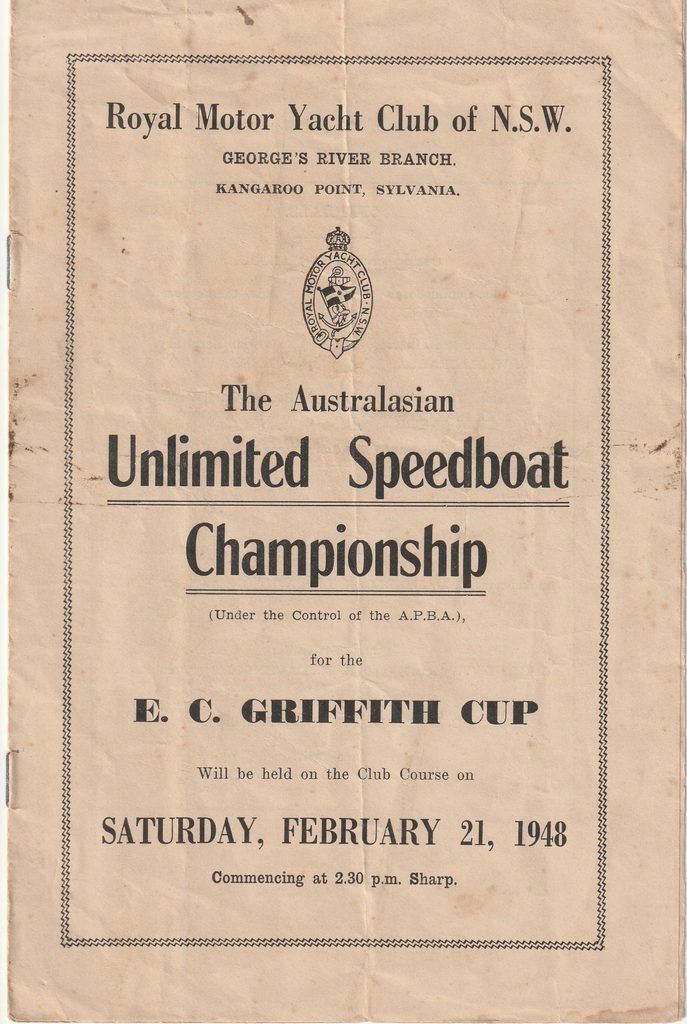
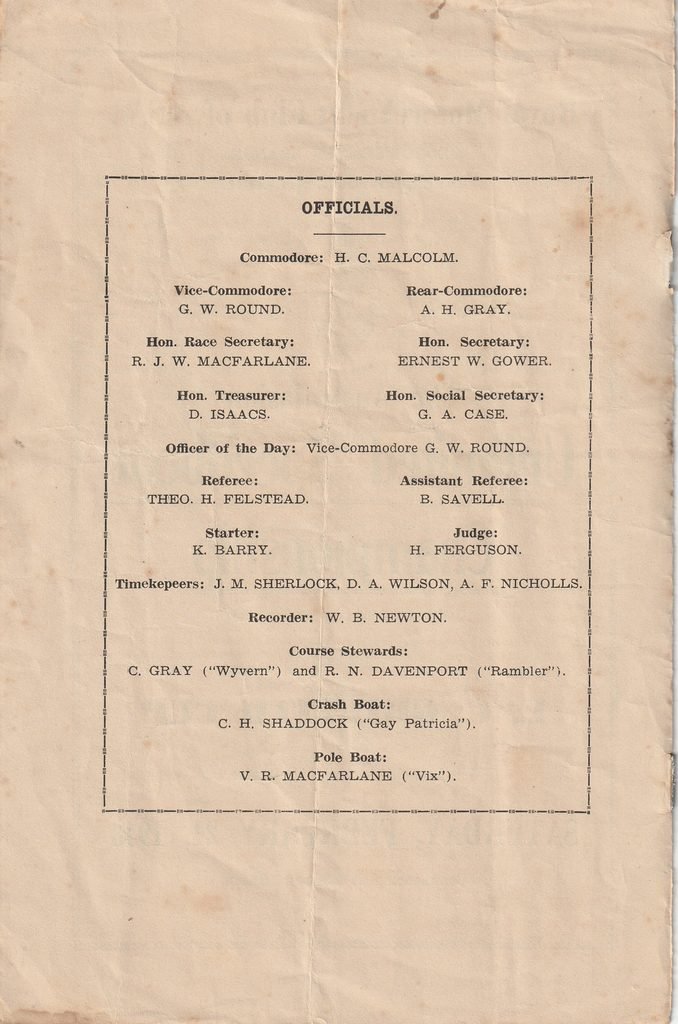
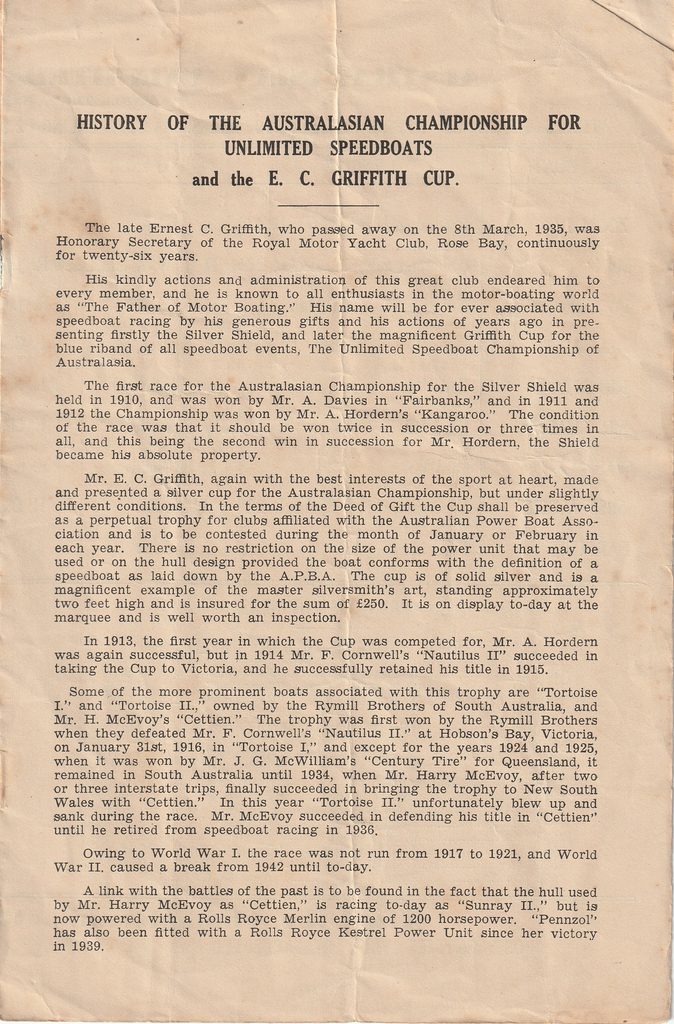
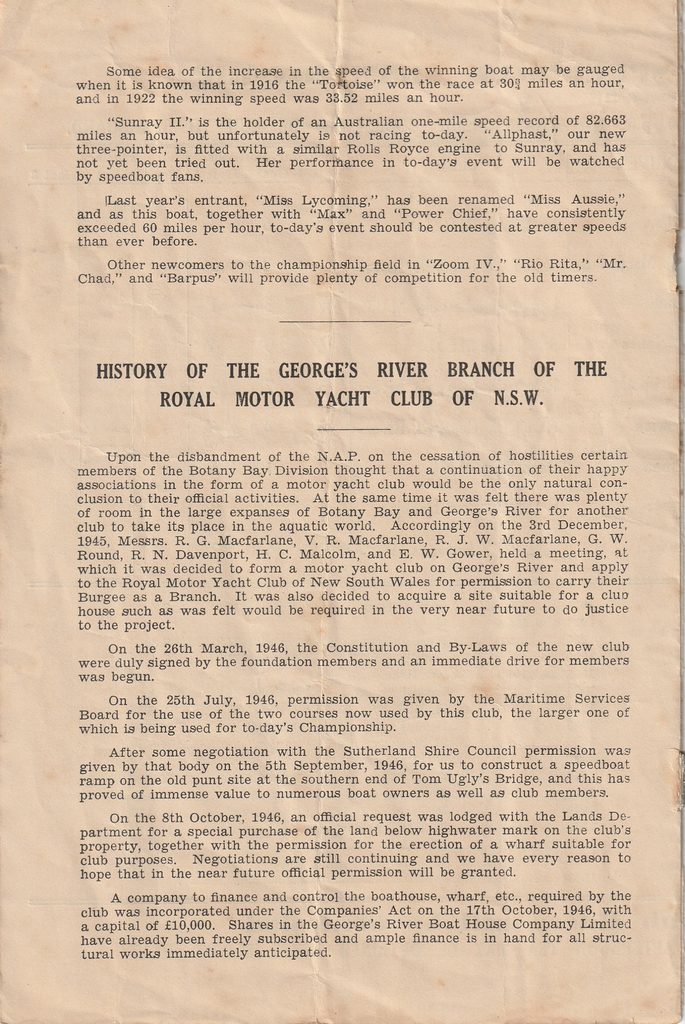
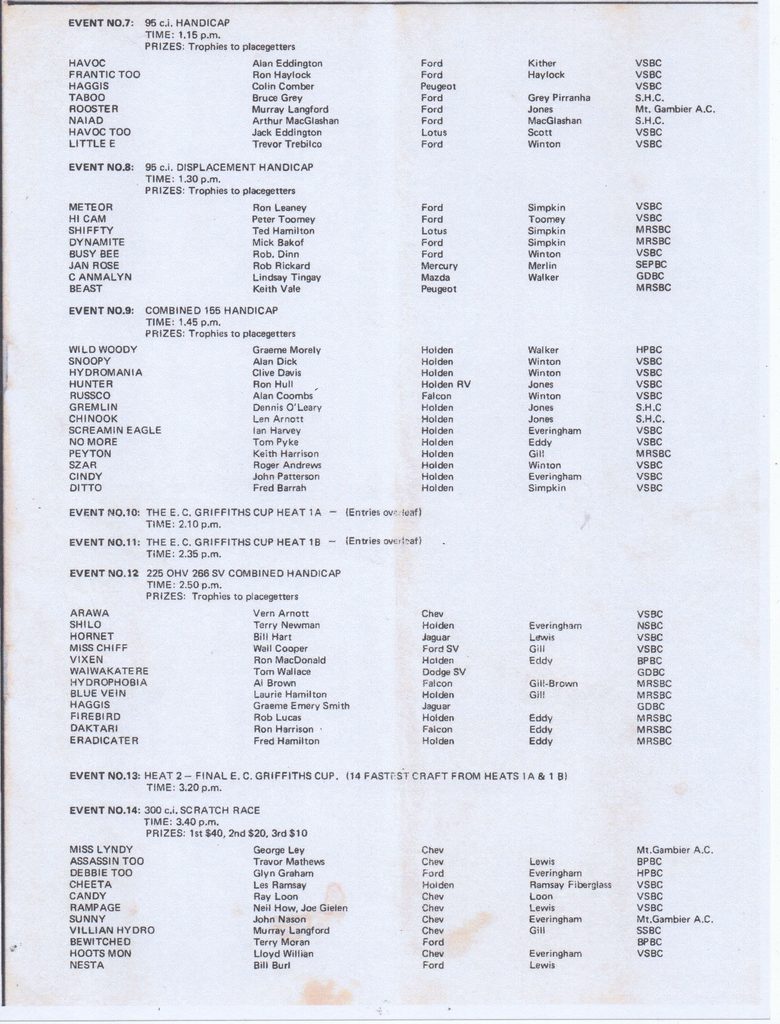
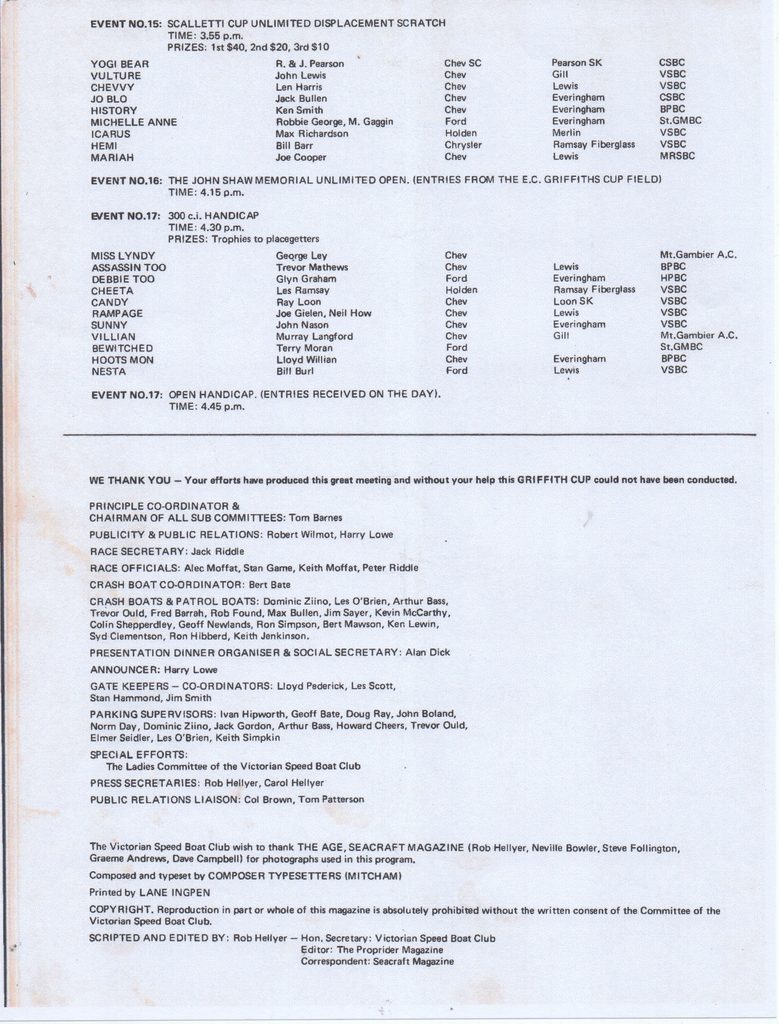
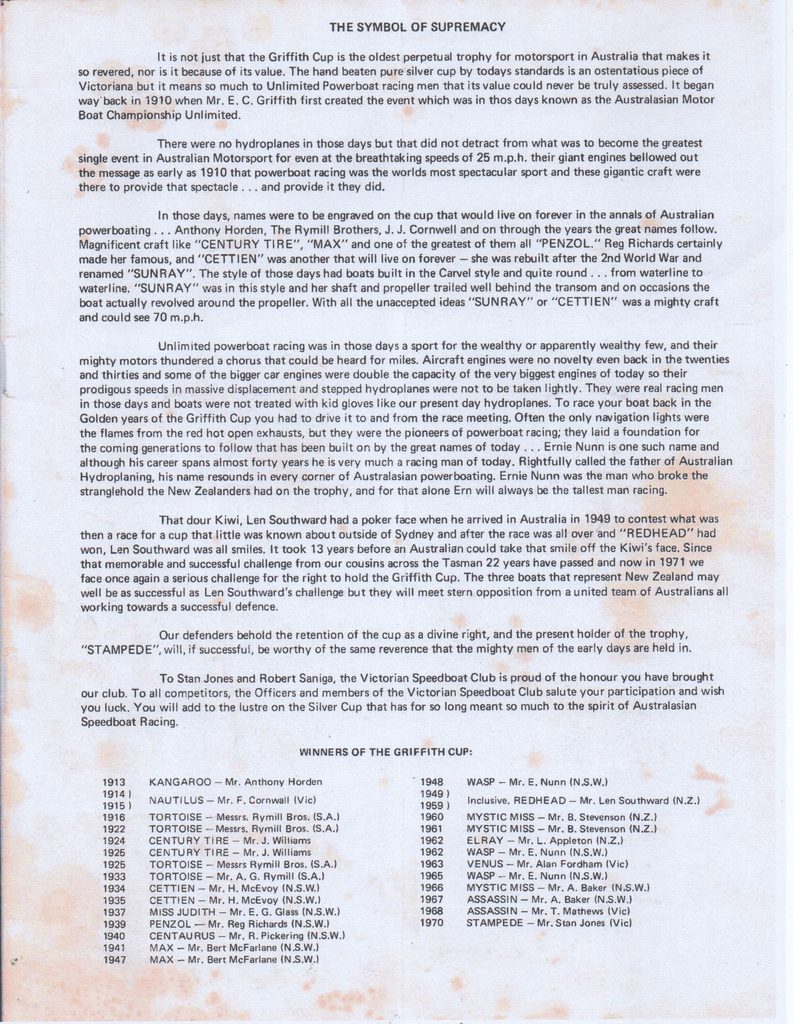
The Australasian Unlimited Speedboat Championship 1948 EC Griffith Cup… —Owing to World War I, the race was not run from 1917 to 1921, and World War II caused a break from 1942 until today. A link with the battles of the past to be found in the fact that the hull used by Mr. Harry McEvoy as Cetien is raced today (1948) as Sunray II, but is now powered with a Rolls-Royce Merlin engine of 1200 horsepower. Pennzol has also been fitted with a Rolls Royce kestral power unit since her victory in 1939.
Published by GillGirl Media/Paula Gill – GILFLITE website for The History of Australian Power Boat Racing, Vol One, ‘For the Record’ by Paula Gill
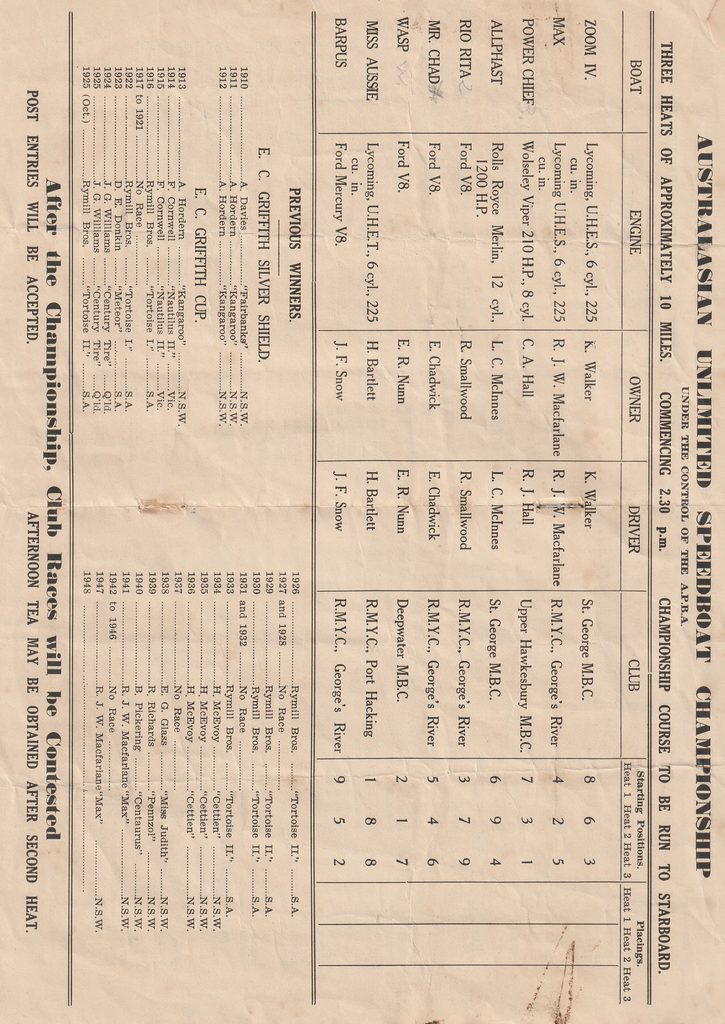
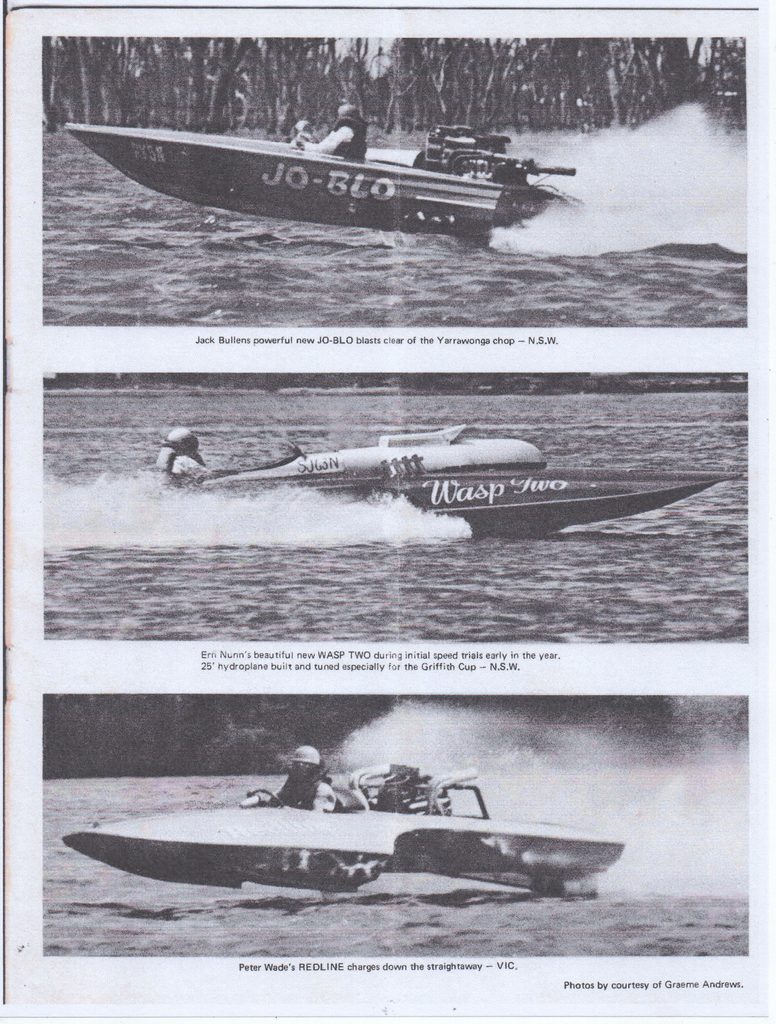
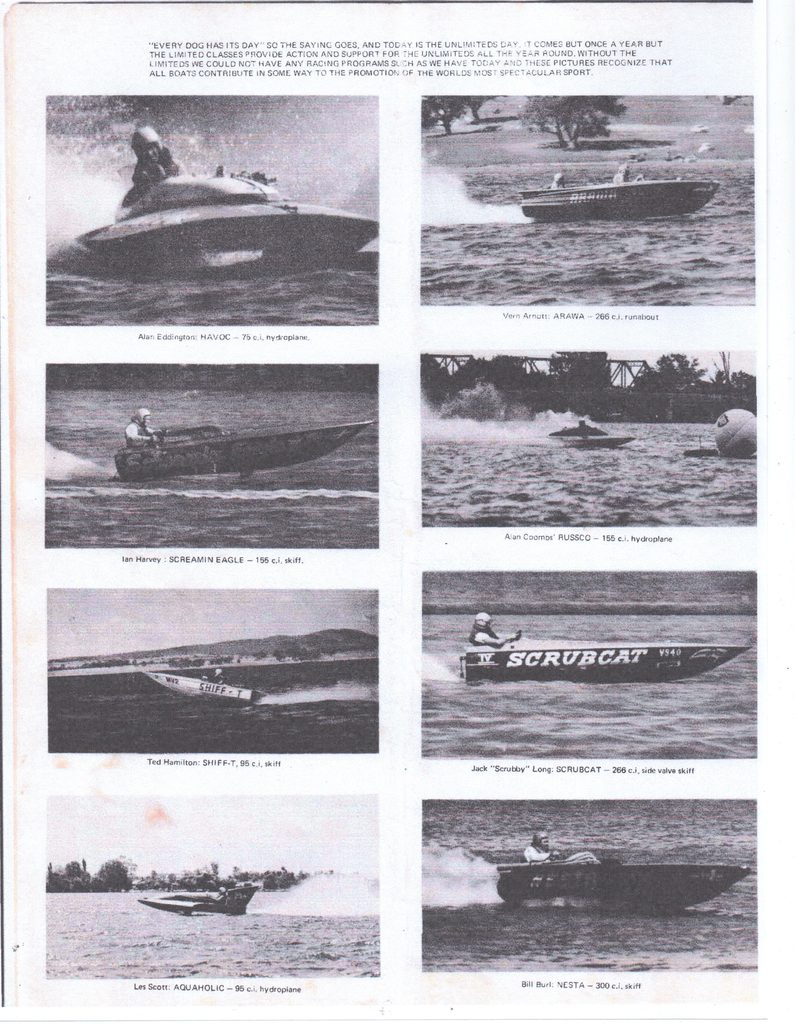
Copy of this 1948 EC Griffith Cup Program was traded with the author of John ‘Mac’ McGinnis Williams – Speed Boat Champion for a historic EC Griffith Cup Medallion
Story researched, written and presented by: Julianne Dodds (Daughter of Racing Boat Champion ‘John Williams’). Copyright 2025
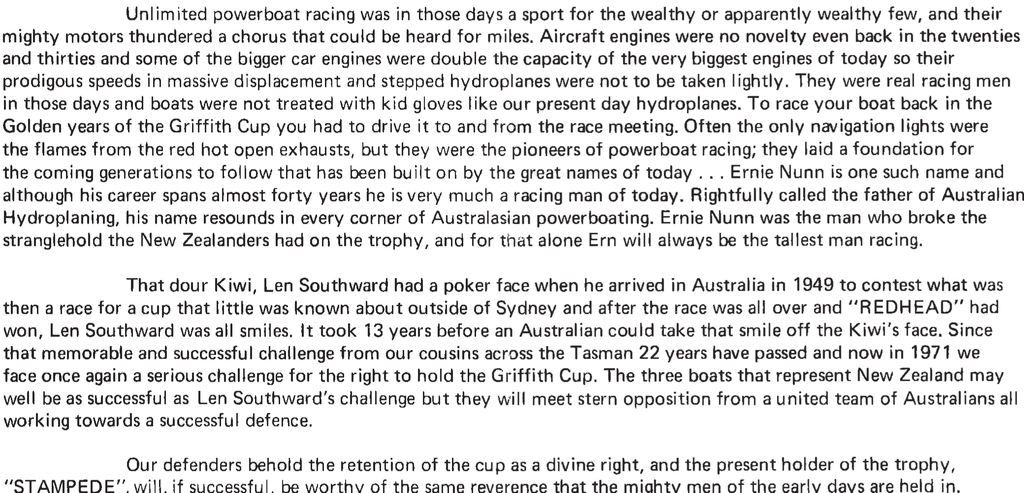
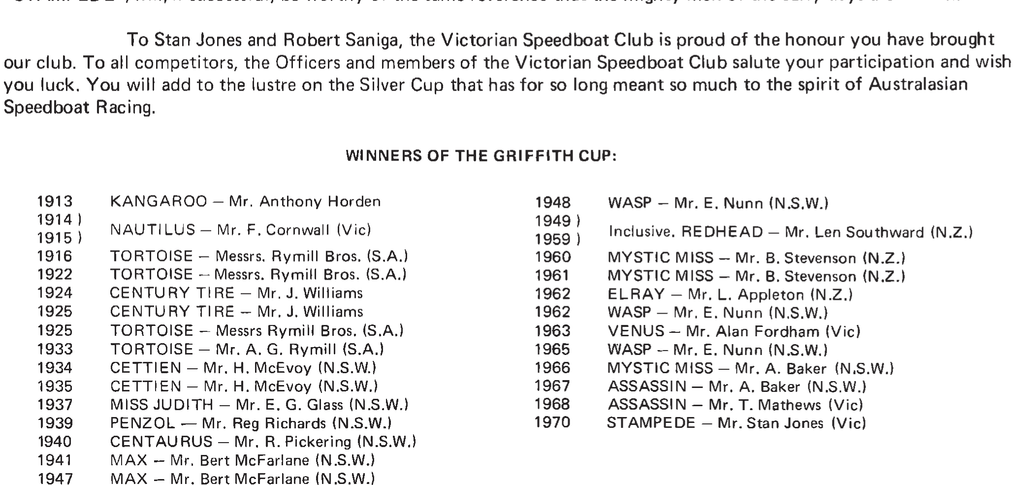
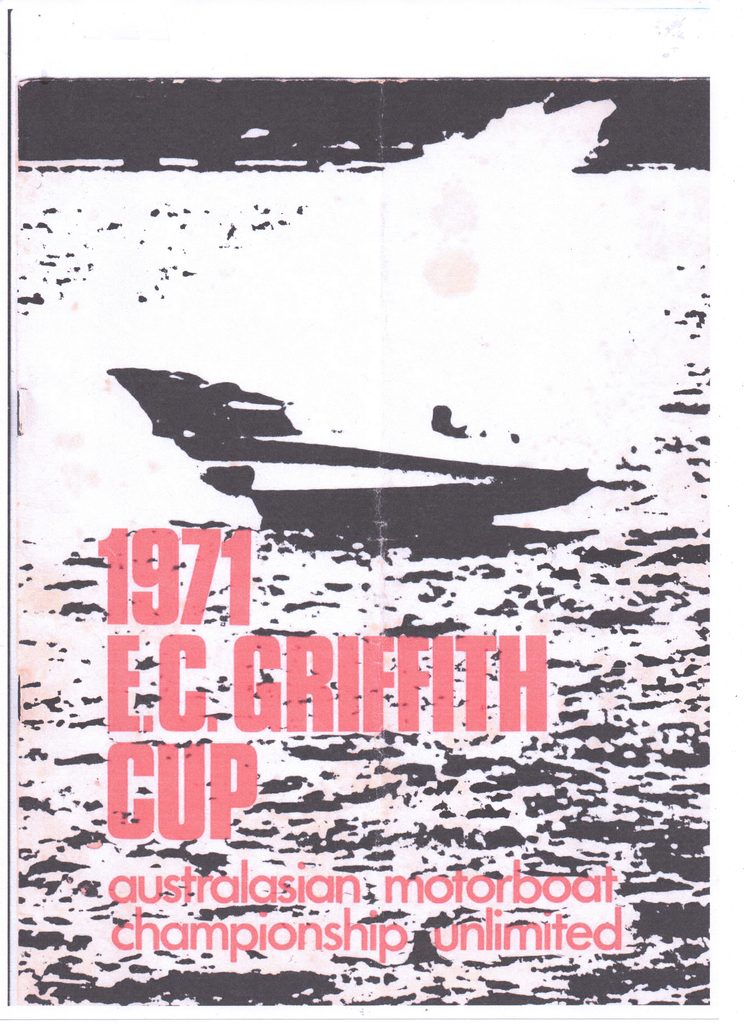
History of the Griffith Cup, the oldest perpetual trophy in Australian motorsport – 1910 to 2026 – here is a beautiful introduction written in 1971 for the EC Griffith Cup Program, hosted by the Victorian Speed Boat Club.
“There were no hydroplanes in the very early days but that did not detract from what was to become the greatest single event in Australian Motorsport for even at the breathtaking speeds of 25 m.p.h. their giant engines bellowed out the message as early as 1910 that powerboat racing was the worlds, most spectacular sport and these gigantic craft were there to provide that spectacle….. and provide it they did.”
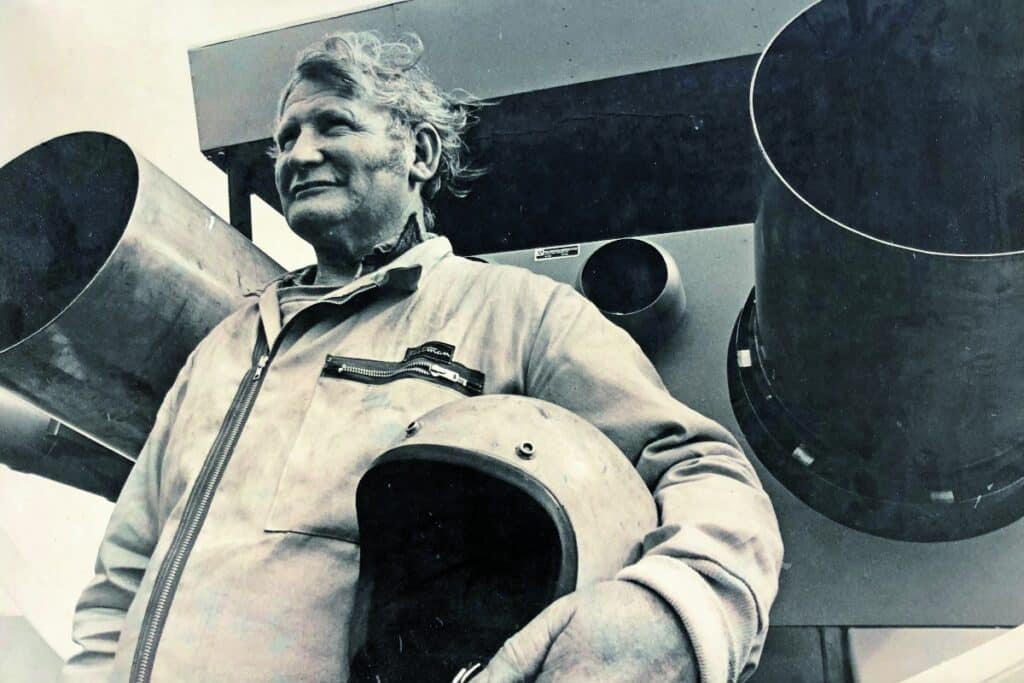
Owned and raced by Tommy Watts – here’s Tom’s story, written by his son Steven(Sept 2026)
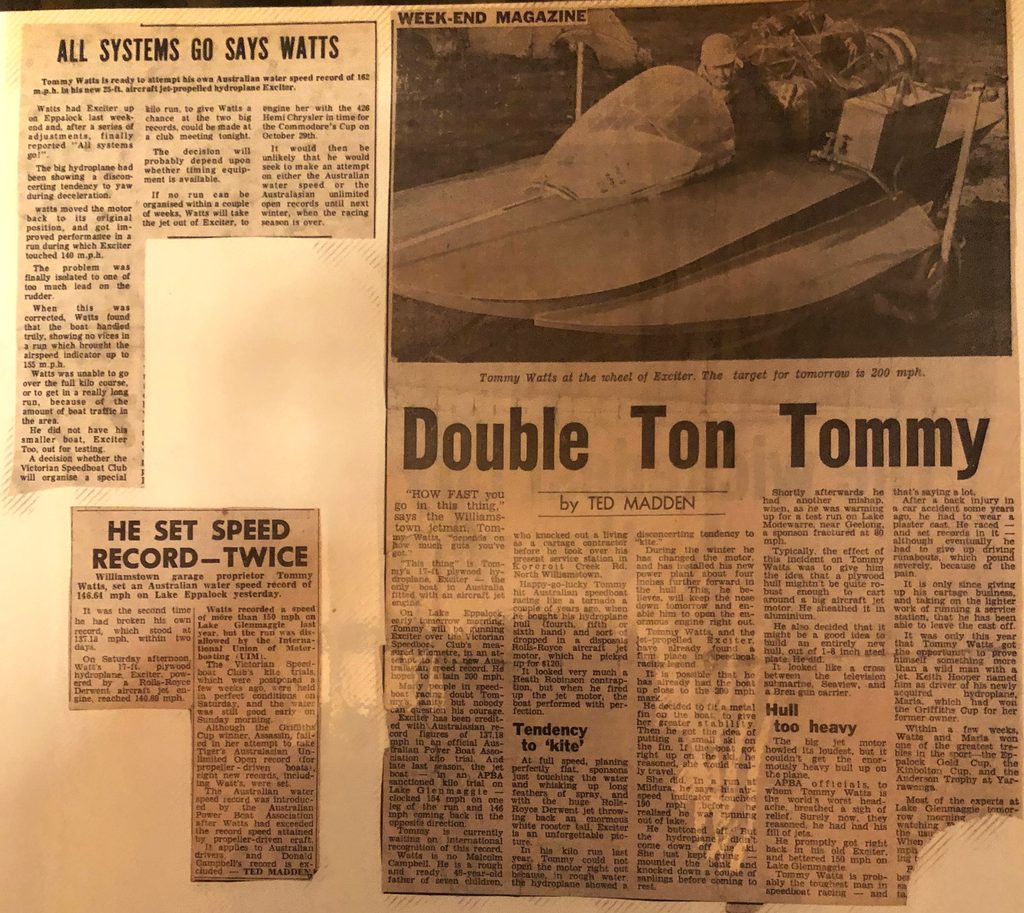
A Man on a Mission – “At Lake Hawthorn, he pushed his jet boat until it got “up on the skeg,” becoming almost friction-free. The air speed indicator jumped from 150 MPH to approximately 190 MPH. With no parachutes or brakes, he ran out of water and traveled 200 feet onto land, clearing two trees before the rudder finally dug into the ground. A small piece of the boat remains a family heirloom to this day”.
This article has been written at the request of Paula Gill for historical purposes: ‘For the Record’ – Australian Power Boat Racing History – Volume One (circa: 1960’s – 1970’s)
The name Exciter was first inspired by my Mother
The first time dad started the Jet engine up in the boat it was facing Kororoit Creek Road in Williamstown, (Melb, Vic). The POWER of the Jet engine made all the cars stop, and all the drivers looked excited! So mum said let’s call it Exciter.
In 1965, he was the fastest boat in Australia at the time, I believe and the fastest in the world for the size and the weight of the boat,
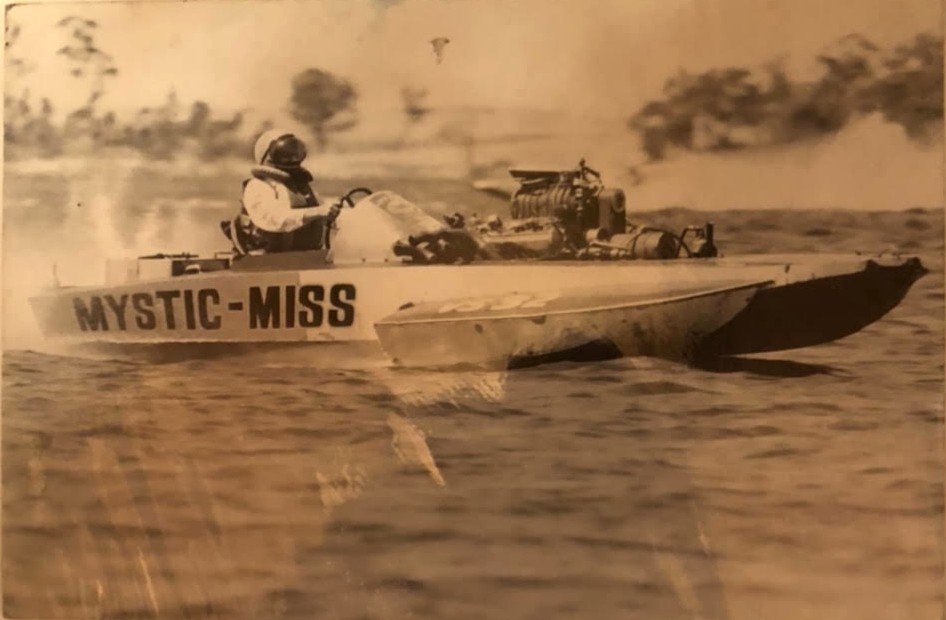
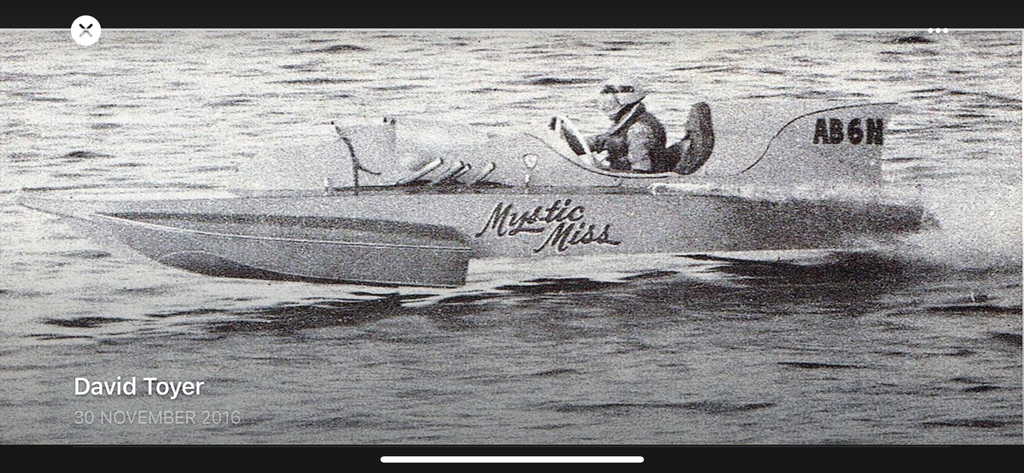
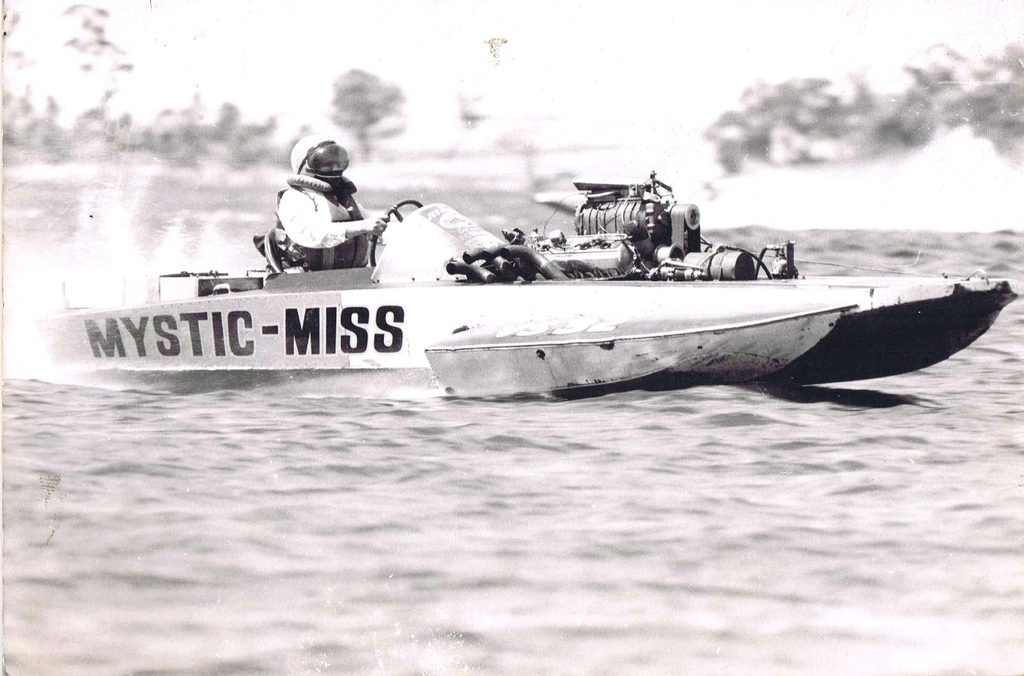
He also had a Hydroplane called Maria which I believe was also Mystic Miss re named with a few different motors in it.
He took this boat down to Pykes Creek with my older brother Robert Watts , he remembers flames shooting out about 8 to 10 foot high.
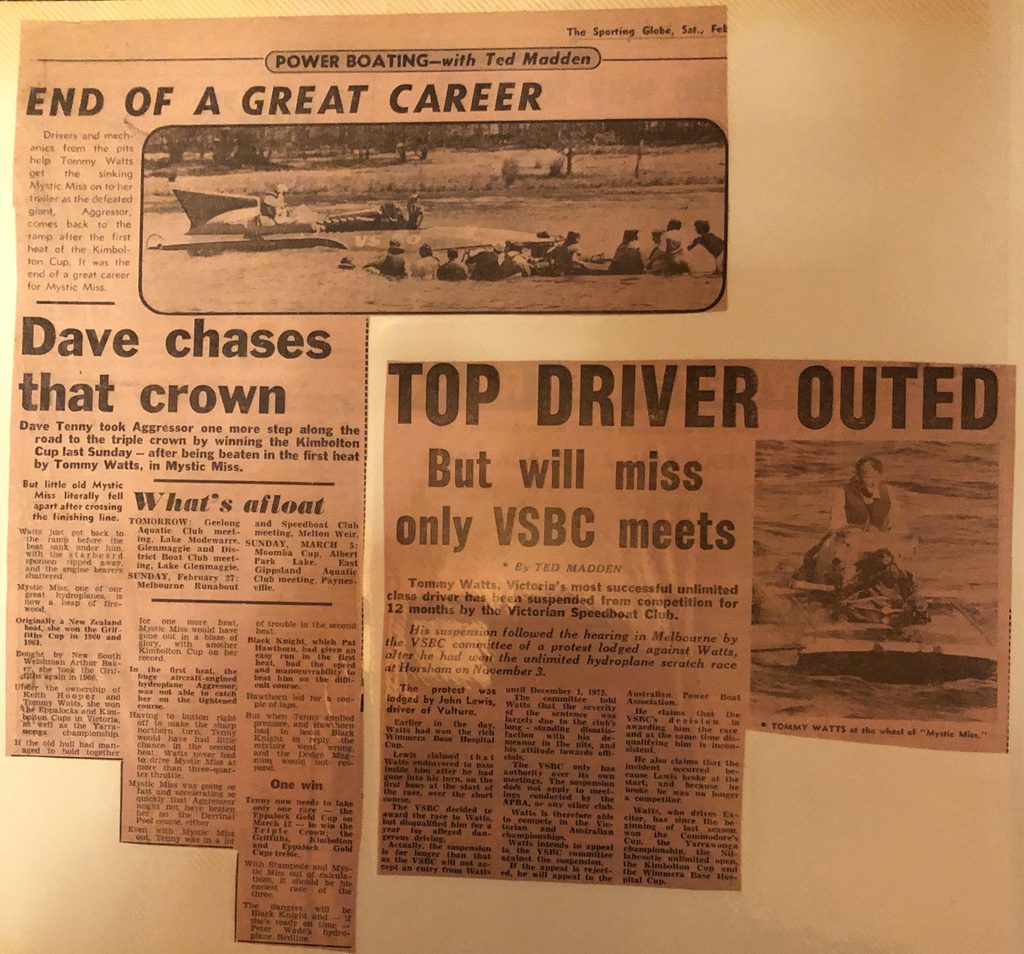
He drove this boat so hard that 1 of the sponsors fell off and he managed to drive it back to the ramp before it sunk.
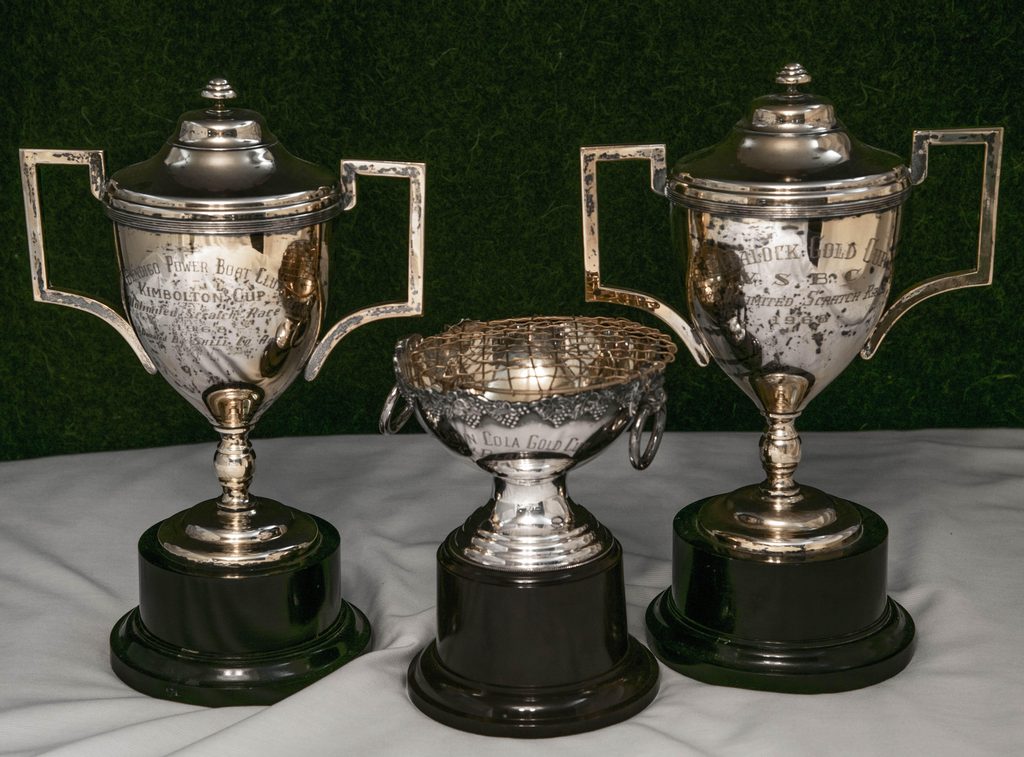
I believe this was when he beat Aggressor fair and square at the Kimbolton cup around 1972/1973.
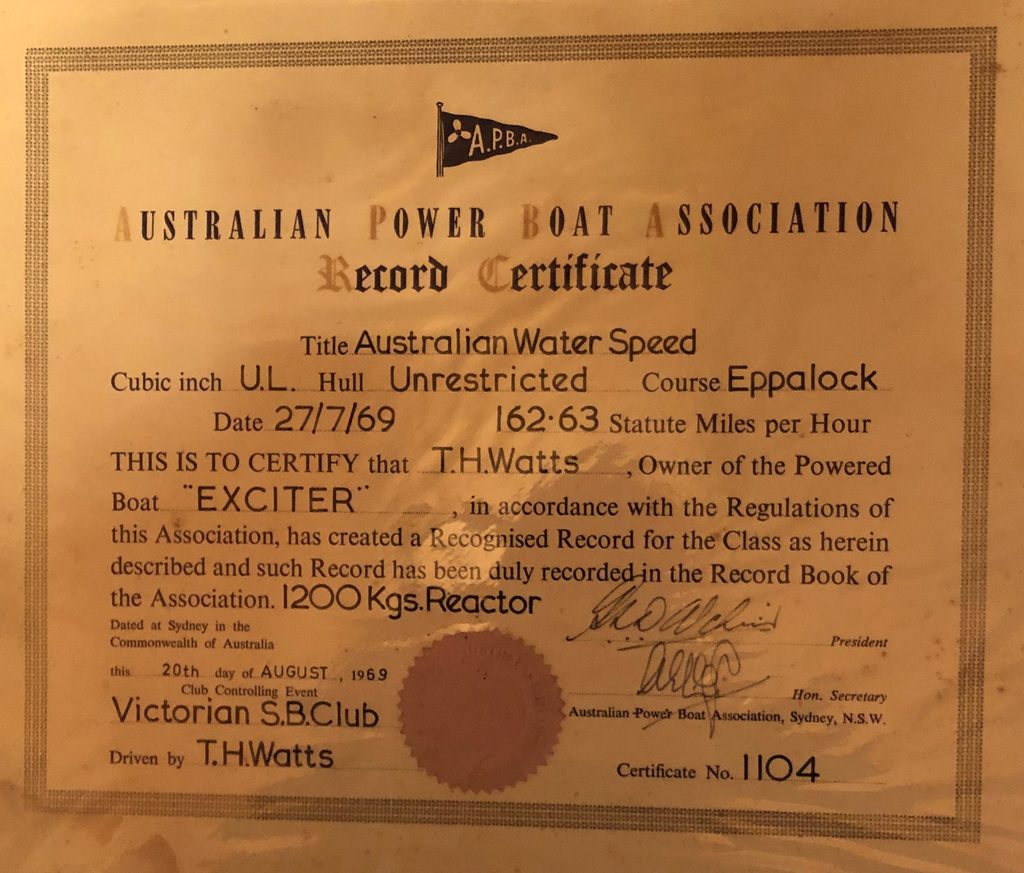
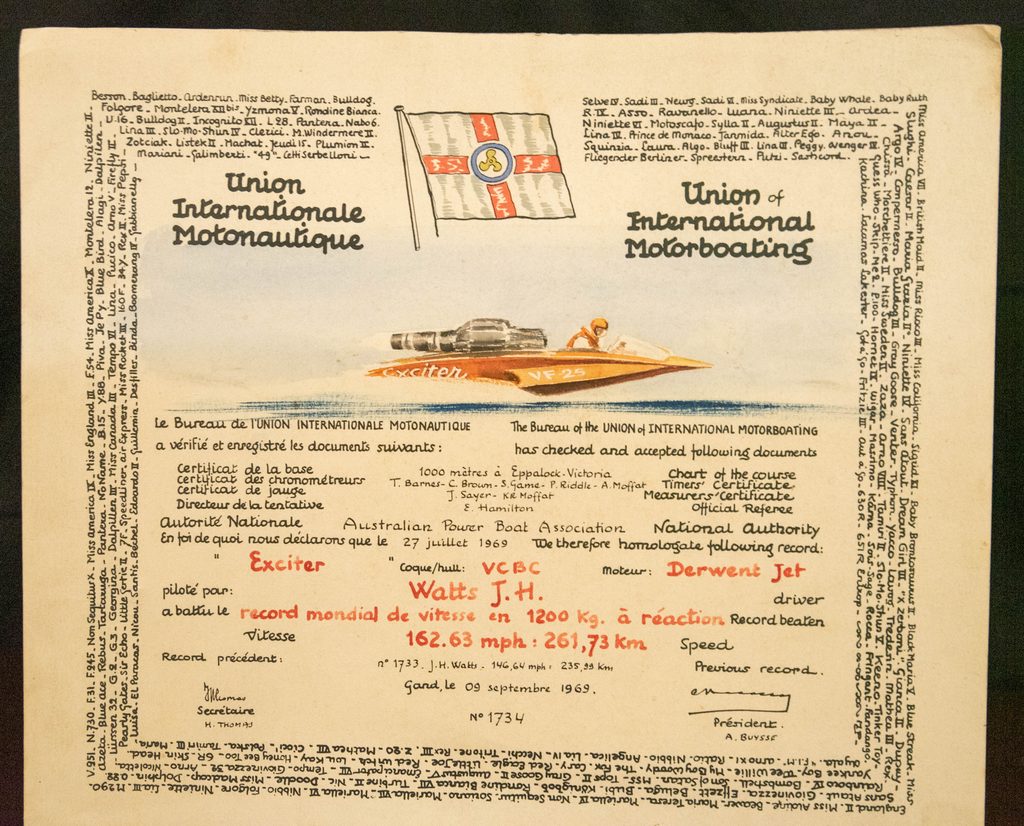
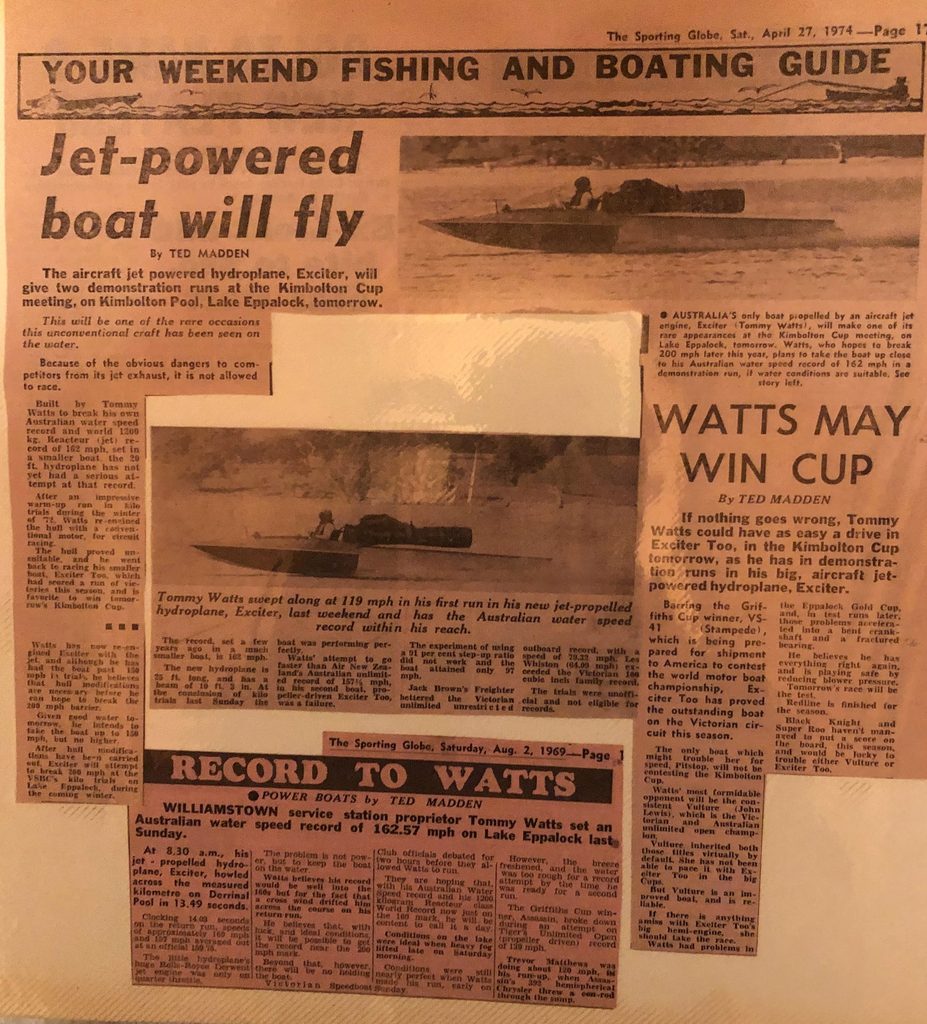
He then set 2 more world records in 1969. I at 146 MPH on the 8th of June then 162.63MPH on the 27th of July 1969. These were both recognized on the 9th of September 1969.
Full story as remembered by Steven below…..
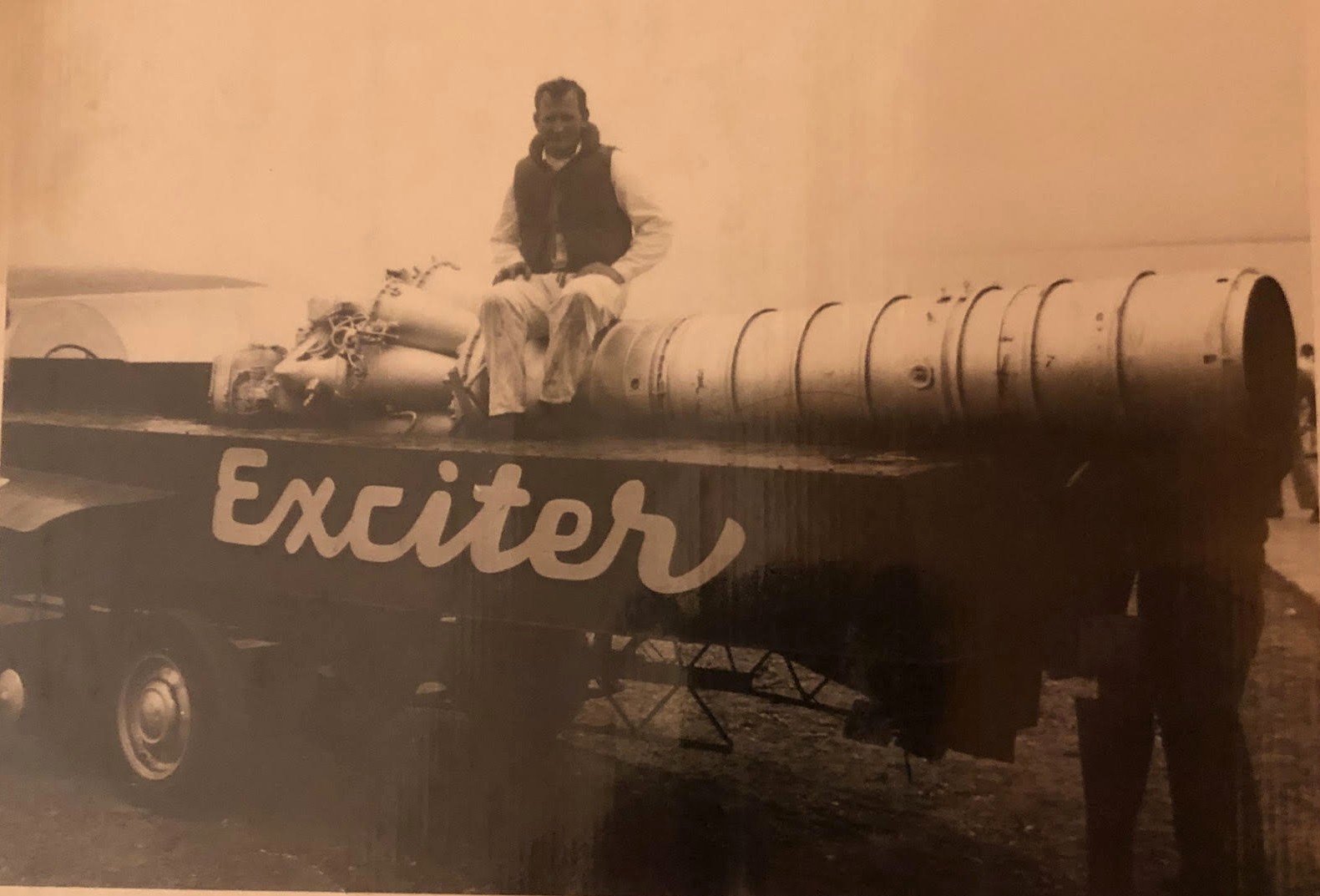
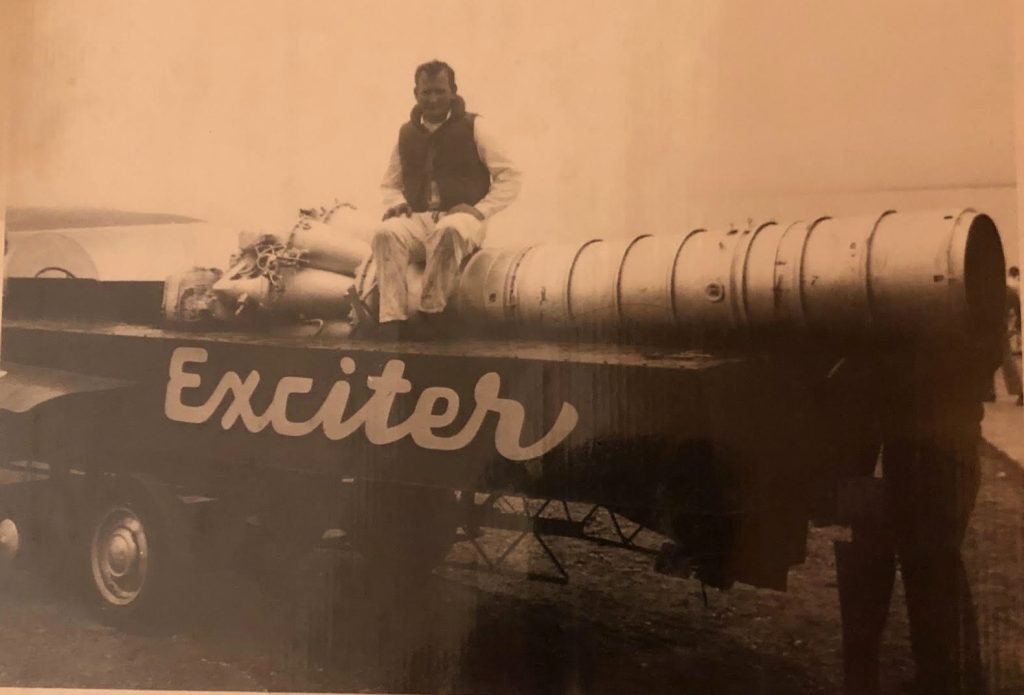
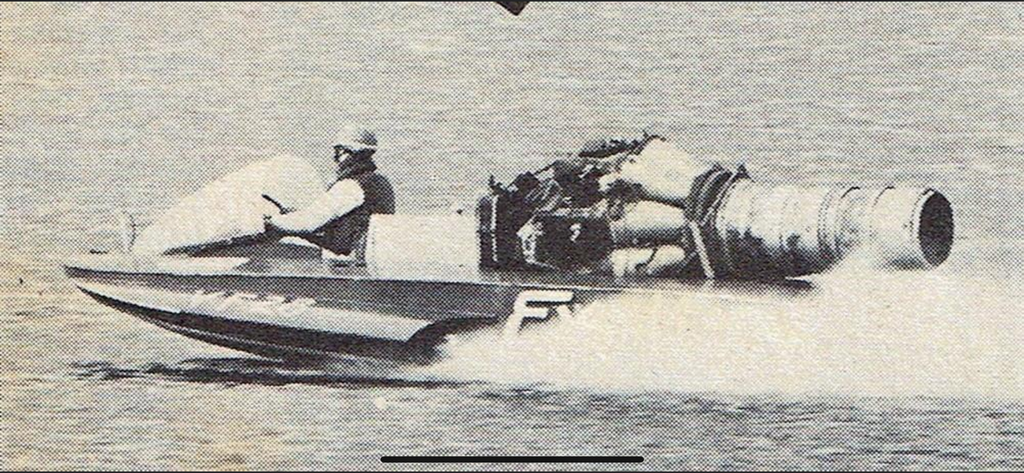
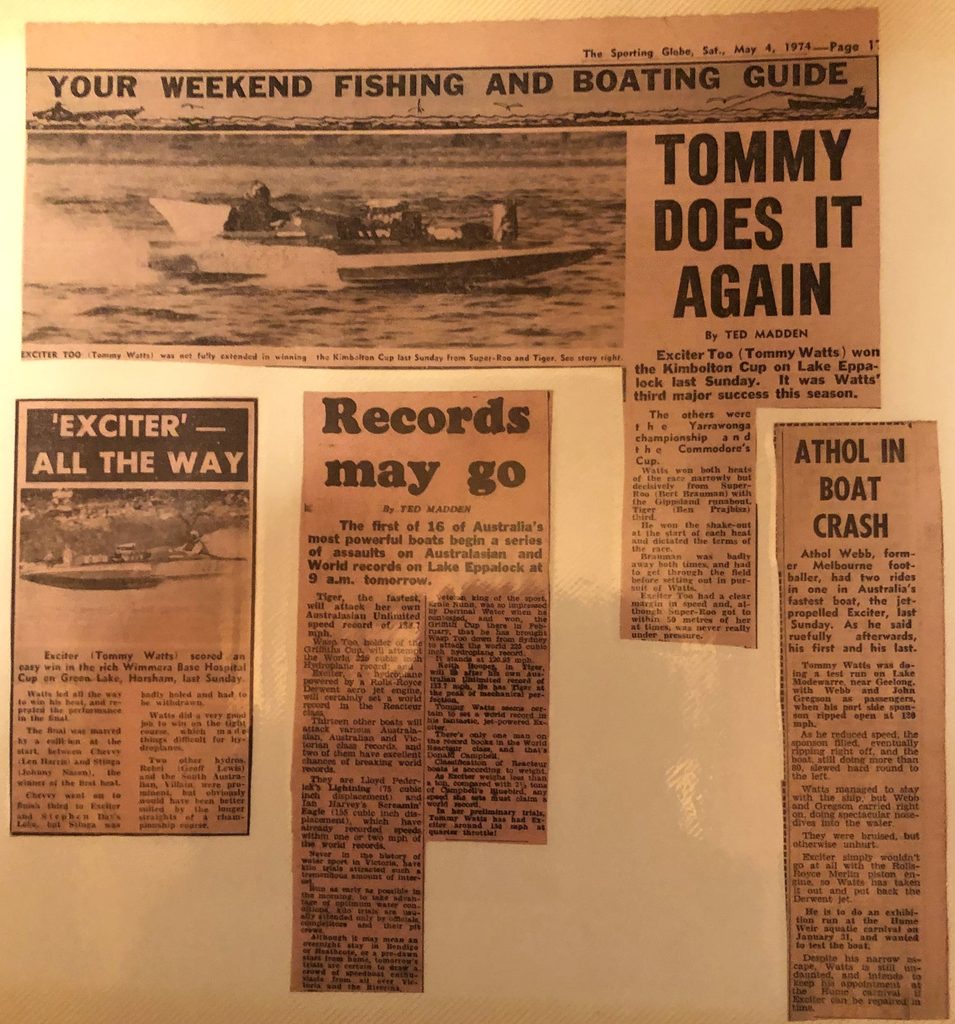
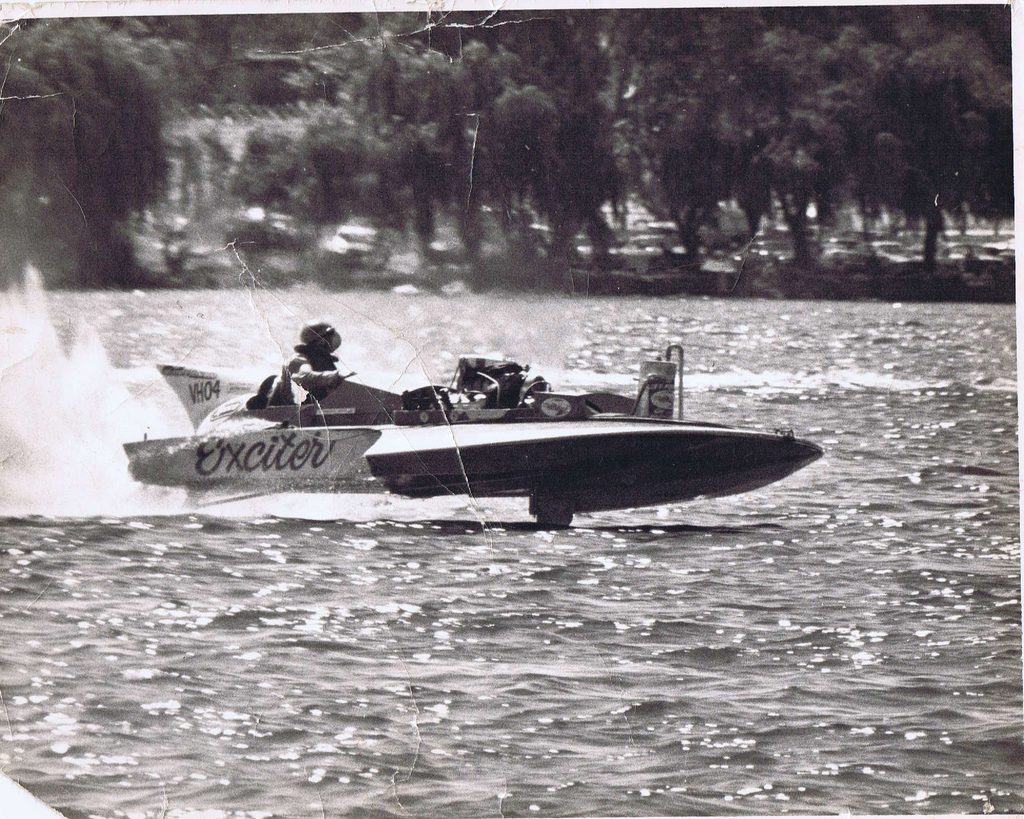
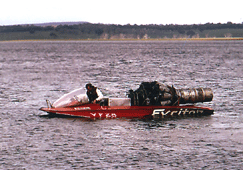
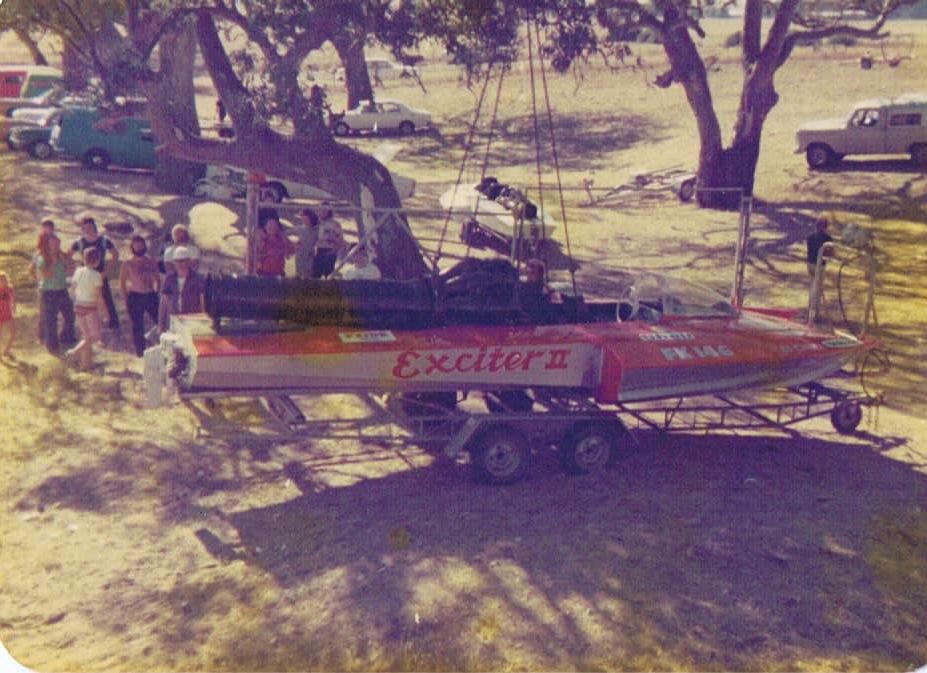
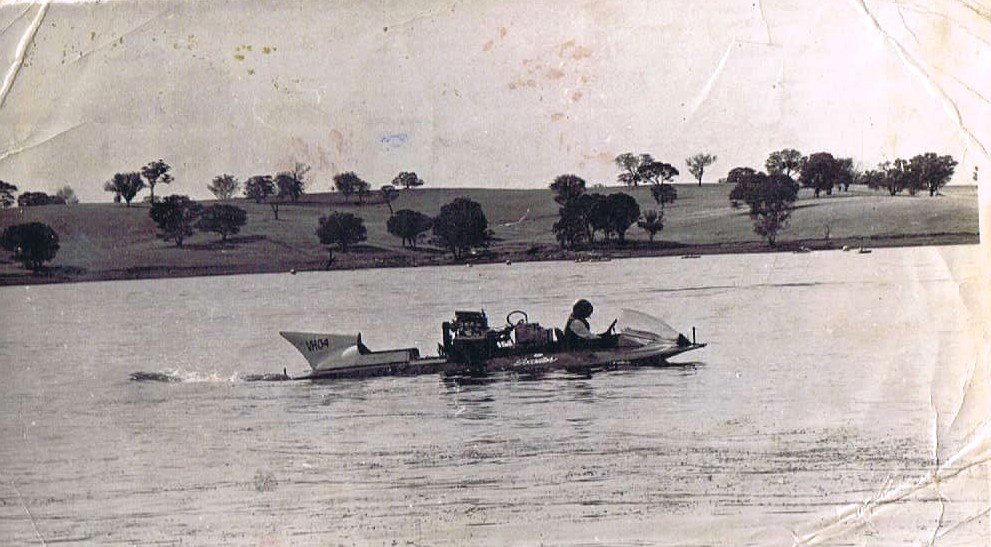
Above: Tommy Watts aboard his Jet Powered Exciter
The Story of Exciter and Australian Racing Legend Tommy Watts
The name Exciter was born from a moment of pure adrenaline. The first time the Jet engine was started in the boat, it was facing Kororoit Creek Road in Williamstown. The sheer power of the engine brought traffic to a standstill; all the drivers stopped and looked on with excitement. Seeing their reactions, my mum said, “Let’s call it Exciter.”
Originally called Shark, the boat underwent a transformation when the Jet engine was installed. I only discovered the true origin of its name this year, though my dad had been racing long before I was born.
Dad achieved his first world record when I was only 2 years old. Reaching 137mph on the 23rd of May 1965. It was recognised by the Union of International Motorboating on the 10th of July 1965. This record was in a category under 1200 kgs REACTOR. He drove the fastest boat in Australia at that time, I believe, and the fastest in the world for the size and the weight of the boat, (under 1200kg’s and 17.5 foot long). The Derwent Jet Engine came from a 1944 World War II Gloster Meteior Fighter Plane, it produced 3600 IB Thrust
World Record and Specifications
World Record: 137 MPH achieved on May 23, 1965 (Recognized July 10, 1965).
Category: REACTOR (Under 1200 kgs).
Dimensions: 17.5 foot long.
Status: The fastest boat in Australia and the fastest in the world for its size and weight at the time.
Before building his own winners, dad started his journey with an old family cabin cruiser and later drove for Keith Hooper in the boat Mystic Miss. After finding success, he acquired his first hydroplane—the boat that would become the original Exciter.
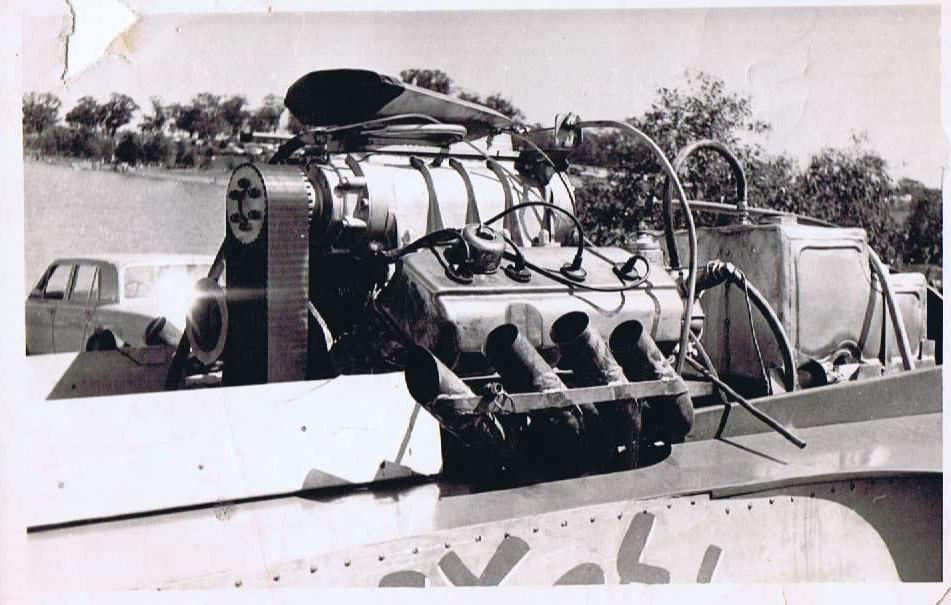
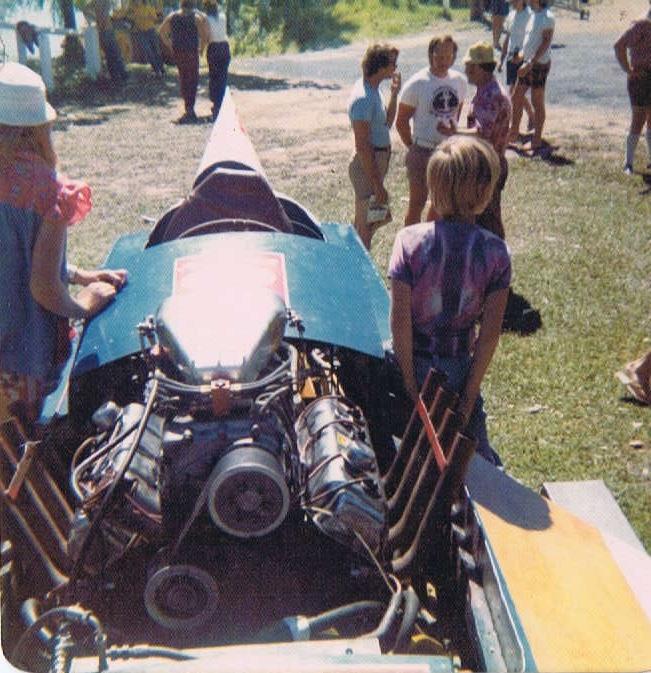
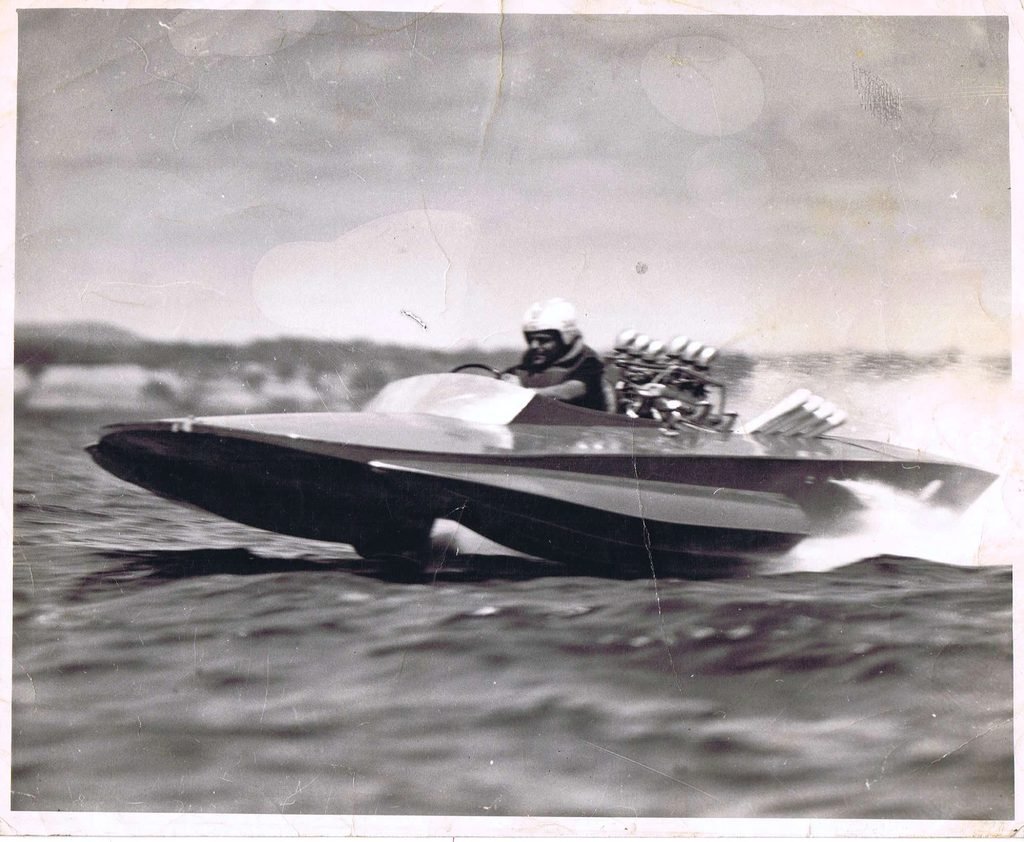
His next vessel, Exciter 2, featured a massive 426 cubic inch Hemi Chrysler engine, fuel-injected and supercharged, running on Methanol. While it was incredibly fast and would often dominate the first two laps, engine reliability issues frequently prevented it from finishing the race.
Racing Success and the EC Griffiths Cup (1972–1974)
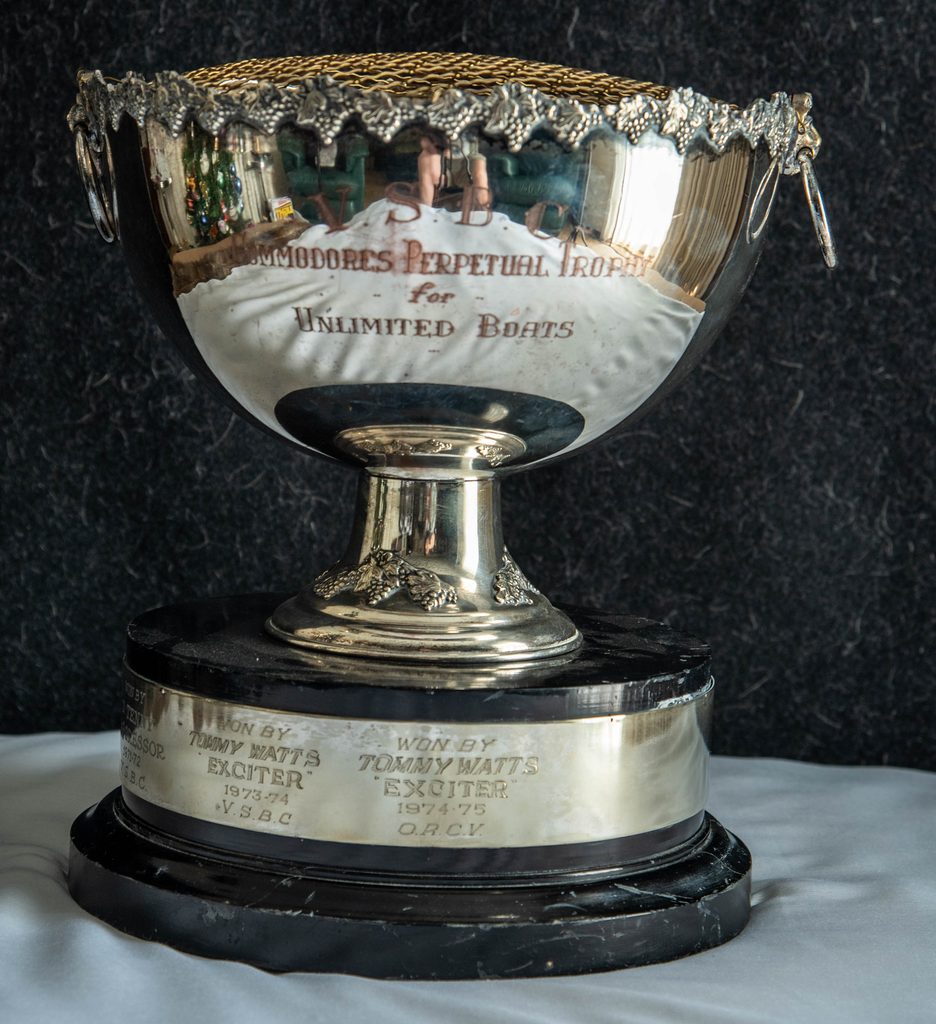
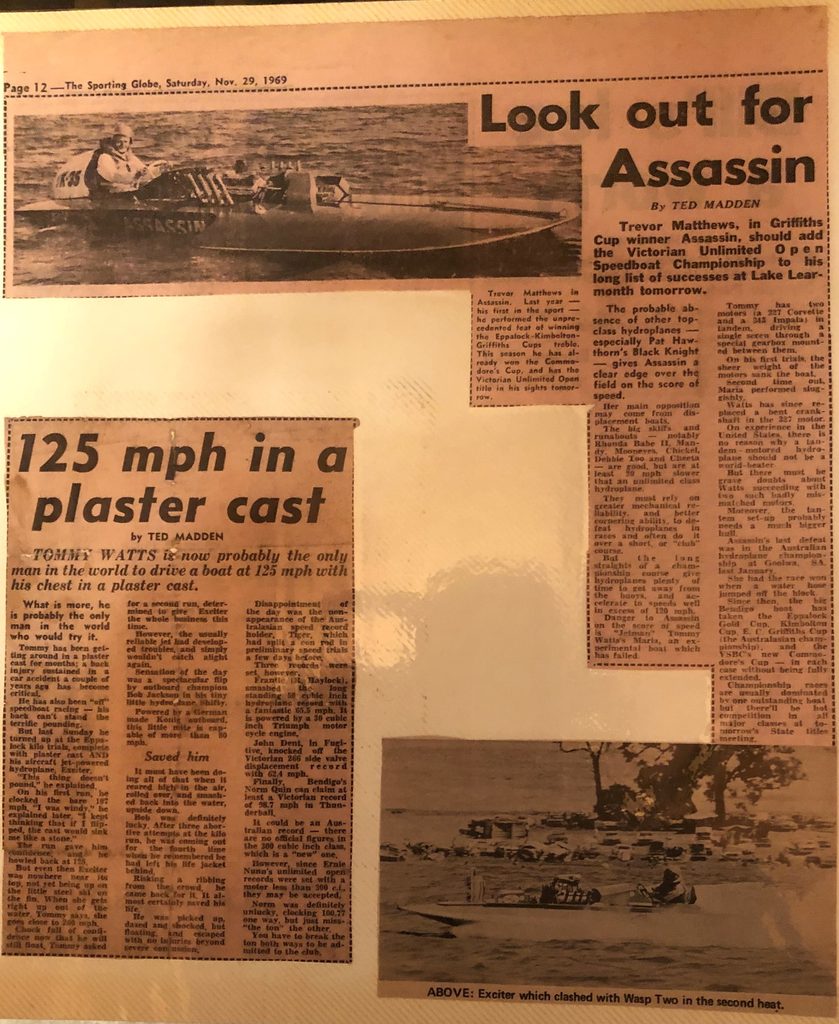
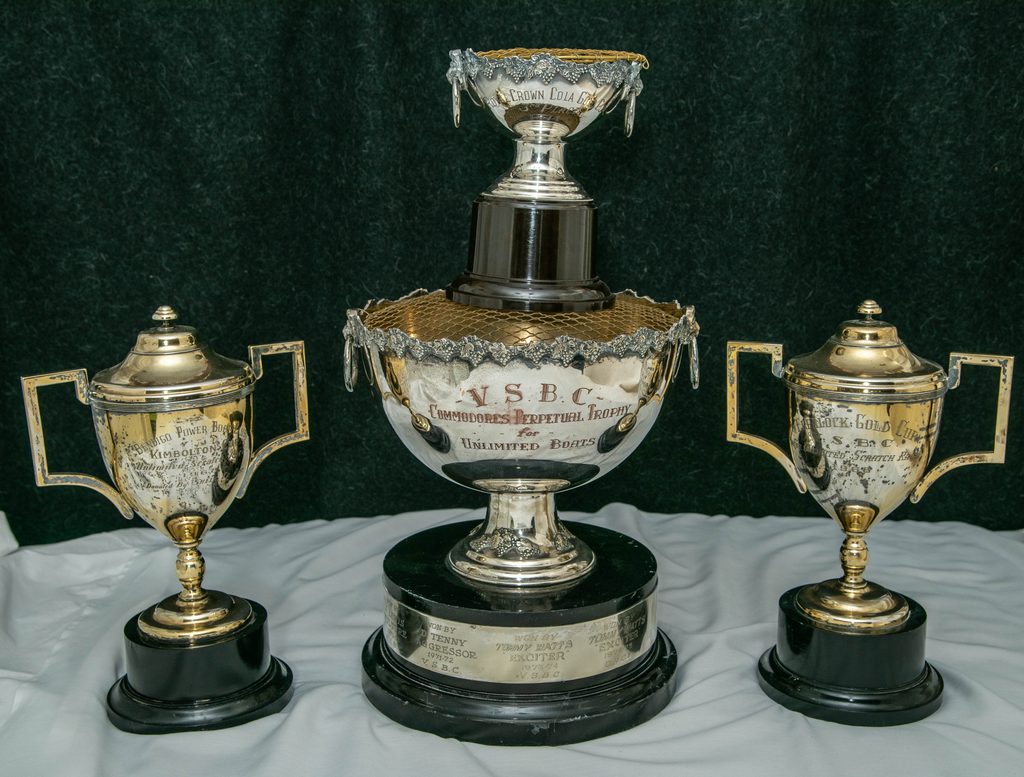
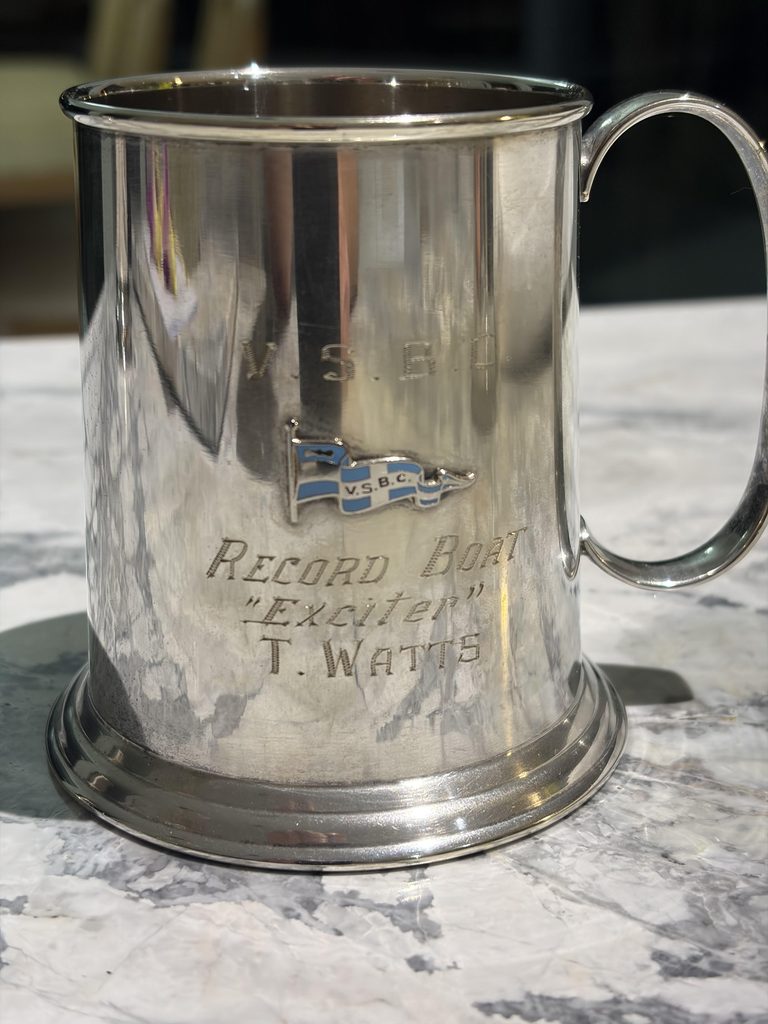
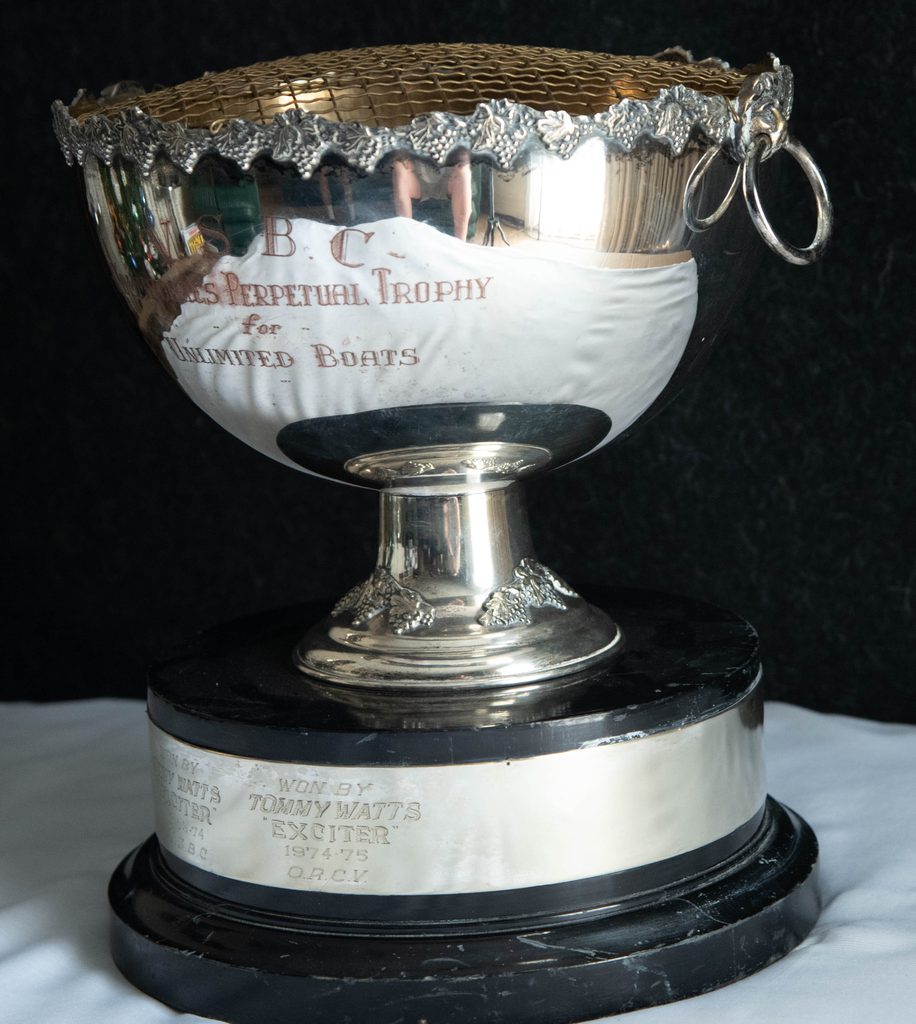
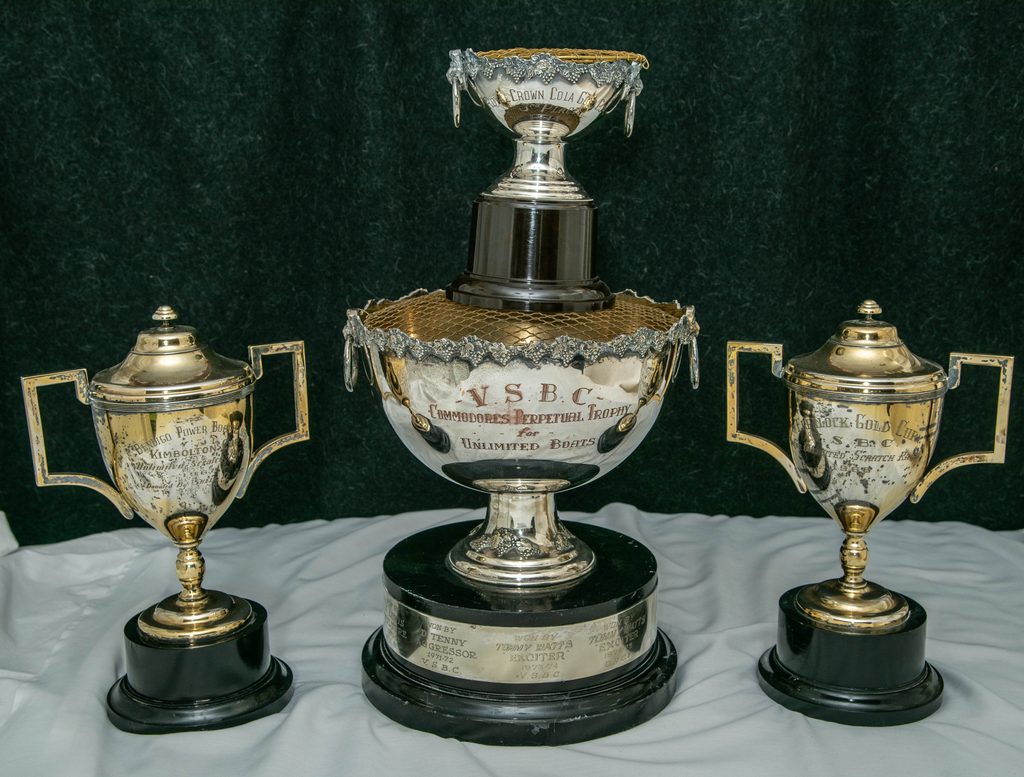
Between 1972 and 1974, a critical discovery changed the course of his racing career. He realized his supercharger had been configured for 1/4 mile drag racing—designed for 10 seconds of intensity rather than the 10 minutes required for circuit racing. Once this was corrected, he became nearly unstoppable, winning every race for the year with the sole exception of the EC Griffiths Cup in Victoria. Although Mistic Miss won the 1960 and 1966 EC Griffith Cup, at the time the boat was owned and raced by AE Baker (Arthur Baker). However, during 1972 through to 1974, Dad got Exciter II going really well, winning many races and prestigious trophies, but never got to the chequered flag first on the EC Griffith cup circuit. Here’s a confession, Dad won the V.S.B.C. Commodores Perpetual Trophy for unlimited boats in 1973 – 75, the trophy was never returned, they weren’t game to come and pick it up after he left the club.
The Evolution of ‘Maria’ and ‘Mystic Miss’
He campaigned a hydroplane called ‘Mystic Miss’, which I believe he renamed ‘Maria,’ and then renamed it again as ‘Mystic Miss’ – serving as a platform for several powerful engine configurations. From fuel-injected V8s to unique tandem setups, the boat was a testament to his mechanical experimentation.
A fuel-injected 350 Chevrolet.
Two motors in tandem: a 348 Impala in front and a 327 Chevrolet at the back.
A rotary turbine engine brought back from America.
A 392 Hemi Chrysler, fuel-injected and supercharged.
The Pykes Creek Turbine Incident
During a test at Pykes Creek with my brother Robert Watts, the rotary turbine engine produced spectacular 8 to 10-foot flames due to a fuel mismatch. While he had been using standard kerosene, the engine required a specialized fuel costing $400 for a 44-gallon drum—a small fortune roughly 55 years ago that would be astronomical by today’s standards.
David and Goliath: The Kimbolton Cup
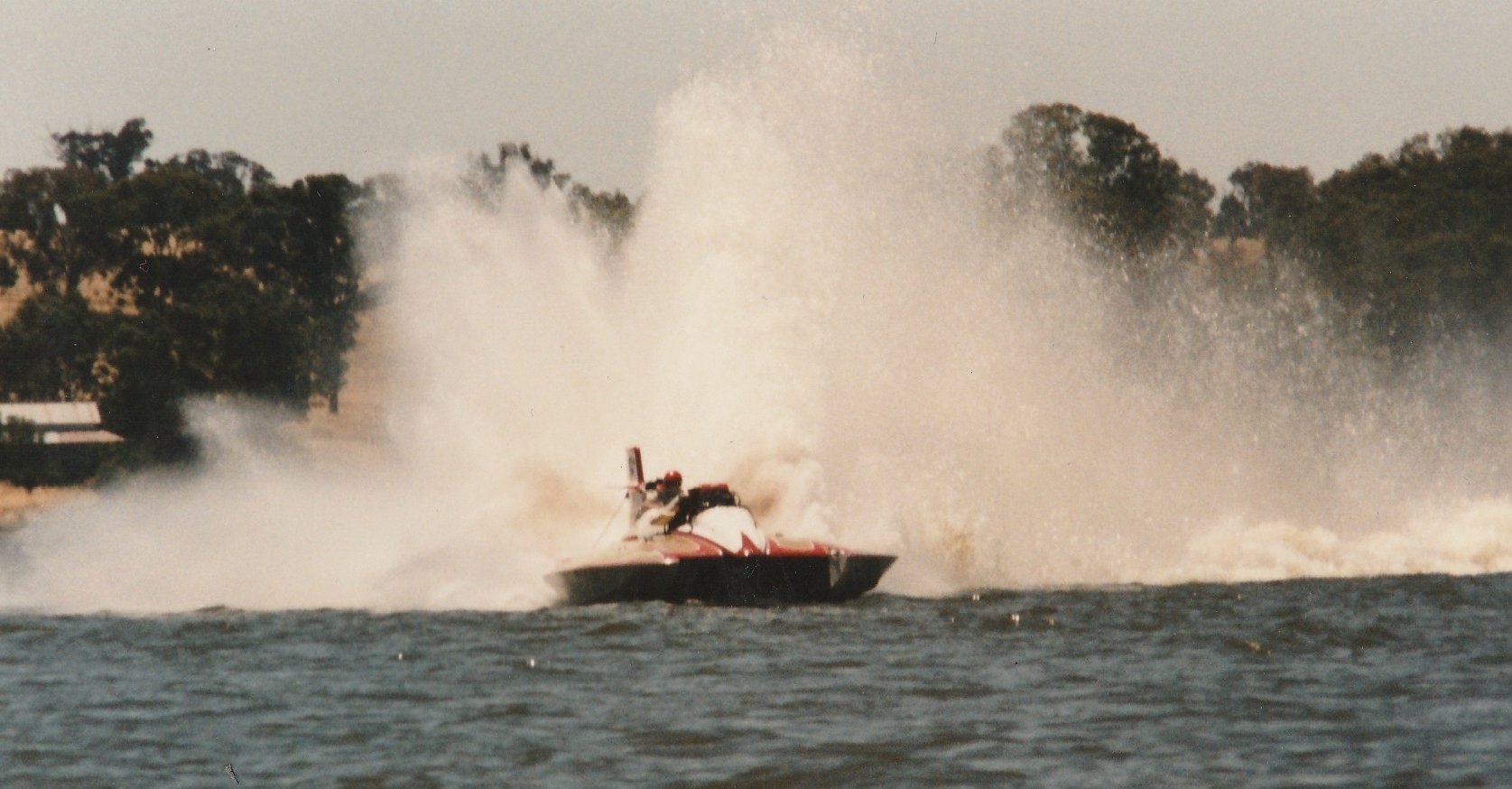
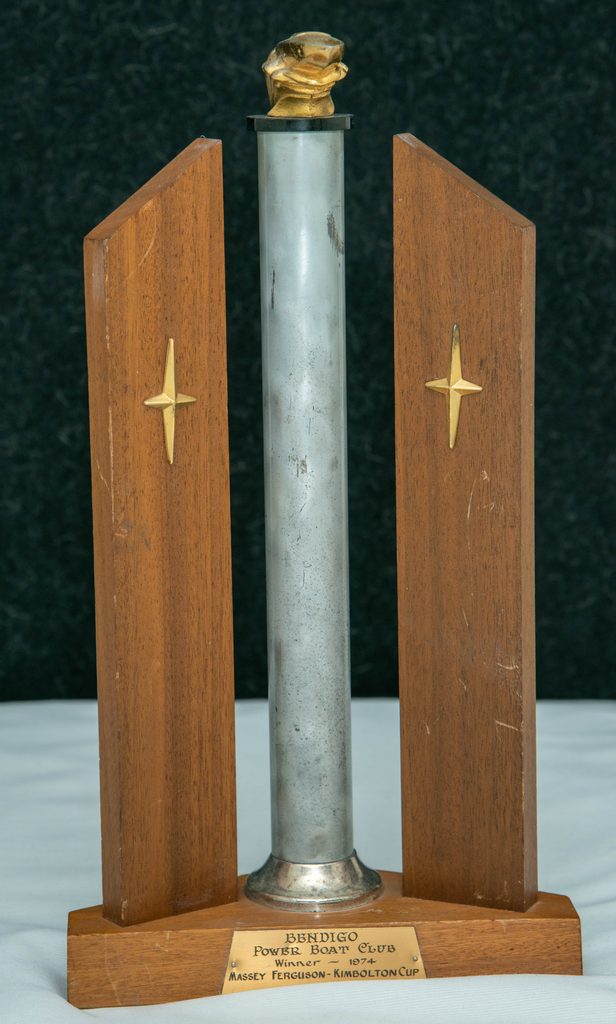
One of his most legendary victories occurred at the Kimbolton Cup around 1972/1973, in a “David and Goliath” battle against ‘Aggressor.’ While Aggressor was a massive boat powered by a V12 Merlin engine, his Mystic Miss ran a fuel-injected V8 392 Hemi Chrysler Fuel Injected and Supercharged running on Methanol. Aggressor held the advantage on the straights, but Mystic Miss took the corners tighter, ultimately breaking Aggressor’s perfect 10-start winning streak. The race was so intense that one of the boat’s sponsons fell off; he managed to drive it back to the ramp just moments before it would have sunk.
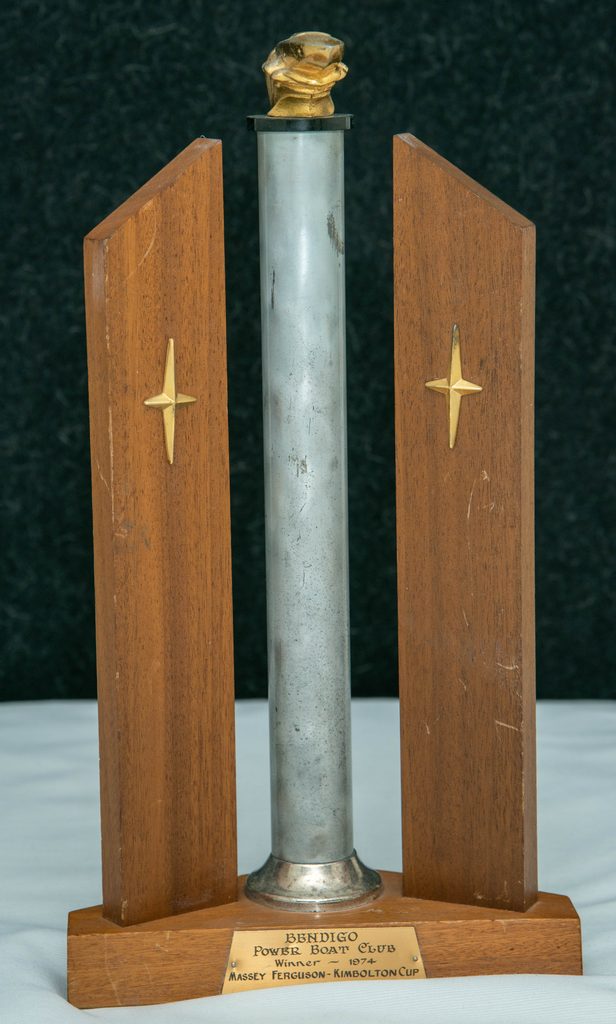
Above: The Kimbolton Cup Trophy, won by Tommy Watts driving (we believe), Mystic Miss – 1974. Beating Aggressor after Aggressors 10 starts and 10 wins!
Pushing the Limits: 190 MPH at Lake Hawthorn
Another time at Eppalock he decided it would be a good idea in the bigger Jet boat to use the thrust to pilot the Jet boat Exciter up the ramp rather than be towed by the tractor or the car. As to some stories you might of heard of him driving it round and round the car park, this was not so as I was there with the chock ready to go behind 1 wheel and my brother was on the other side with the chock for the other wheel. Also the car had a long rope still attached just incase. The crowd loved this although the club soon put a stop to this for some reason.
A Fleet of Innovation
Dad had four different Jet boats all up, including putting the Jet motor into a run about called Diana. This wasn’t to successful so it soon got removed out of that run about. He also had the idea of a bigger Jet motor called an AVON which he put in a boat that he welded together out of steel. This boat proved to be unsuccessful due to the weight of the boat.
The four Jet Boats were a acquired as follows; The first one was Exciter, this was the old boat called Shark. then the 2nd boat he built from steel with the Avon Jet motor which came out of a 1950 World War 2 Canberra Bomber with 6000 Ib Thrust. The 3rd boat was built by Neville Aitken, and also called Exciter. The fourth boat was a runabout called Diana, she was not successful and the Jet engine was soon removed.
Dad went back to his Derwent Jet Engine in his smaller Hydroplane and then set 2 more world records in 1969: one at 146 MPH on the 8th of June, then 162.63 MPH on the 27th of July 1969. These were both recognized on the 9th of September 1969.
Club Life and Controversy
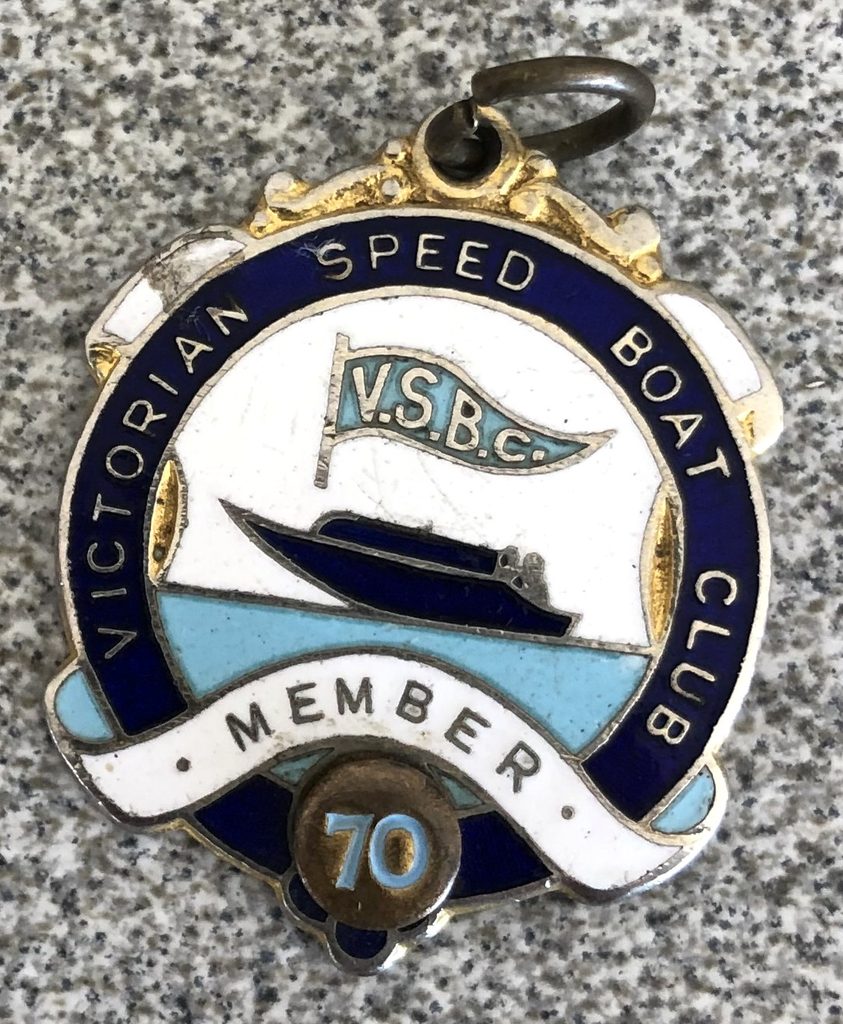
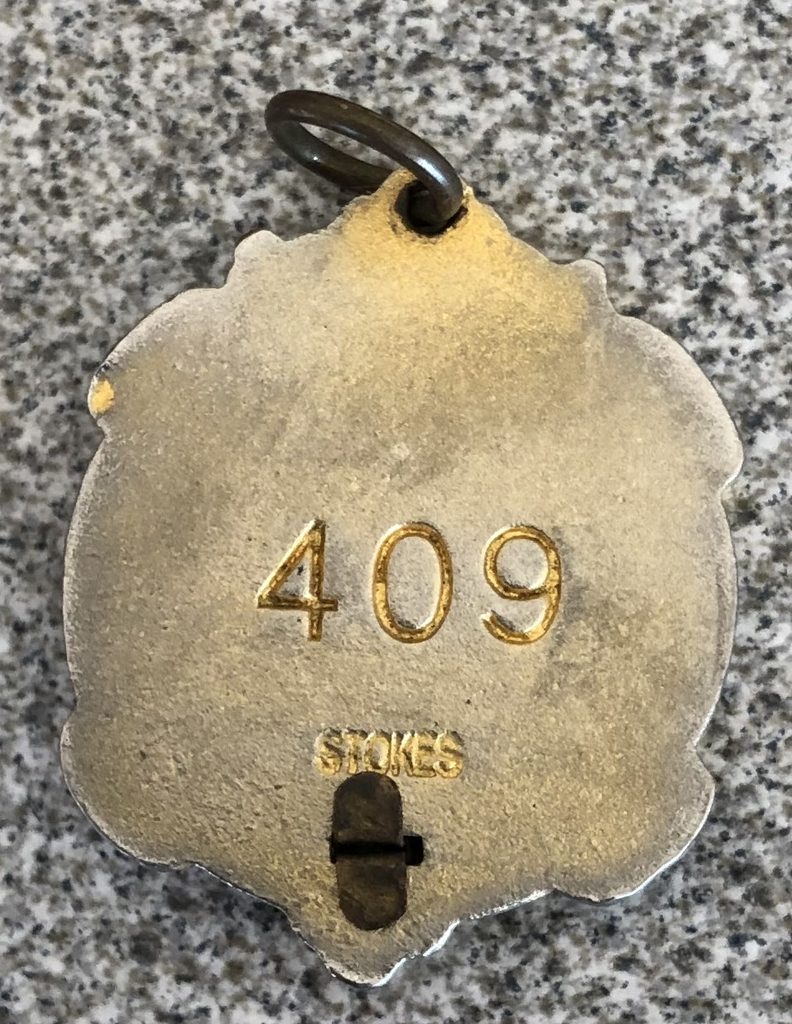
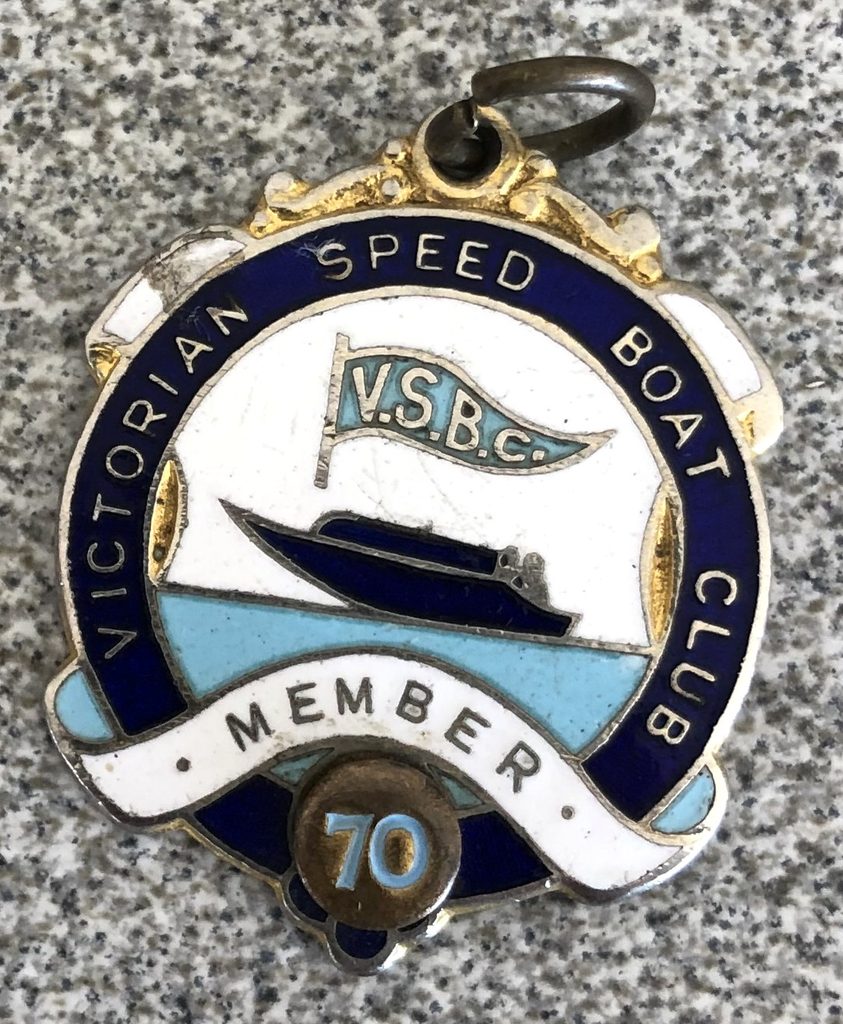
He was member no 70 of the VSBC and also got his 100 MPH badge. He didn’t get along with a few of the club members as he wasn’t an “all show no go” boat—he was a “no show all go” boat. He got suspended around the early 1970s, but only from VSBC club events, so he joined the Melton Speedboat club. He eventually gave away racing around the end of 1974 to 1975.
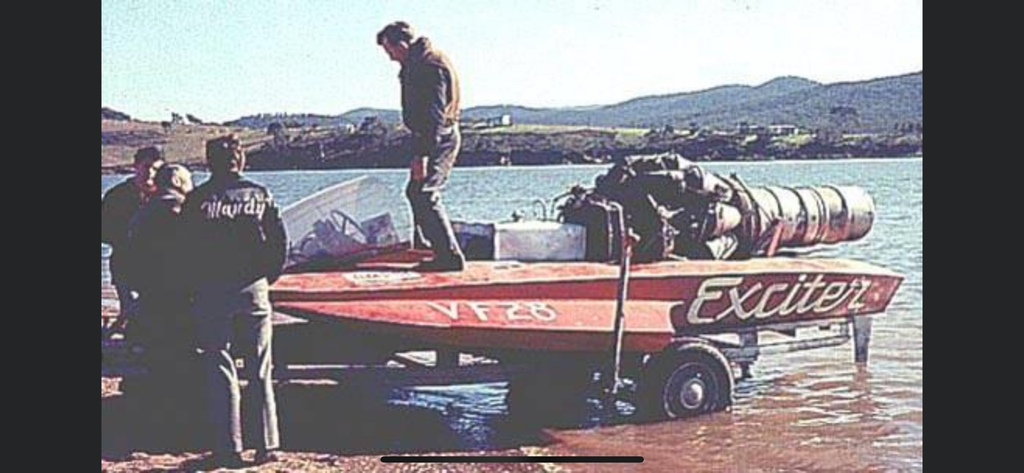
The Jet Boat Exciter was registered as VF 28 – His speedboat Exciter with the Hemi in it was registered VH04 – Mystic Miss carried the rego numbers: VS32
In Australian powerboat racing, VH, VS, and VF are club identification prefixes displayed alongside a race boat’s number on the hull to signify which specific club the boat is registered with under the Australian Power Boat Association (APBA).
The letters correspond to different historical and active powerboat racing clubs within the Victorian State Council:
VF:Victorian Outboard Club (VOC) (Historically designated as the Victorian Fleet or Outboard division
VS:Victorian Speed Boat Club (VSBC) (e.g., the famous hydroplane Stampede raced under the boat number VS41).
VH:Melbourne Runabout and Speed Boat Club (MRSBC) (Historically designated as the Victorian Hydroplane Club before transitioning names).
Breaking the 200 MPH Barrier
He decided to form his own speed boat club and organized a fair few boats to race at Lake Burrumbete on the 22nd of February 1976. This was the 1st time in the world where 2 Jet boats had raced side by side and also the 1st time in Australia a boat had gone over 200 MPH. This was recorded with timing lights that Tommy had bought back from the USA.
Dad had told the other 2 drivers, Colin Wynd and Russell Tidd, who were piloting his bigger Jet boat built by Neville Aitken, that they were only allowed to do 150 MPH—but dad pushed his just past 200 MPH. This was a very successful day and of course dad won his speedboat races in his speedboat Exciter Two.
Racing Grit
There were lots of times when he would rock up to the races and the officials would try and pick on his boats. One day, with one of his early boats, Col Winton or Dave Gill came up and punched a hole in the bottom where it probably had wood rot.He had to get a bit of plywood and have it fitted so he could go out on the water that day. (Story correction by David, who was scrutinising at the time. The boat had rot in it and he put his finger through the hull, scooping out rotten timber – may have been a different race but it’s what happened back in the day. apparently he didn’t race that day or he may not have survived it – David also remarked that Tom Watts was a genius at what he did).
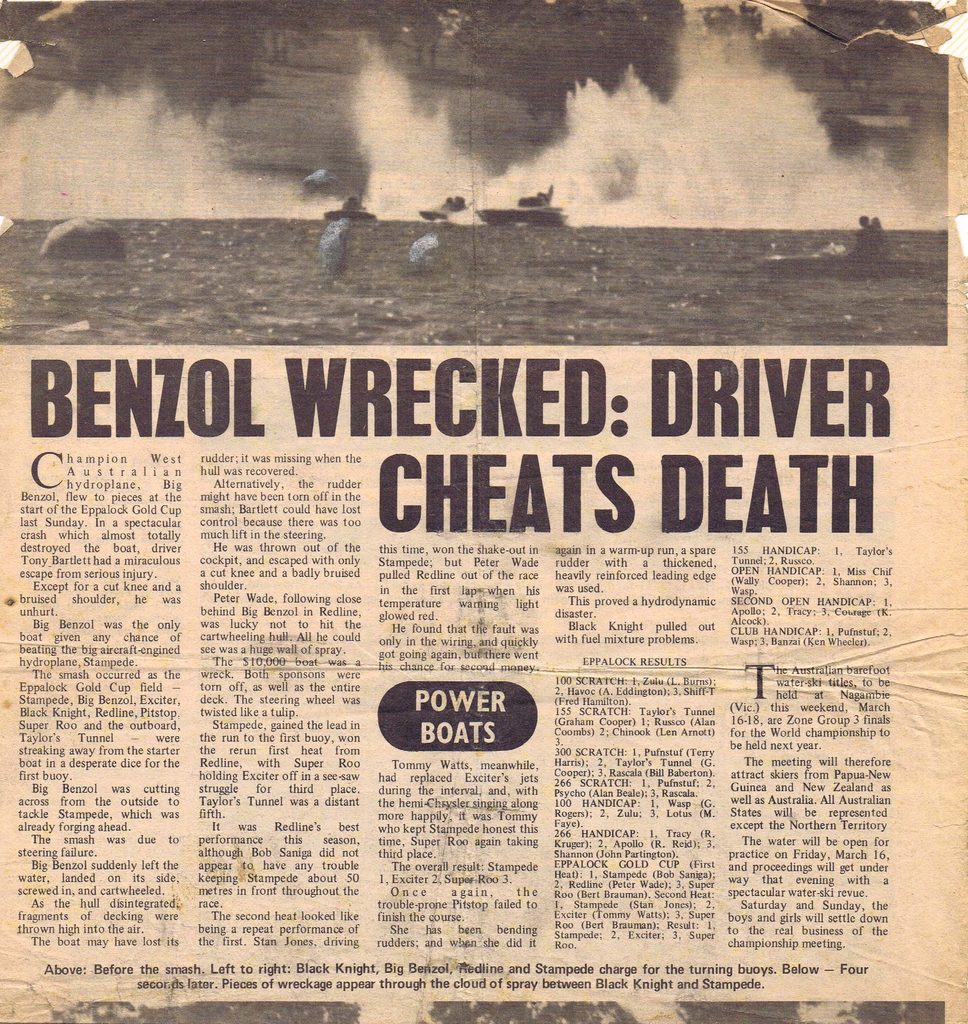
I remember with his speed boat dad would always start back a bit so as he would never get disqualified for jumping the starting line. On this day a boat called Big Benzol was in front of him and as he was catching up, Big Benzol flipped in front of dad and he drove straight under the boat as it flipped!
Legendary Hydroplanes
I can remember a lot of the Hydroplanes which were my favorite type of boats:
Stampede
Aggressor
Exciter
Mystic Miss
Black Knight
Super Roo
Red Line
Air New Zealand
Tiger
Vulture
Pitstop
Wasp Too
Assassin
At Lake Hawthorn, he pushed his jet boat until it got “up on the skeg,” becoming almost friction-free. The air speed indicator jumped from 150 MPH to approximately 190 MPH. With no parachutes or brakes, he ran out of water and traveled 200 feet onto land, clearing two trees before the rudder finally dug into the ground. A small piece of the boat remains a family heirloom to this day.
Dad had a piece of bent up copper pipe fitted under the boat at one stage. The copper pipe came up beside his cockpit, and if there wasn’t any water coming up through the copper pipe, he knew the boat was lifting too much as the front.
The Legacy of Tommy
I still have all his Trophies and World records and news paper clippings etc, at the moment. I will end up donating them to a club.
Drag Racing & The Forklift Incident
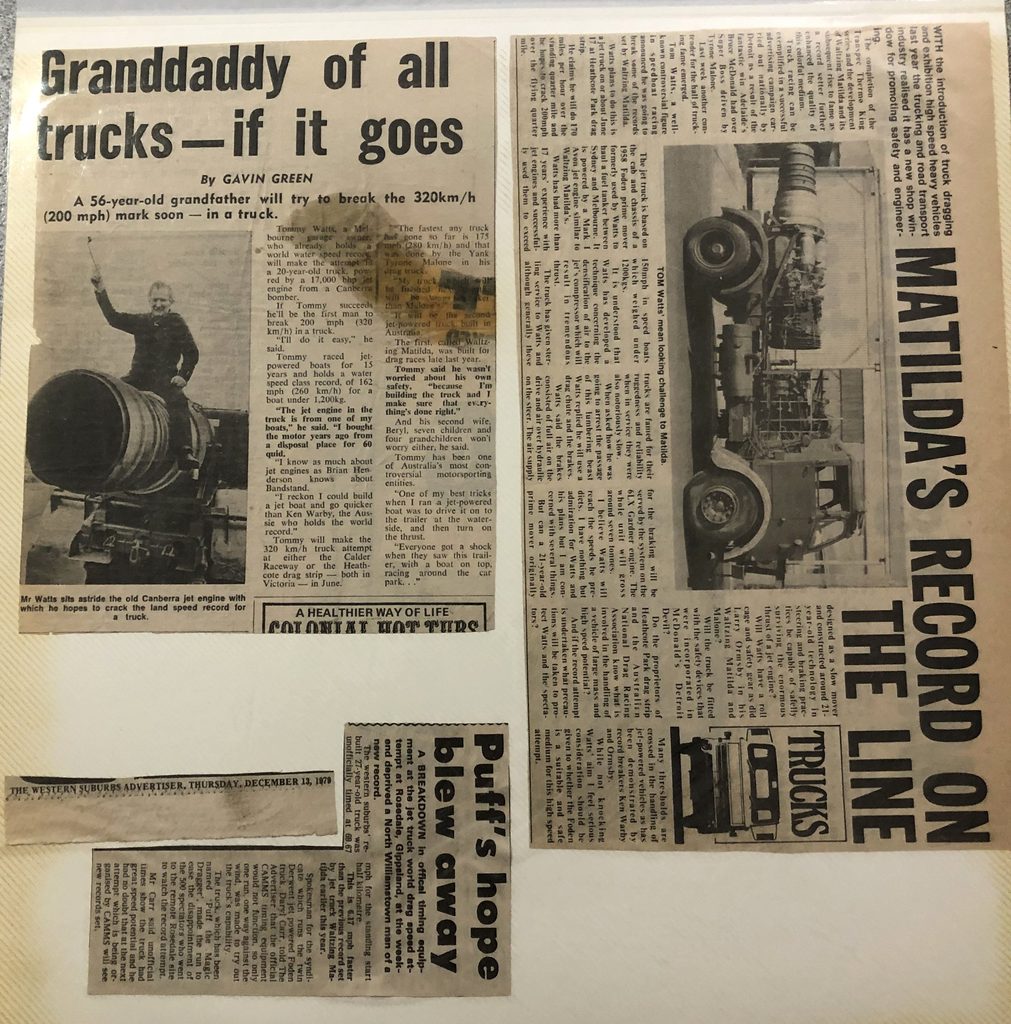
Dad was going to go into Top fuel Dragster 1/4 mile racing. He had two of these: one from Graham Withers and also one of the first rear engine dragsters built in Australia. As he was moving this rear engine dragster around, he lifted it up with his forklift from where the parachute hooks onto and the bracket snapped off. That was the end of his proposed drag racing career.
Innovation on the Water
Over the years he bought a lot of engines and equipment back from the USA. At one stage he fitted a V12 Rolls Royce Merlin motor to his Jet boat, but I believe it was not successful. I had been told about this many years ago and just come across a photo of it last year.
At one stage when all of his speedboats were out of action, he had a very small Hydroplane called Exciters Pup. This only had a 4 cylinder motor in it and he raced it at Melton. He got the paddle out and used that as well to go a bit faster—I even have this on film.
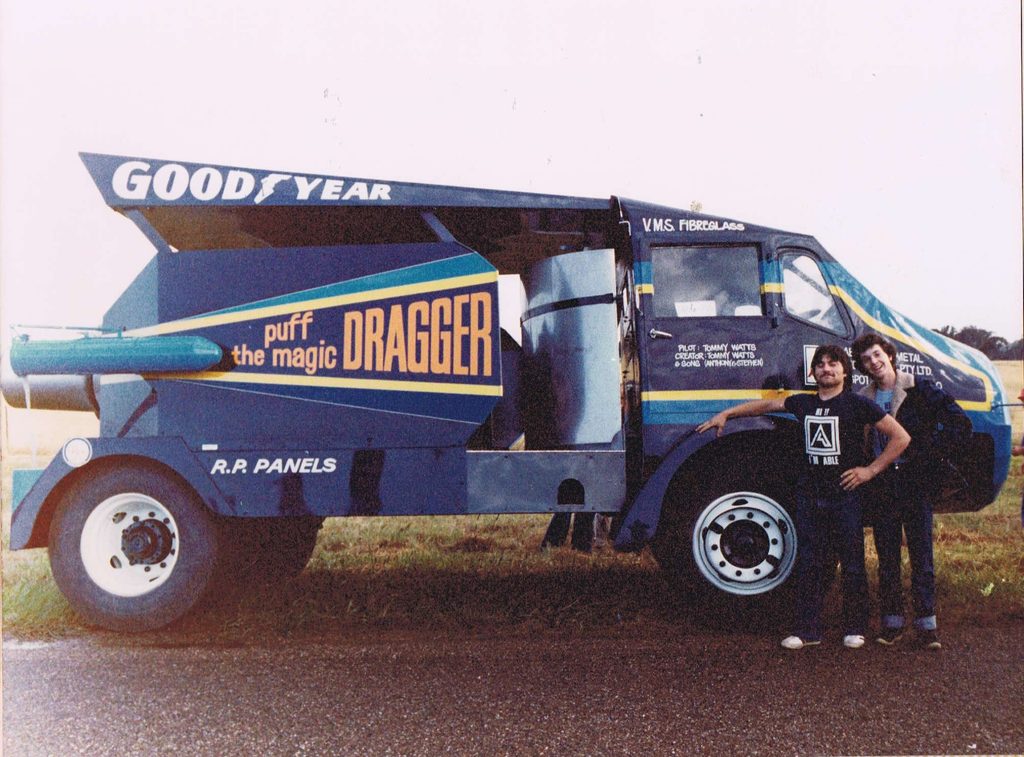
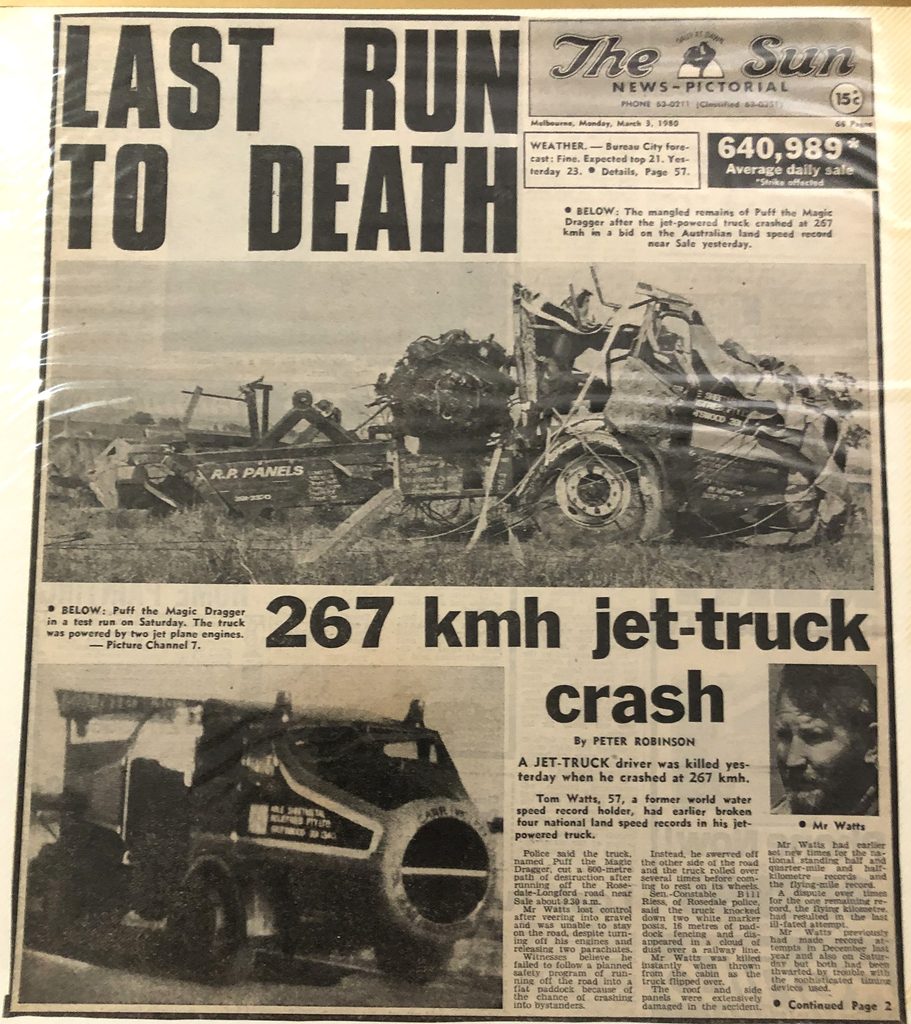
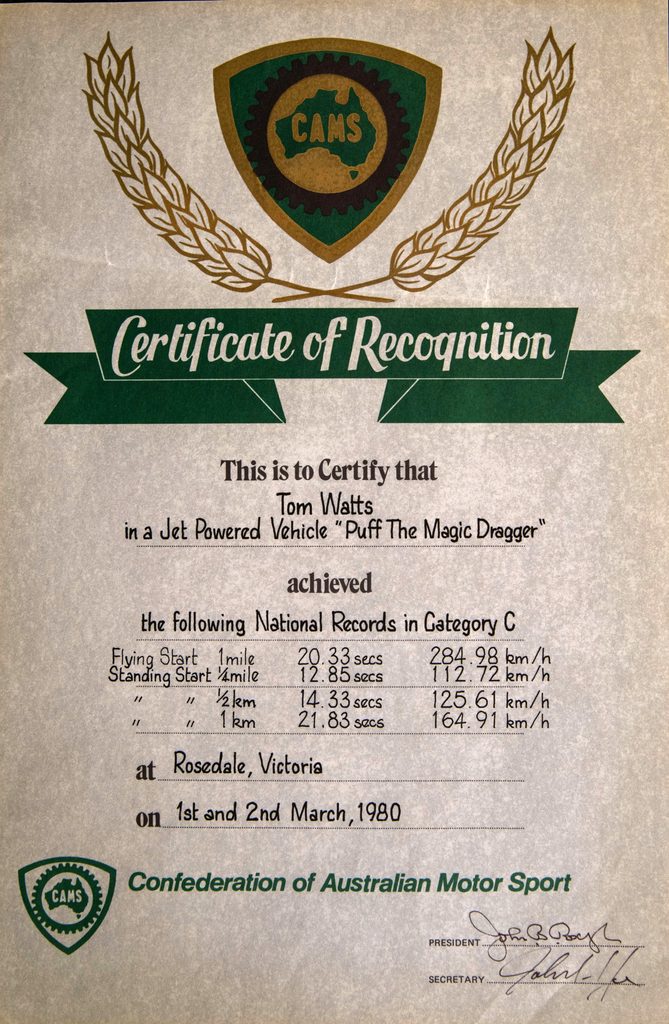
Puff The Magic Dragger
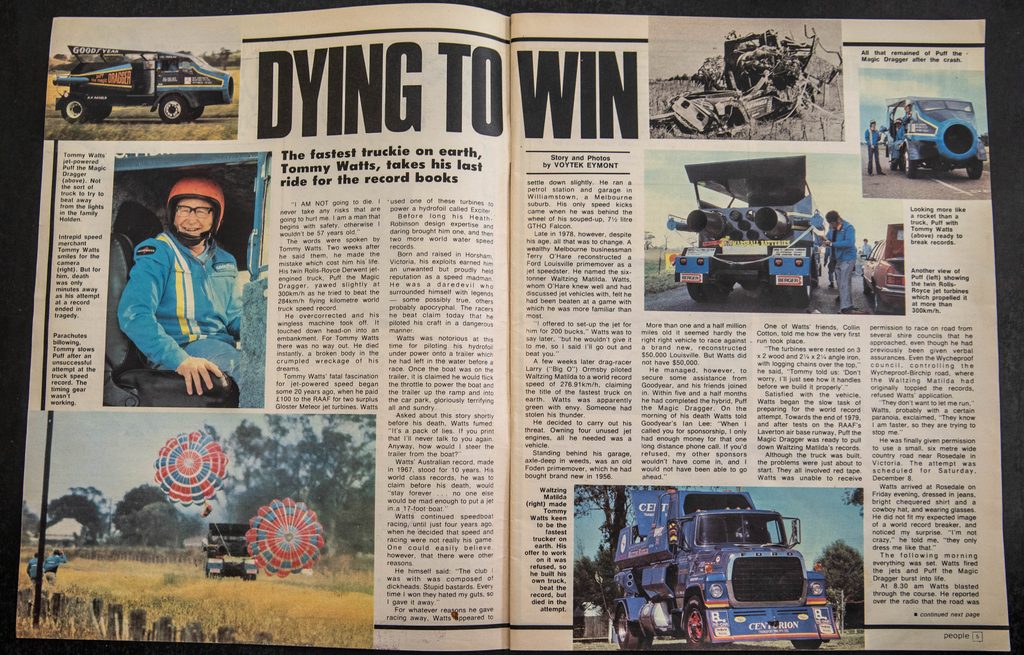
In 1979 dad decided to build his twin engine Jet truck. By 1980 he became the fastest truck driver in the world, breaking all the records of the other Jet truck, Waltzing Matilda. Unfortunately on his last run he got killed in an accident, but at least he went out doing something he loved. He was 57 years old.
Racing & Practice Locations
Yarrawonga / Mulwala
Lake Eppalock
Melton Reservoir
Lake Modewarre
Lake Hawthorn
Lake Nillahcootie
Lake Glenmaggie
Lake Burrumbete
Lake Hume
Pykes Creek
Lake Learmonth
Lake Hazelwood
Lake Albacutta
Albert Park
Lake Nagambie
Lake Green Horsham
I’m sure there’s plenty more places that he raced at and plenty more stories
Share Your Memories
Any more stories or photos would be very welcome. If you have memories of Tommy racing at any of these locations, please reach out.
Regards
Steven Watts (Author)
The story of Tom Watts written by son Steven Watts
Photos and news clippings courtesy of Steven Watts
Published by: GillGirl media – GILFLITE Boats website ‘Boat Talk’ – For the History of Australian Power Boat Racing – Volume One – ‘For the Record’
In 1992, after GILFLITE began manufacturing the “Rush” sports jet boat under contract for Mercury Marine, Mercury Marine chose to also use the GILFLITE Esprit hull, which they branded and sold as the Bermuda.
GILFLITE Boats: Pioneers of Australian Powerboat Design. From the early days in the 1960’s, designing and building race boats, the GILFLITE range of models, like the Esprit, the Integra and the Shortline, set new benchmarks in performance and craftsmanship. These boats, built with precision at the GILFLITE Headquarters, became icons on the water – each model with its own story, its own legacy, and its own place in Australian boating history.
Here’s a chapter of the the GILFLITE Esprit – A.W.S.A. Tournament approved Ski Boat.
The Bermuda
In 1989, GILFLITE began building the hull used for the Bermuda range. (Originally designed, built and marketed by GILFLITE as the Esprit).
The Bermuda was developed as a versatile family and recreational boat, offered in Bowrider, Ski Tournament and Skier configurations. Designed for both socialising and water-sports, the range combined practical layouts and quality craftmanship with the performance and handling characteristics for which GILFLITE boats had become known.
The Bermuda model, developed by GILFLITE, found a significant audience through Mercury Marine, who adopted the GILFLITE Esprit hull due to its outstanding performance and handling. Impressed by its agility and design, Mercury Marine chose the hull for their distribution, bringing the Bermuda’s blend of style and performance to a broader, international market.
Recently, we were contacted by an international boat owner based in France who has acquired a Bermuda model. He reached out with the intention of fully restoring and refurbishing the boat. We appreciate his passion for preserving the classic GILFLITE designs and we welcome him to share his restoration journey with the global boating community. We look forward to seeing his progress and will be happy to assist where we can.
The original brochure provides a snapshot of the Bermuda range and its specifications from the period.
Below: The GILFLITE Esprit / Bermuda Bowrider, Bermuda Ski Tournament & Bermuda Skier – also available with Mercruiser Sterndrive.
GILFLITE began building the hull used for the Bermuda in 1989, though the specific “Bermuda” branding was established in 1992.
The boat was originally designed and developed by David Gill in 1989 as the GILFLITE Esprit.
In 1992, after GILFLITE began manufacturing the “Rush” sports jet boat under contract for Mercury Marine, Mercury Marine chose to also use the Esprit hull, which they branded and sold as the Bermuda.
Below: is the full range of Bermuda Boats as per Mercury Marine marketing material circa: 1992 – Note: only the Esprit Bermuda Bowrider, Ski Tournament & Skier where GILFLITE Esprit design/builds. GILFLITE also manufactured the Rush under contract for Mercury.
Below: The extended Burmuda Range (circa: ealy 1990’s – not current – not built by GILFLITE)
Original advertising material: Mercury Marine (circa 1992)
In our latest blog in Boat Talk by GILFLITE we present Bob Carters most recent article where he reflects on his decades of dedication to Australian Powerboat Racing. Since his first ignition of obsession in the 1950’s, he has raced boats, written about them, and captured them through his photography.
Early Inspiration and Spectatorship: Bob Carter’s fascination with boat racing began in the late 1950s as a young child, attending races with family and following the sport through magazines. He became a dedicated spectator, attending events at venues like Albert Park Lake and dreaming of participating more directly.
Bob Carter’s journey is a model of lifelong passion evolving into professional involvement, showing how personal interests can lead to diverse roles—competitor, organizer, journalist, and business owner—within a sporting community.
His story illustrates the importance of community clubs, adaptability, and the challenges of sustaining niche sports over time.
Later Years and Reflection: After stepping back from racing and promotion, Carter continued to write about the sport and photograph events, adapting to digital technology. He reflects on the decline of boat racing’s popularity and club numbers, expressing concern for the sport’s future but gratitude for the friendships and experiences it brought him.
Powerboat Racing, the VSBC and Me
By Bob Carter
My lifelong obsession with boat racing began in the late 1950’s, but I really don’t remember it. I was a very little tacker when my aunt took me to the outboard boat races at Edwards Park Lake in Reservoir.
What I do recall later on, is sitting out in the baking sun at Exford Weir, Melton, with my brother and parents, watching fast boats racing and skiers flying around with their delta wing kites. As a high school kid I followed boat racing through the magazines of the day, principally Seacraft and Modern Boating. For me, neither carried anywhere enough stories and photos about race meetings and the championship events.
When I was old enough to travel alone on public transport, I caught the train to Middle Park station, ran across the parkland and was a fanatical spectator at Albert Park Lake, where the Victorian Speed Boat Club staged the boat races. This was my version of heaven. The smell of oil impregnated timber hulls, the noise of racing engines, the speed and spray all remain with me to this day.
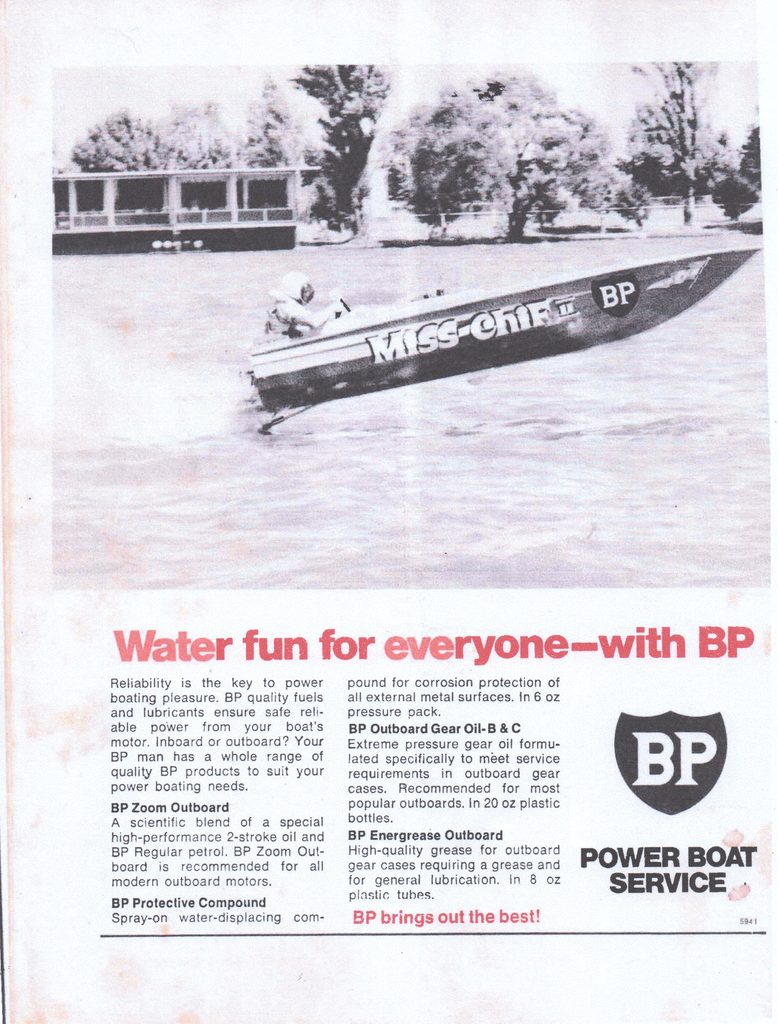
I knew no-one of course. But from the magazines I knew which boats were the fastest and who the best drivers were. Mandy, Black Knight, Scrubcat, B Pee, Hydrophobia, Miss Chif II… I took photos of some with my little Kodak instamatic camera. Then later there was Vulture, Cheeta, Puff-n-Stuff, Rascala, Piranha and even Pitstop did a demo run around the lake once.
To get closer to the action, I managed to sneak into the pits and stuck my nose in where it didn’t belong. Thankfully, no-one ever seemed to be bothered by the inquiring kid.
I longed to get to the big boat race meetings at Eppalock and Yarrawonga, but that would have to wait until I was 18 and at uni. I got my licence at 18 and also a HB Torana. With a car, I was able to follow the boat race circuit in earnest. I finally got to Eppalock and Yarrawonga, but also club events such as the Geelong Aquatic Club meetings at Modewarre, the MRSBC at Exford Weir…. Hazelwood, Paynesville… anywhere there was a puddle and boat races in Victoria, I was there.
Inevitably the pathway would lead from spectator to racer. I joined the Formula Ford register, an excellent entry class, and was fortunate enough to be invited to help out skiff driver Leon Doyle of the MRSBC. I was on the crew of Super Roo, a solid club boat raced by good guys.
The next step was to join a club. For me the VSBC was the only choice. I had grown up with the club racing at Albert Park, and I wanted to be a part of the dominant powerboat racing club in Victoria.
John “Ox” Nason was the Commodore and Ray Loon the Secretary when I joined up. Once a month, I think the third Thursday of the month, there was a members meeting at the Albert Park Lake clubhouse. There was a very well stocked bar in one corner of the club rooms. It was extremely popular amongst the members, both before and after the meeting, all in the name of club fund raising of course.
Ox Nason was an excellent Commodore. He was very forthright and with the support of the committee guided the club through a highly successful era of race meetings at Albert Park, Eppalock and Yarrawonga. The Albert Park venue drew big crowds ringing the lake with the Moomba Cup and Prince Henry’s charity events being the major meetings of the time. These meetings gave spectators a good taste of racing which in turn lured families to Eppalock where the biggest and fastest boats raced.
This period was the most successful in my boat racing journey. The crowds at Eppalock lining the banks were huge. Back then there were more freeloaders across the lake at Morrabbee Lodge Caravan Park, than there are today at an Eppalock meeting. The VSBC raced at Green Lake, Horsham with over 110 boats entered. Lake Boga played host to big events later on. The annual Yarrawonga carnival was massive, particularly on New Years Day when there was an influx of Sydney boats venturing south to take home the big pot of VSBC prizemoney on offer.
Colin Mogford became Commodore after Ox and I joined the Committee. Colin and I lived near each other and would head to club meetings in his Porsche 911. On the committee I lacked plenty in knowledge and experience, but I like to think that I made up for that with enthusiasm. The Committee meetings were often a lively affair, and like any club, there were competing factions constantly niggling at each other.
Somewhere around this time I bought a 12’ 6” Simpkin skiff, as a bare hull from Bill McLeod. As a uni student working a part-time job as a cleaner, I didn’t have the money to buy a Formula Ford engine.
Whenever I had a few spare dollars, I spent it rigging my skiff. Peter White and I built a trailer in Leon Doyles shed and Tom Barnes generously stepped up and leant me his spare Formula Ford engine so the register could have another boat on the water. My first race was at Eppalock, but I enjoyed racing at Albert Park Lake the most. Along the way I ran the skiff through the kilo at Lake Glenmaggie to set an Australian speed record of 50.48 mph. Being the first Formula Ford skiff to run through the kilo, I reasoned that I held a Victorian, Australian and world speed record!
At the VSBC I assisted Ray Loon with the club magazine, The Prop Rider, and eventually produced it myself capably directed by Ray who continued to print it.
Then in 1976 a new boating magazine appeared on the shelves at newsagents. PowerBoat magazine was a breath of fresh air, a magazine devoted to powerboats and powerboat racing. I contacted the editor, Peter Stuart, and offered to submit an article on the Formula Ford class given that I was racing my skiff at that time. Fortunately, he agreed. Then to my astonishment, after the article appeared in November 1976, the second edition, a cheque arrived in the mail.
Unwittingly my career with PowerBoat was off and running. Peter Stuart asked me to write another article, then another and another. I don’t profess to say that I really knew what I was writing about. I’ve always been big on research, so I got by in those early years and my confidence gradually grew.
After a year racing my skiff, Theo Janssen made an offer that I couldn’t refuse. He made one of his Formula Ford fibreglass hydroplanes available to me to drive. So I spent a year racing with Theo’s hull, Tom’s engine and my trailer. Much and all as I thoroughly enjoyed being a racer, I didn’t have the finances or knowledge to be anywhere near competitive.
With a fledgling career under way with PowerBoat, a new wife and a secondary school teaching job in the Mallee, I retired as a race boat driver! I recall that I won just the one race, a handicap trace at Lake Modewarre, and had a “world” speed record to my name!
The PowerBoat journey lasted until the late 1980’s. I lost interest after the then editor took the magazine in a different direction… fishing boats. The magazine had changed owners, and the new publisher could see more advertising revenue with fishing boats than race boats. In 1983 & 1984 I contributed the weekly boating column for the Melbourne Herald evening newspaper. I also began contributing to Club Marine magazine in 1985 and was submitting articles as recently as 2024 when they decided to no longer take articles on boat racing. Bugger!
Boat racing during the 1970’s, 1980’s and 1990’s was extremely strong. Lots of boats, heaps of clubs and race meetings galore. I had the privilege of photographing and writing about race meetings, race boats and drivers all year long. I loved the racing and through boat racing, made lots of lifelong friends all over our great land.
But, the boat racing flame flickered, then inevitably went out. The whingers and complainers got to me so I gave away covering boat racing for a time and instead wrote about ski boats and boating destinations. It paid the same, was easier and there was zero grief. The push back by some clubs against boating media then, unfortunately still exists in some quarters today. Crazy!
Although I was a commerce teacher by profession, my exposure to the marine industry through PowerBoat and the Herald created new opportunities. I left the classroom in 1984 and established a marketing & PR business that concentrated on recreational boating. Connexion PR was born. My first clients were Flightcraft, Mercury Marine and the Melbourne Boat Show. I enjoyed my business from day one to the end 35 years later when I retired in 2019.
One of the highlights of running my own marketing business was in 1988 when I established the Australian Formula 1 Powerboat Grand Prix business. I was disillusioned with the way powerboat racing was conducted under the club structure. My thinking was that a national six round series for F1 outboard tunnel boats could deliver a better format for the drivers. The touring car series of boat racing if you will.
These were standalone events with F1 boats being the centrepiece. We started with 10 drivers/boats in the first F1 GP at Griffith and within two to three years we had 32 boats entered at the Newcastle GP which was televised live by NBN TV. Clearly, we were doing something right. The business model was all about a combination of the right venue, the right program, treating the teams as entertainers and the application of solid marketing.
In Melbourne I ran two F1 GPs on Albert Park Lake, much to the chagrin of the VSBC who (wrongly) claimed that outboards were banned from using the lake. One of the highlights of my five years of running the series was the GP staged at Victoria Docks in 1993. I was chuffed to run the Adelaide F1 GP events in concert with the Formula 1 Grand Prix Organisation who ran the F1 car event through the streets of Adelaide. I learnt so much about sports marketing from Dr Mal Hemmerling and his organisation.
After running the F1 powerboat series for five years, I realised that this was a high risk business venture which delivered very marginal financial returns. I found it impossible to attract the level of sponsorship needed to sustain the series, so reluctantly I called it a day having run 30 individual F1 race meetings. On reflection, the F1 series was a standout success by every benchmark, except for adequate sponsorship.
Although I was done with the Australian series, I still harboured a desire to bring a round of the UIM world F1 series to Australia. Working with Melbourne Major Events, we had an agreement and funding in place to run the Australian leg of the UIM F1 powerboat race on Albert Park Lake on the same weekend as the F1 car race slated for 1996. Sadly, Bernie Ecclestone, who owned and ran the world F1 car series, refused to have boats as part of his Melbourne weekend, and that killed off the venture and my time as a promoter.
So from 1996 until 2024, my involvement in boat racing had been a few articles a year published in Club Marine and posting photos on social media. The proliferation of digital photography has made photographing the sport so much easier. Back in the day I would shoot at the most six rolls of black and white film and three rolls of colour at a big Griffith Cup or Yarrawonga meeting. That’s a total of 324 frames of which 10 to 15 would be submitted to the editor to support a story.
Nowadays at Yarrawonga or the Dorwin Gold Cup or Melton Gold Cup I could easily shoot 8,000 to 10,000 digital frames per day, but I limit my social media posts to 20 to 30 images. I used to get out on the water on a crash boat for my photography as I only had a 200mm lens. But now with a 400mm lens on my digital Canon body, I shoot exclusively from the bank at all venues.
When the classic wooden boat movement gained interest, I went in search of my Formula Ford skiff. I tracked it to Hobart but the trail was cold and I assumed that it went to the tip. I loved the old skiffs so much that I bought a Lewis V8 skiff called Rebound in 2001 and had a heap of enjoyment with it. Nothing is for ever, and I sold it in 2015. These days I have a 1964 Lewis twin cockpit runabout called Turbo Fire, a Bridge to Bridge winning boat raced by Phil Reeson. I also have the slowest boat in captivity, a 1941 Chris Craft mahogany runabout, which I restored back to her original beauty. As I’ve grown older, my boats have become slower!
Over my journey, from the outset to the present day, powerboat racing has been very kind to me. I’ve met some wonderful people at home, interstate and overseas. I’ve been able to visit places that I would otherwise never have been to, both in Australia and overseas. I’ve seen some absolutely breathtaking races. And sadly we’ve suffered through the tragic loss of brave and talented drivers, thankfully so many fewer over recent years.
To wrap it up on a gloomy note, the sport isn’t what it once was. Whereas other forms of motor sport have grown to attract big sponsors, crowds and fields, boat racing by comparison has barely survived. The reality is that there are very, very few classes which could be regarded as strong. And whereas there was once a plethora of APBA affiliated clubs, today there are just a handful battling along.
I find it hard to see how our sport can be turned around, as in my eyes it’s hanging by a thread. Older blokes like me have had their day in the sun; we’ve done our bit, we had our say and now we sit on the bank as has-beens looking to the contemporary breed to have their turn and rescue the sport that we love.
Story written by Bob Carter
Original Photography by Bob Carter
Published by GillGirl Media – GILFLITE – copyright 2026
When I was old enough to travel alone on public transport, I caught the train to Middle Park station, ran across the parkland and was a fanatical spectator at Albert Park Lake, where the Victorian Speed Boat Club the staged the boat races. This was my version of heaven. The smell of oil impregnated timber hulls, the noise of racing engines, the speed and spray remain with me to this day.
I knew no-one of course. But from the magazines I knew which boats were the fastest and who the best drivers were. Mandy, Black Knight, Scrubcat, B Pee, Hydrophobia, Miss Chif II… I took photos of some with my little Kodak instamatic camera. Then later there was Vulture, Cheeta, Puff-n-Stuff, Rascala, Piranha and even Pitstop did a demo run around the lake once.
To get closer to the action, I managed to sneak into the pits and stuck my nose in where it didn’t belong. Thankfully, no-one ever seemed to be bothered by the inquiring kid.
The next step was to join a club. For me the VSBC was the only choice. I had grown up with the club racing at Albert Park, and I wanted to be a part of the dominant powerboat racing club in Victoria.
From now (above VSBC Legends Tent – Yarrawonga Griffith Cup event 2026) – a few Legends!!!
To below: Boat Racing on Albert Park Lake the original home of the Victorian Speed Boat Club
Below: Articles written by Bob and about Bob
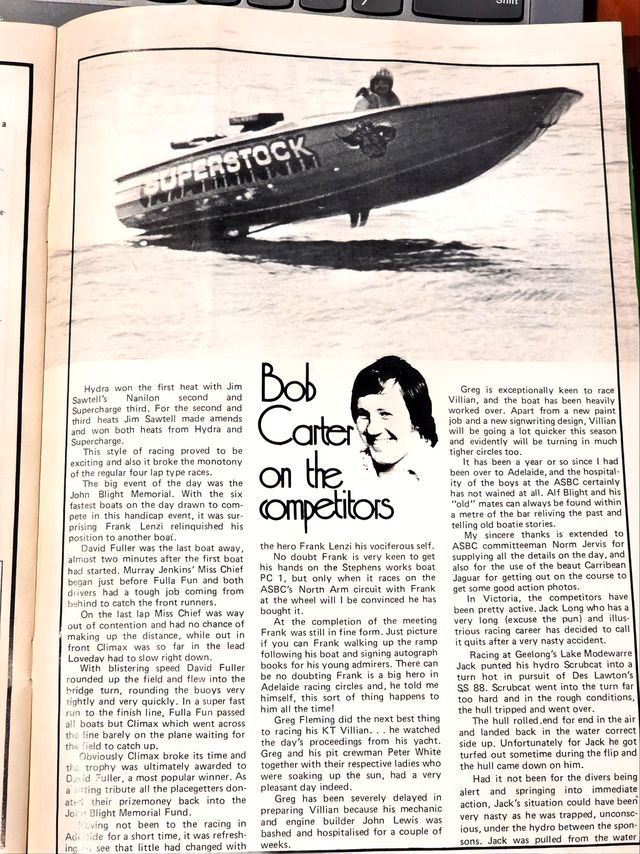
Powerboat Magazine boat testing by Bob Carter
Club Marine article on GILFLITE tittled ‘Guts & Glory’ by Bob Carter
From the archives of Australian Power Boat Racing we present the EC Griffith Cup Medallion – a lasting tribute to one of the nations’s oldest perpetual and most prestigious motorsport trophies. Now out of production.
Featuring the historic and now highly collectible Bronze EC Griffith Cup Unlimited Racing Commemoration Medallion. These medallions honor winners from 1910 to 1977, with two editions issued—some in bronze and others in silver, historically, even traveling to the USA when the Thunder-boat Solo competed abroad. Only a limited number were ever created.
Above: Both sides of the same coin
The first and second edition of the E.C. Griffith Cup medallion features a face side sculpted by Stanley Hammond. It depicts the Griffith Cup itself, symbolizing the trophy’s long history since 1910. The reverse side carries raised lettering that lists the EC Griffith Cup race race winners, along with the boat names and their drivers. The initial idea was that each year a new medallion would be issued, updated and showing the all of the Griffith Cup winner’s names on the reverse side (as pictured above). These medallions were released in both silver and bronze, and showcased in stylish presentation boxes. (Only two editions were ever released – in 1976 and 1977). Making these medallions a rare collectable series of E.C. Griffith Cup medallions.
The historic (and now collectable) Bronze E. C. Griffith Cup Unlimited Racing Commemoration Medallion was produced by the late R. (Ron) Simpson PTY LTD Melbourne (Ringwood, Victoria Australia), and features winners from 1910 to 1977 on one side of the medallion coin and three VSBC boats on the other side; Aggressor – Vulture – and Redline.
The die struck medallion sculptured by Stanley Hammond features:
The E.C. Griffith Cup with three Boats: Aggressor – Vulture – and Redline
E.C. Griffith Cup Winners: 1920 – 1977
Below: Current E.C. Griffith Cup Winners 1910 – 2025 (Notably GP1 driven by Grant Harrison won the 2026 EC Griffith Cup making it his 10th Griffith Cup Win)
This tribute is from a close friend and son-in-law, who knew Ian Harvey as a man unafraid to take on a challenge. A true gentleman and a boat racer through and through, he lived life at full throttle, never backing down, always doing things his own way.
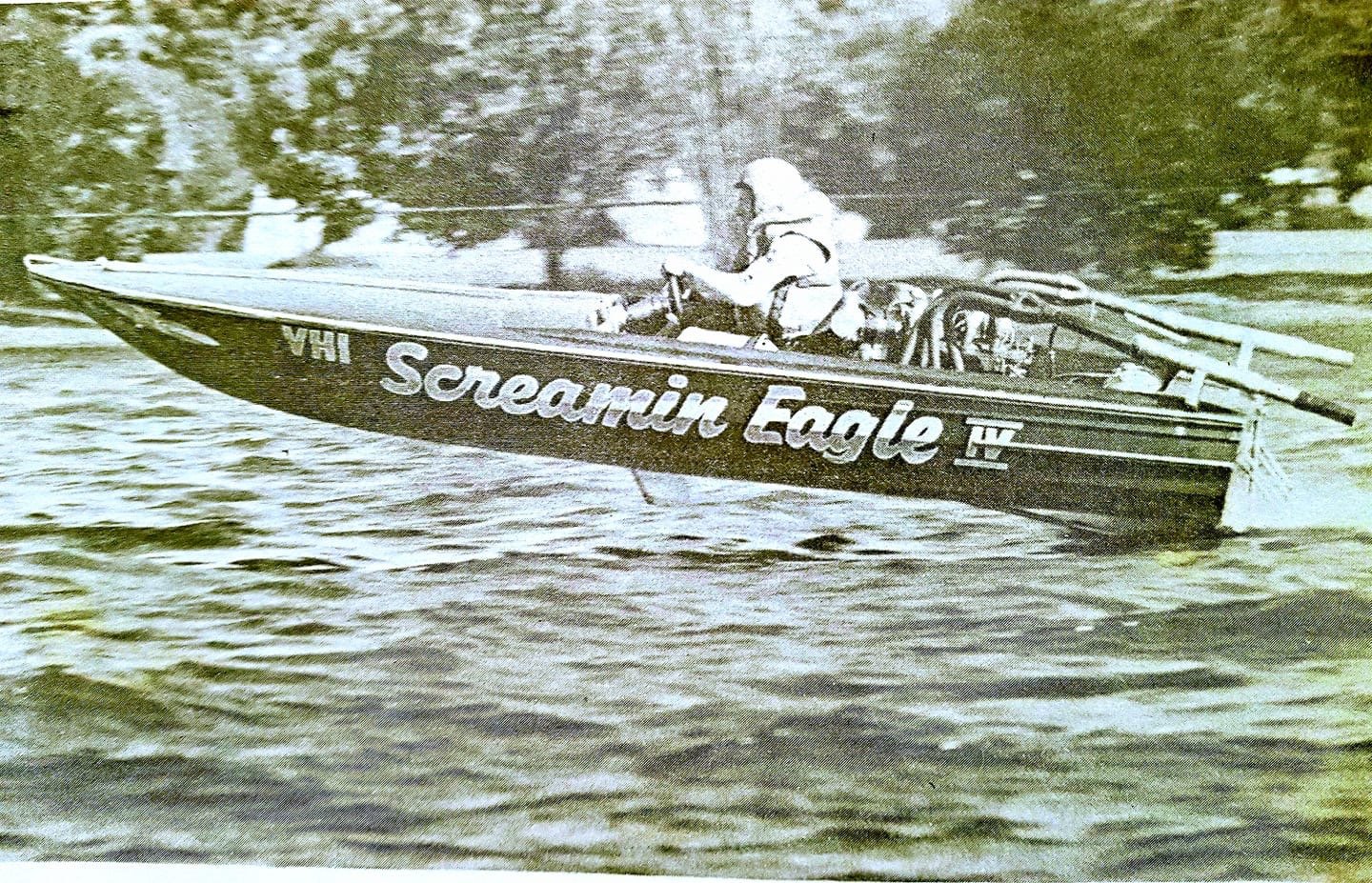
‘Screamn Eagle’ Tribute to the Legendary Ian Harvey, written by Patrick Austin – April 26
Ian’s earliest passion was motorbikes and cars (the faster the better) – he was an excellent mechanic running his own business when he encountered a race boat owner who needed to buy a car that Ian had for sale at Harvey Motors. The gentleman couldn’t afford the asking price, but a deal was done based on Ian keeping the race boat to make up the shortfall on the purchase price. This chance meeting and deal set Ian on a course to chase the ‘need for speed’ on water.
Harv’s as known to his friends, was not afraid to give most things a crack and always in his own unique quirky style.
From his start with the VSBC in the 60’s until he hung up his helmet in the early 80’s, Harv’s owned and raced 4 variants of his beloved Screamin Eagle.
From the first skiff Screamin Eagle I with a Holden 6 cylinder grey motor, to Eagle II incorporating Waggott heads, to the game changing inclusion of a genuine Brabham race engine in Eagle III, and finally to the runabout Eagle IV powered by a 4.2 litre Holden V8 built with Alan Healy; Ian was intent on remaining progressive in the sport.
Screamin Eagle III still holds the speed record across the kilo in the 155ci class at a whopping 76 Mph. By today’s standards not necessarily super quick, but these boats were unpredictable and in many cases dangerous given their flighty nature and basic design. Enhanced design technology and safety simply was something for the future.
Ian loved the VSBC and being part of the club. The social activities which always included a few beers (no breathalysers in those days) seemed just as important as the racing that was conducted on a rolling and regular basis. Albert Park was integral in enabling the race drivers the opportunity to race on a frequent basis and generally close to home. Ian (generally with family in tow) travelled Victoria wherever races were held. These included Lake Eppalock and Yarrawonga for annual meetings at Easter and New Years. Yarrawonga was like a second home, and Ian and his wife Dawn went as far as purchasing an apartment on the lake which reflected their feelings towards the town.
Ian was remembered by his fellow race mates as ‘a bit out there’, and didn’t necessarily waste time on safety or general presentation.
He was humorously known for regularly not hitching his boat to the trailer. Once driving through flood waters on the way home from a meeting, his boat floated off without Ian realising. Once when towing he braked hard in an emergency and his boat ended up perched on the top of his car! He had aviaries at home for his birds, and many a time when his boat was scrutineered it had grass growing in the hull from bird seed that had made its way in the boat and germinated. On another occasion he needed to borrow a helmet to race because his pet cocky had chewed all the foam out from the inside of his helmet.
Ian didn’t care and would just laugh it off.
Ian also purchased a 4.2 Hydro called Hunter which his great mate Ron Hull raced while Ian raced the Eagle. Many of the competitors became life long best mates who would recall and exchange stories of close calls, achievements and more than occasional politically incorrect behaviour. The stories interestingly becoming more outrageous after each telling.
Even after he retired from racing Ian stayed in touch with VSBC race events, either attending in person or watching the streamed race coverage.
Above: Ian Harvey celebrating with Alan Healey at the VSBC 60th Anniversary
In his early 80”s, Ian once asked Mark Healy if he could have a drive of his 6 litre hydro just for old times sake…. whilst the opportunity didn’t present, it demonstrated that the pursuit of exhilaration never fades.
Ian sadly has passed away, but is remembered as a unique character, who was a respected and fearless competitor who loved to race, loved his racing mates and the VSBC.
Another power boat racing legend, gone but never forgotten.
Screenshot
Above: Ian celebrating life, with his boat, the V.S.B.C. and eldest daughter Leanne
Below…….
***VSBC Members offical Legends Tent***
This year, at the 2026 Yarrawonga Powerboat Spectacular, the Victorian Speedboat Club proudly hosted the first ‘VSBC Members Official Legends Tent’
Surrounded by the legends of Australian powerboat racing, we welcomed iconic racers, veteran members and fans, enjoying front-row views, with shade, and a space to meet and mingle where old friendships were reunited and new ones made, right here at the greatest sport on Earth
Pictured below: Ian’s family attended the 2026 EC Griffith Cup meet, hosted by Ians club ‘The Victorian Speed Boat Club’ at Yarrawonga.
Pictured above: Dawn Harvey with daughter Nicole and Partner (Scream’n Eagle), Jean Jones with Paul & Terry (Stampede & Stanpede), Paula Gill (GILFLITE), and friends & legends of the V.S.B.C.
Below: This tribute is from a close friend and son-in-law, who knew Ian Harvey as a man unafraid to take on a challenge. A true gentleman and a boat racer through and through, he lived life at full throttle, never backing down, always doing things his own way.-
‘Screamn Eagle’ Tribute to the Legendary Ian Harvey, written by Patrick Austin – April 26
Below: Ian sitting in Scream’n Eagle with one of his many well won Trophies.
Above: Ian’s wife Dawn, daughter Nicole and Partner wearing Scream’n Eagle tribute t.shirts at this years E.C. Griffith Cup, in the V.S.B.C. official Legends Tent, Yarrawonga Foreshore.
Tribute article with b/w photos supplied & written by Patrick Austin for the feature article in the 2026 E.C. Griffith Cup Program.
Published on the GILFLITE website by Paula Gill (GillGirl Media), with additional photos by Paula for the historic records of Australian Power Boat Racing (July 26).
Celebrating the 50th Anniversary Win of Miss Bud driven by Bob Saniga
1976 E. C. Griffith Cup
This year at the 2026 Yarrawonga Power Boat Spectacular, The Victorian Speedboat Club proudly presented the 2026 E.C. Griffith Cup Program, honoring the 50th anniversary of Miss Bud’s historic 1976 EC Griffith Cup victory, driven by the legendary Bob Saniga. Dive into this year’s commemorative souvenir program and relive a milestone in Australian powerboat racing.
Story below, as described by Bob Saniga – Driving Miss Bud to victory
Miss BUD became a reality because of Norm Putt. He envisaged a Team with 2 Thunder boats in the ‘stable’ following the disastrous attempt at trying to win the American Power Boat Gold Cup in 1974. What ensued was that Miss BUD & Solo/VS41 became opponents.
I was asked by Norm to become Miss BUD’s driver after she arrived in Melbourne late November 1975. Our first race was to be the Griffith Cup, on Australia Day 1976.
However, I changed this decision as I needed some experience in driving Miss BUD.
A test run at Lake Glenmaggie was set in motion for early December. The Committee talked Norm into entering a race there. Solo was also entered. We won.
Norm entered us into both the Boxing Day & New Year’s Day meetings at Yarrawonga. We again won our races on both days.
It’s amazing how some small matters interfere with plans. I had inadvertently upset Norm and we parted company. However, the ripples settled & we ironed out our differences.
Miss BUD was a far superior Hydro than Solo. We won our Heat to make the final which included Solo, a big contender with Miss BUD. However, taking it easy, Solo did a slightly faster time in their Heat. Stan Jones was heard to say, “Tramp it at the start, & keep turning left”!
We drew pole position 2. Solo drew the outside lane. At flag fall, we edged ahead but could see Solo charging up from behind and trying to ‘close the gate’ at the first turn. We cornered better & pulled ahead, increasing our lead on every lap and eventually winning by more than half a lap. This, I consider was possible due to the experience I obtained in the 3 lead up races.
Solo driven by Stan Jones came in second & third place was won by Superstock driven by Ben Praibisz.
If anyone is interested in watching parts of this event which was photographed by Ernie Nunn, type in 1976 E. C. Griffith Cup on UTube!
Sincerely,
Bob Saniga
Written by Mr Bob Saniga -1976 EC Griffith Cup Winner driving Miss Bud. Written for the VSBC feature article in the 2026 Yarrawonga Power Boat Spectacular Souvenir Program.
Later, published by Paula Gill (GillGirl Media) GILFLITE Boats website – recording the rich history of Australian Power Boat Racing during the Thunderboat era.
Photos courtesy of Gavin Anderson, Scott Williamson, Bob Carter – Thank you
Below: A Bronze E. C. Griffith Cup Unlimited Racing Commemoration Medallion from, R. (Ron) Simpson PTY LTD Melbourne (Ringwood). Features winners from 1910 to 1977. These were also issued in Silver and some went over to USA when the Boat ‘Solo’ competed overseas.
Below: Article as featured in the 2026 Yarrawonga Power Boat Spectacular Souvenir Program
Below: 2026 E.C. Griffith Cup Souvenir Program – Presented by the Victorian Speed Boat Club
Dive into this year’s commemorative souvenir program and relive a milestone in Australian powerboat racing where Grant Harrison won his 10th Griffith Cup, beating the Kiwis and following in the footsteps of his father Kieth Harrison.
The links below provide further fascinating reading about the rich history of Australian Power Boat Racing
ARTICLE written by Liam Holland Feb 25 – Photos supplied by Liam Published by: Paula Gill (GillGirl Media) – GILFLITE Boats
“Like Father, Like Son”
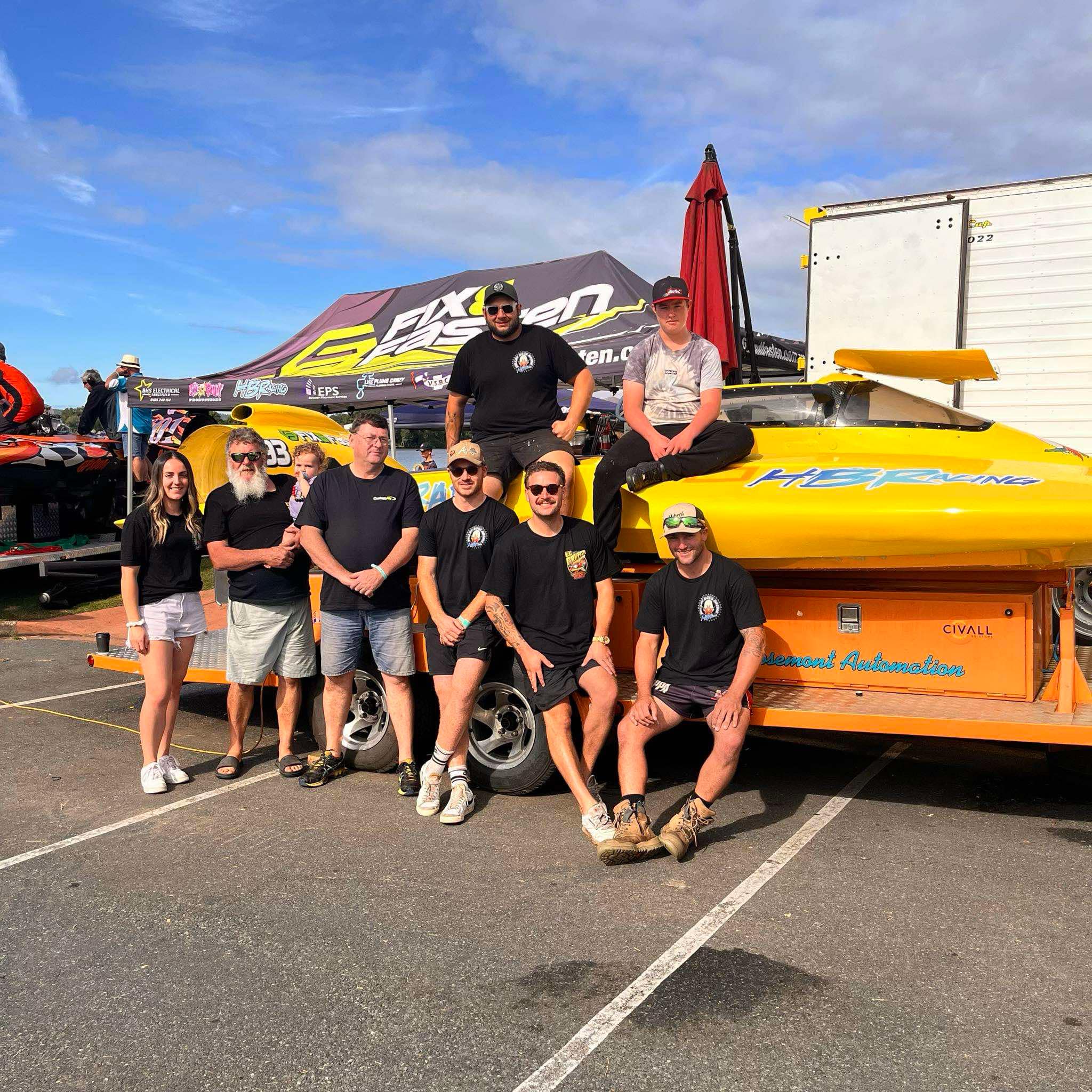
Grand Father, Father, Sons – The HBR Boys – 3 Generations of Boat Racers
Three Generations of Holley’s in the boat racing fraternity.
Ken Holland the start of the early pioneering era of Australian Power Boat Racing….. Being brought in to the Victorian Speed Boat Club through a good friend, & club legend Bob Found.
Kenny purchased a hydroplane with Bob found called Loco, while Bob Raced, Ken nominated & become the Commodore of the club.
Highly considered one of the best commodores we’ve ever seen quoted by Racing Legend “Ben Fox”
Kenny later becoming a Life Member of the club.
Son Greg ‘Holley’ Holland quickly followed, but enjoyed the racing side more following mentors like Ben Fox & Graham Rodgers.
Holley Teamed up with Doug Smith ( VSBC LIFE MEMBER ) & the rest is history, from 4.2ozboat all the way up to GP having the opportunity to race for Ron Burton, Big Chief & successfully making the trip to NEW ZEALAND & bringing home our Holly Grail – The E.C. GRIFFITH Cup in 2002
The Sons – Third generation racers!!! As soon as Brad & Liam were old enough to race, Holley hung up the boots & quickly adapted to crew chief allowing them to start their racing careers & make a name for themselves.
Above: The HBR Shed
Brad Holland, started in the 1.6ozlites where he still campaigns his own boat Twister & both sons are V.S.B.C. Members and their boats are, (of course) V.S.B.C. BOATS !!
Liam Holland, commenced in the 1.6 category & after a few seasons stepped up to what we know as DESPERADO, the 6ltr Hydroplane.
Successfully following in dad’s footsteps, 20 Years on, claiming his own EC Griffith cup win in 2022 @ YARRAWONGA.
In 2022 the Holly Boys once again claimed the Holly Grail with Liam driving Desperado to Victory at Yarrawonga on Lake Mulwala – Hosted by the Victorian Speed Boat Club
History still being written stay tuned !
Thank you to everyone who supports Australian Power Boat Racing, past, present & future with information, time, stories and images.
Photos courtesy Liam – Above: Desperados E.C. Griffith Cup win, Lake Mulwala, Yarrawonga 2021

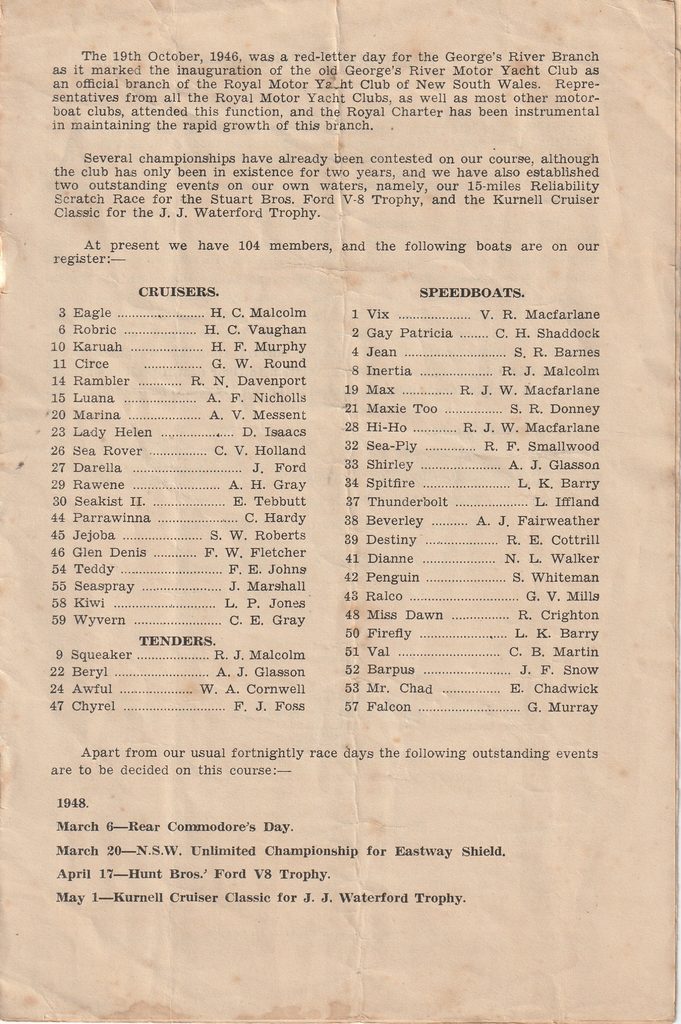
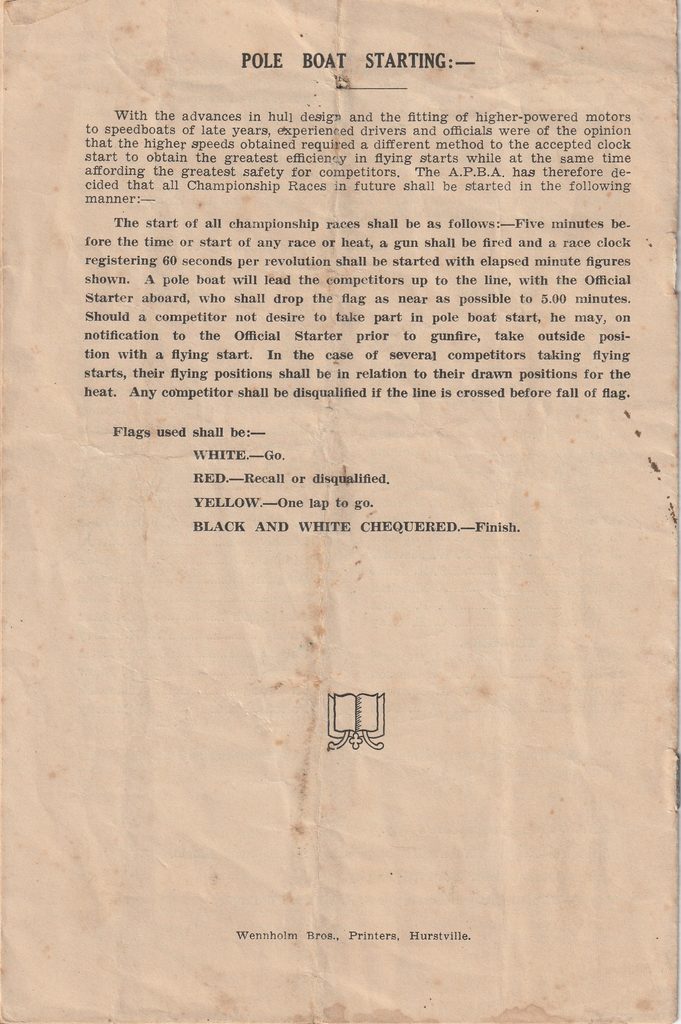
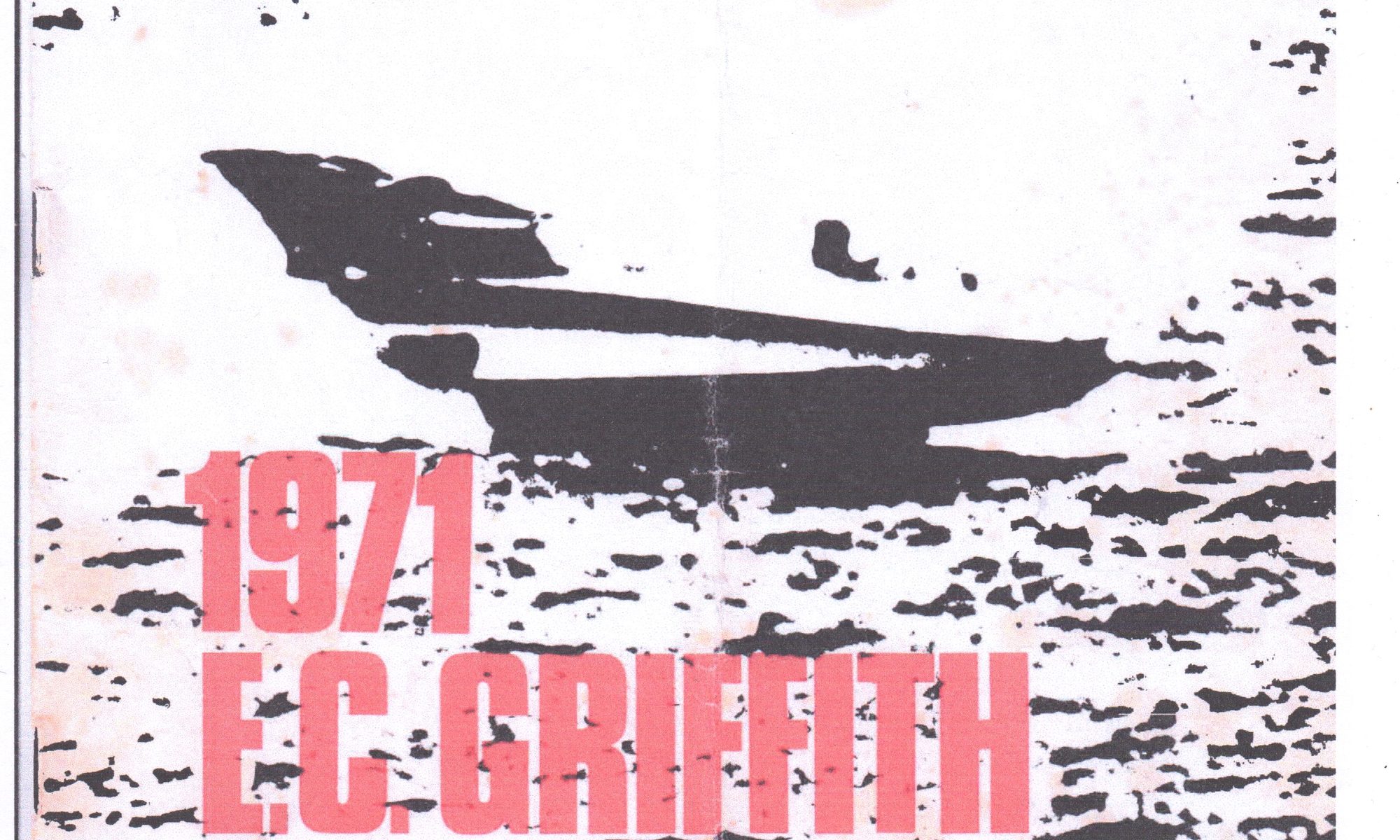
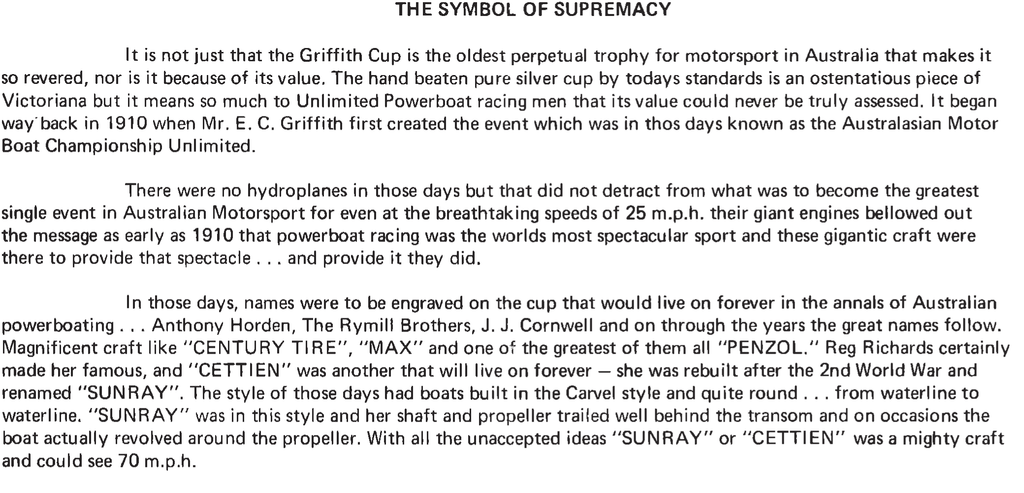
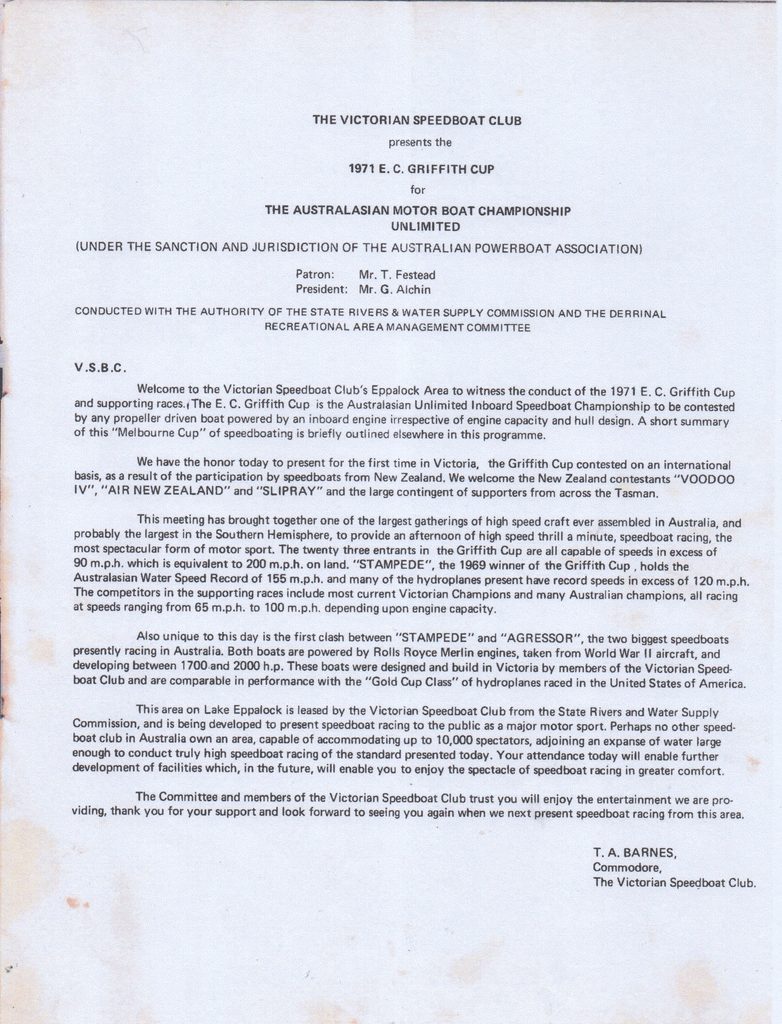
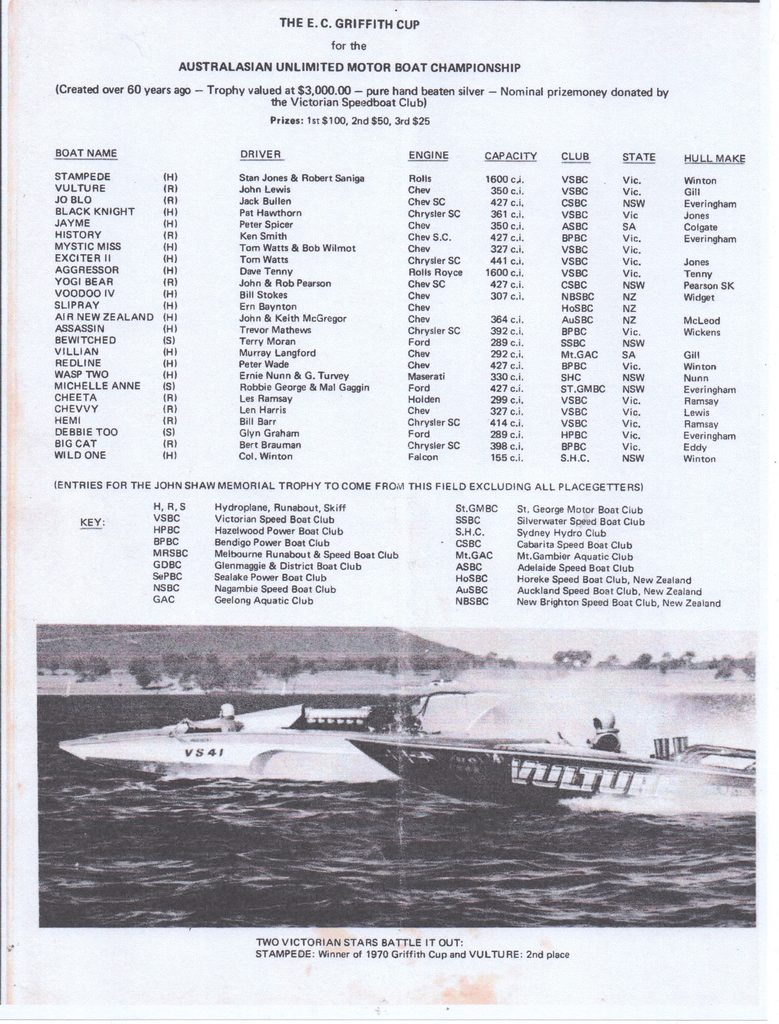
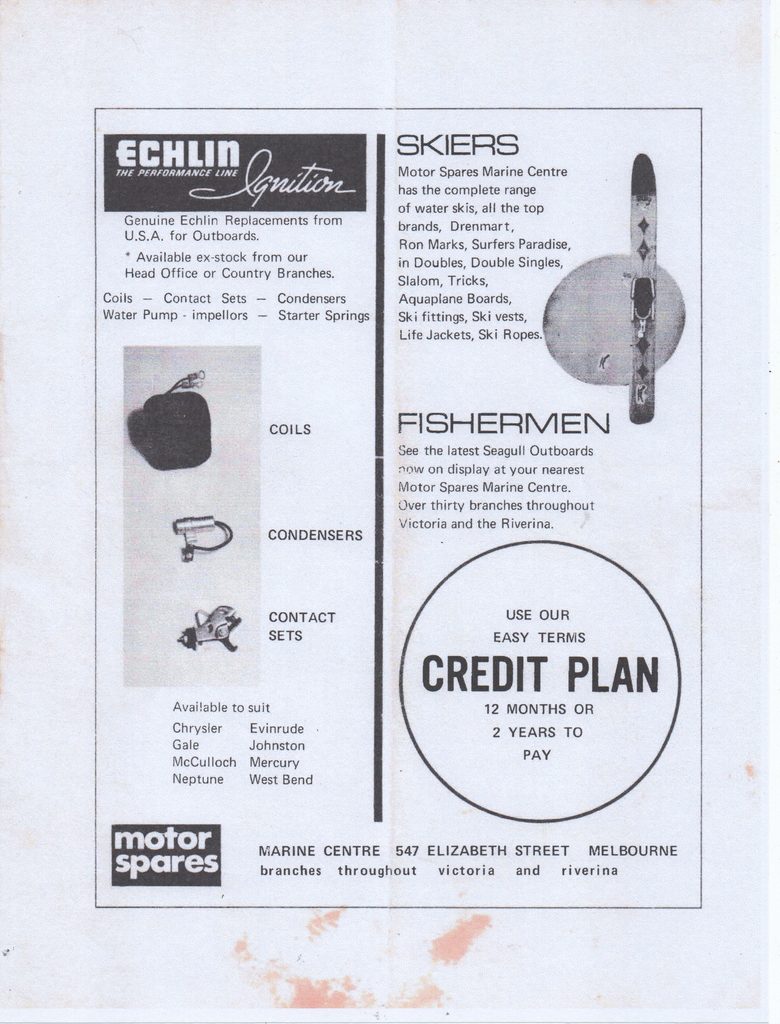
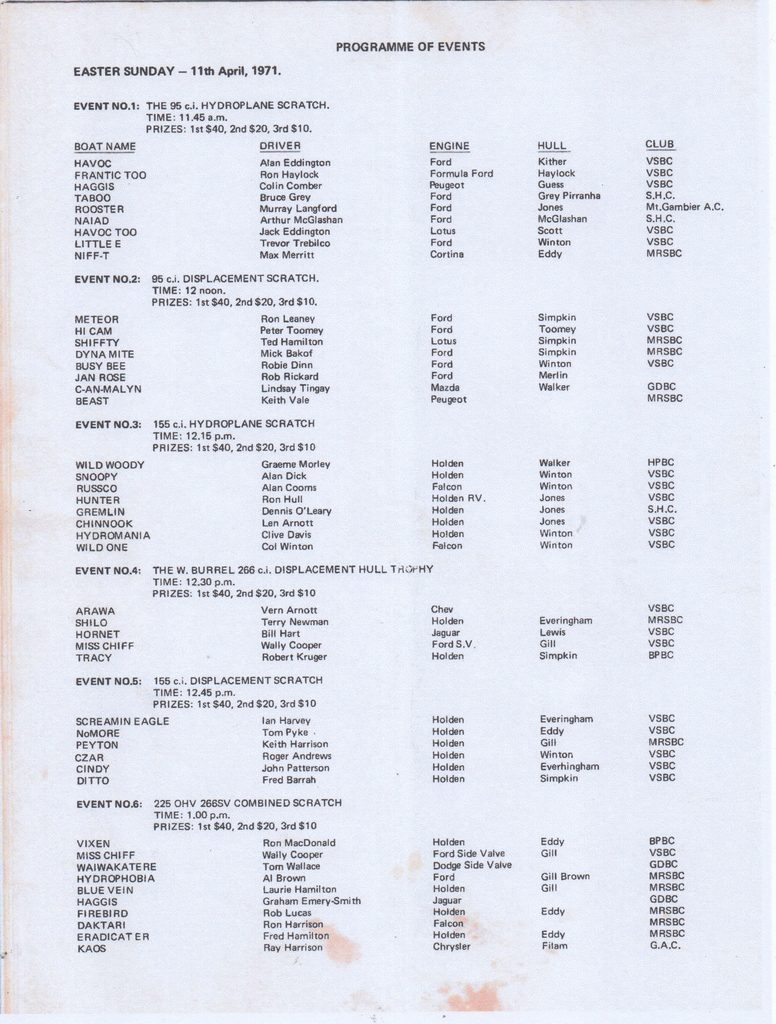
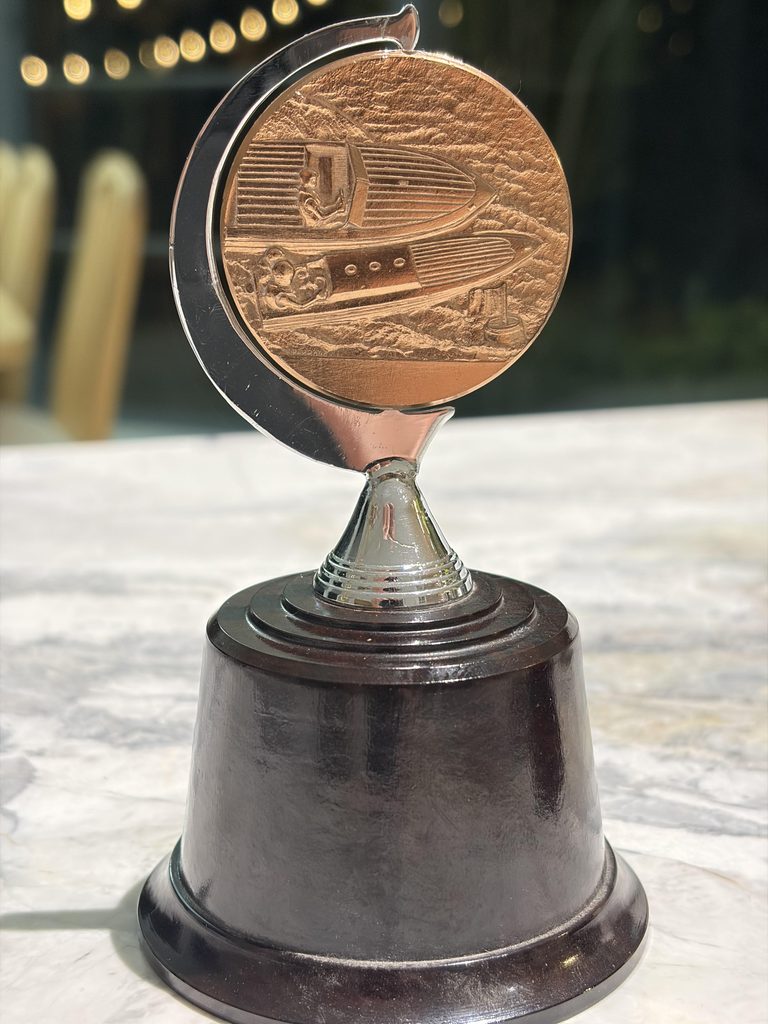
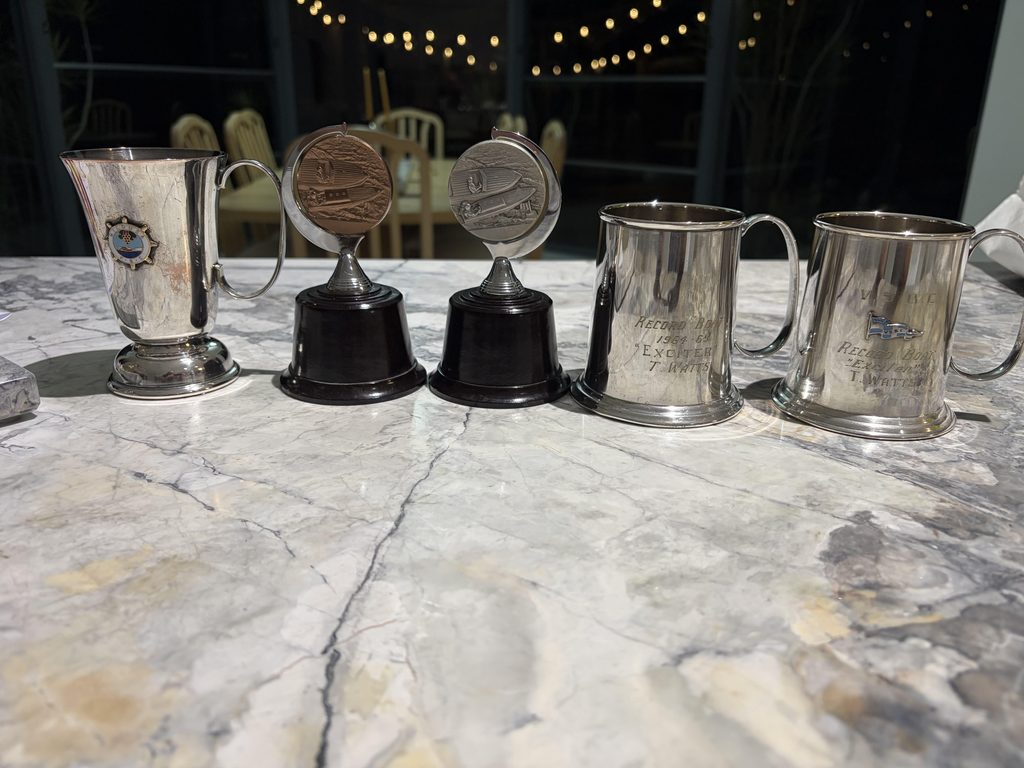
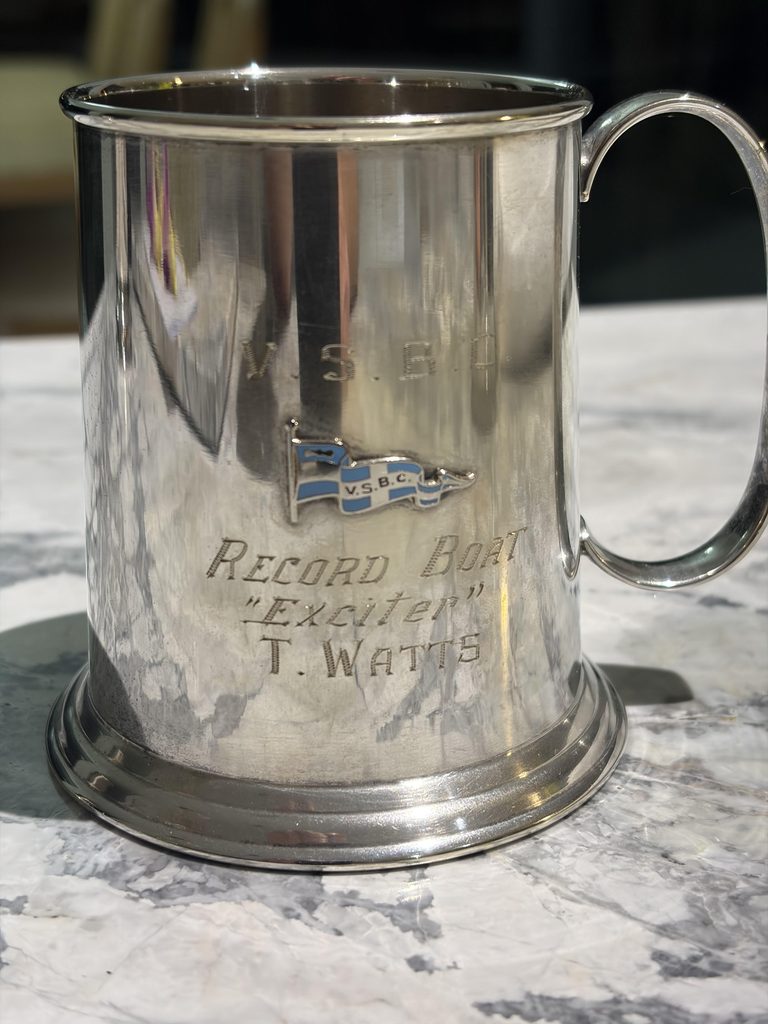
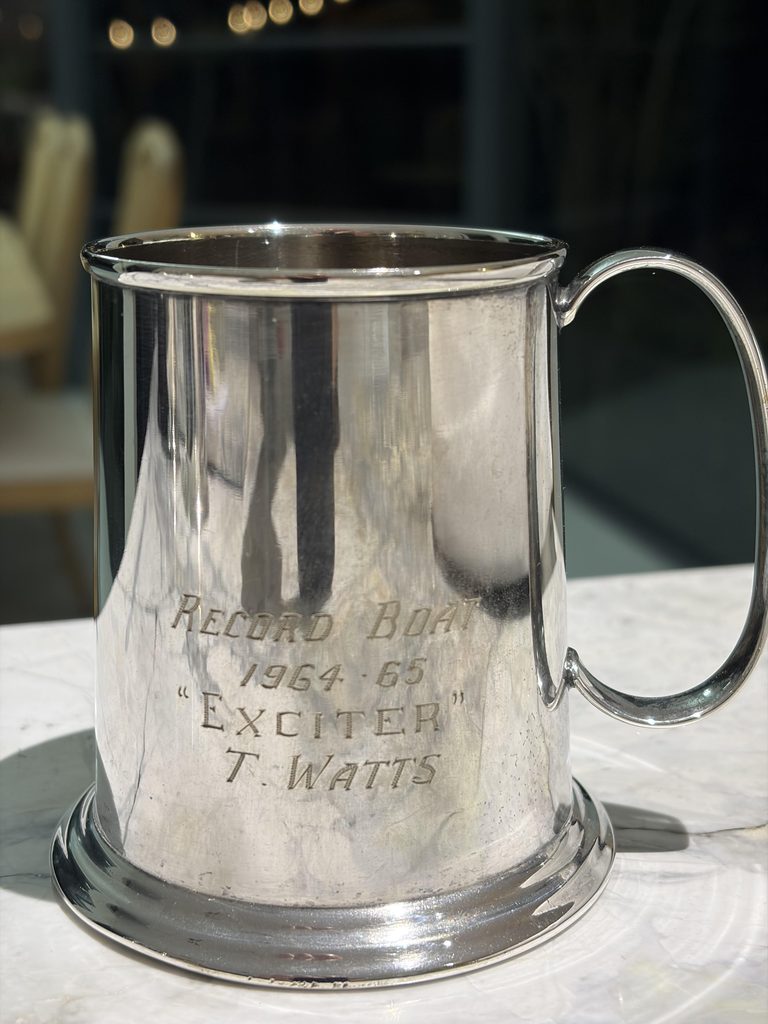
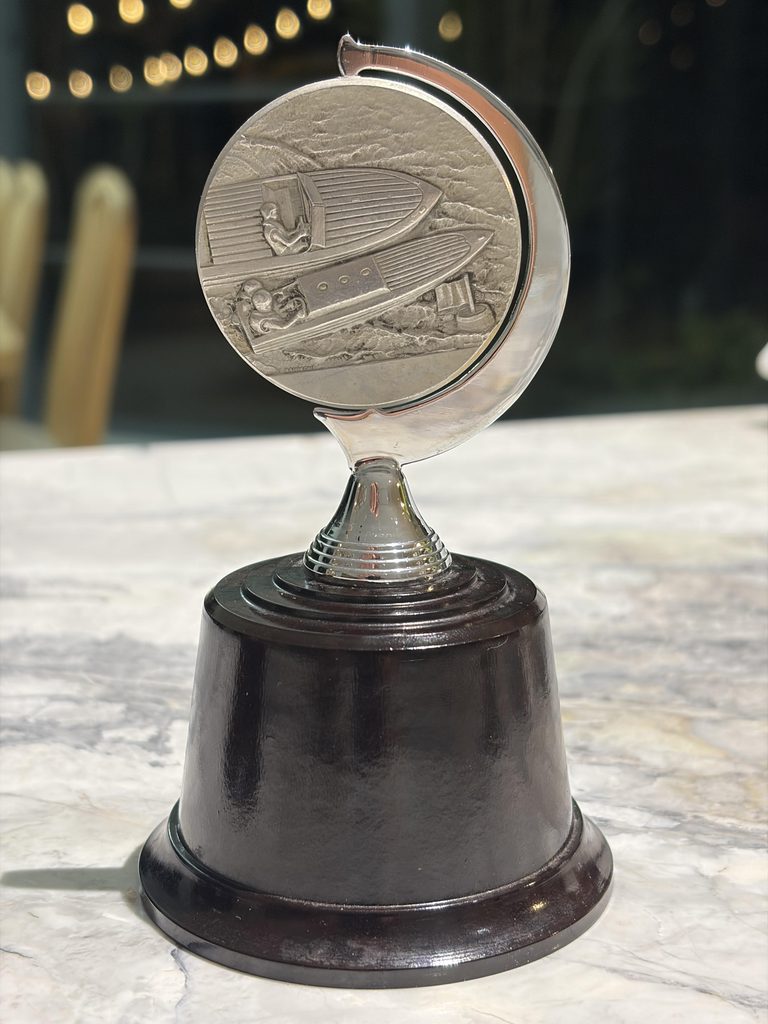
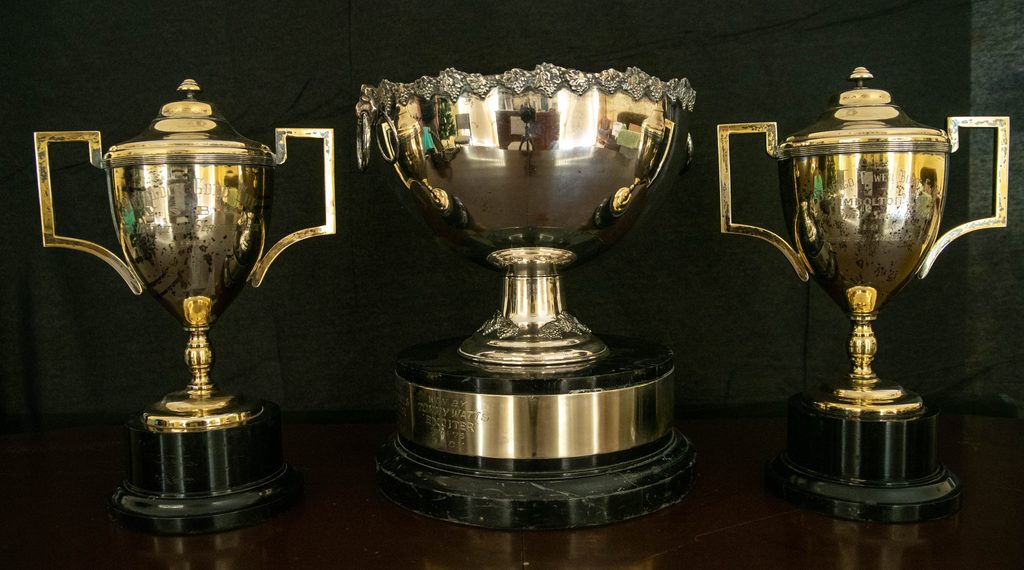
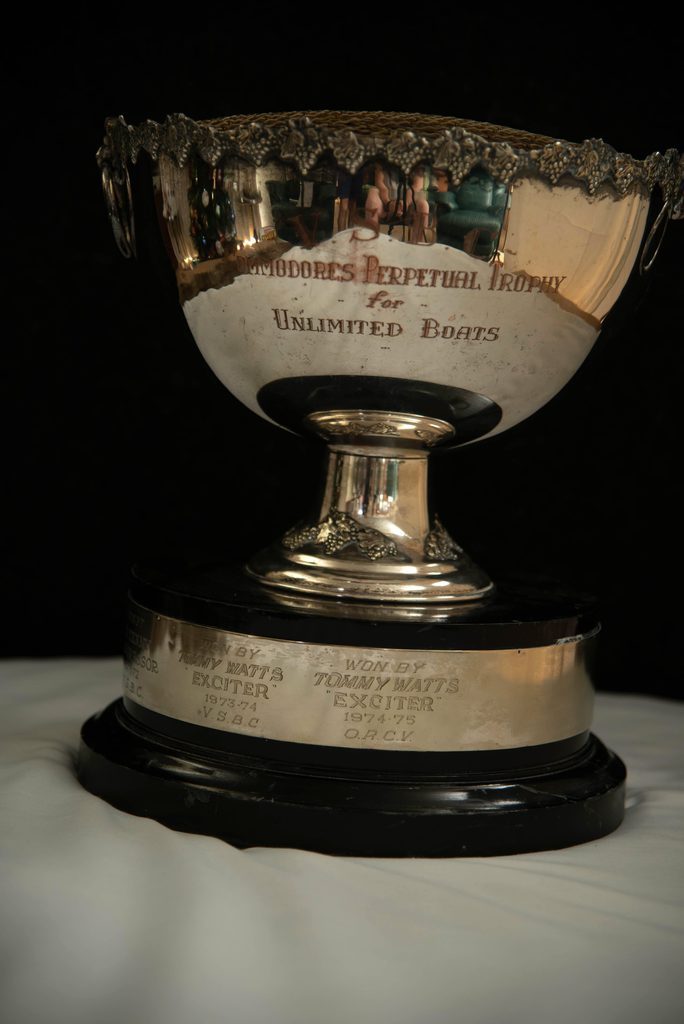
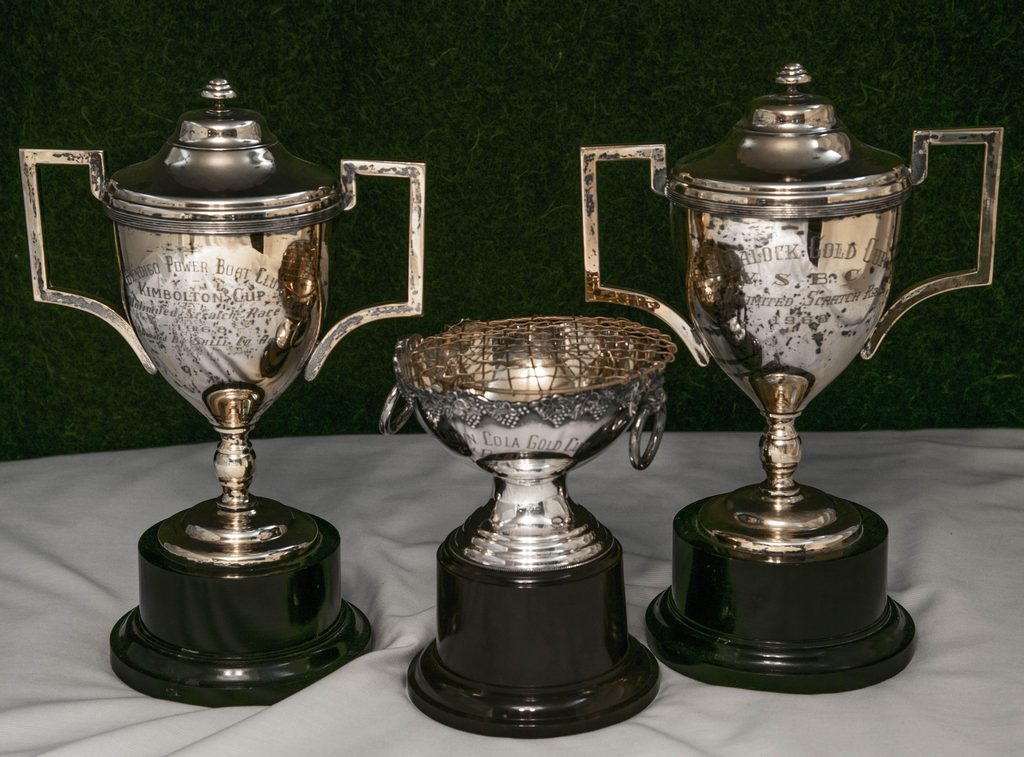
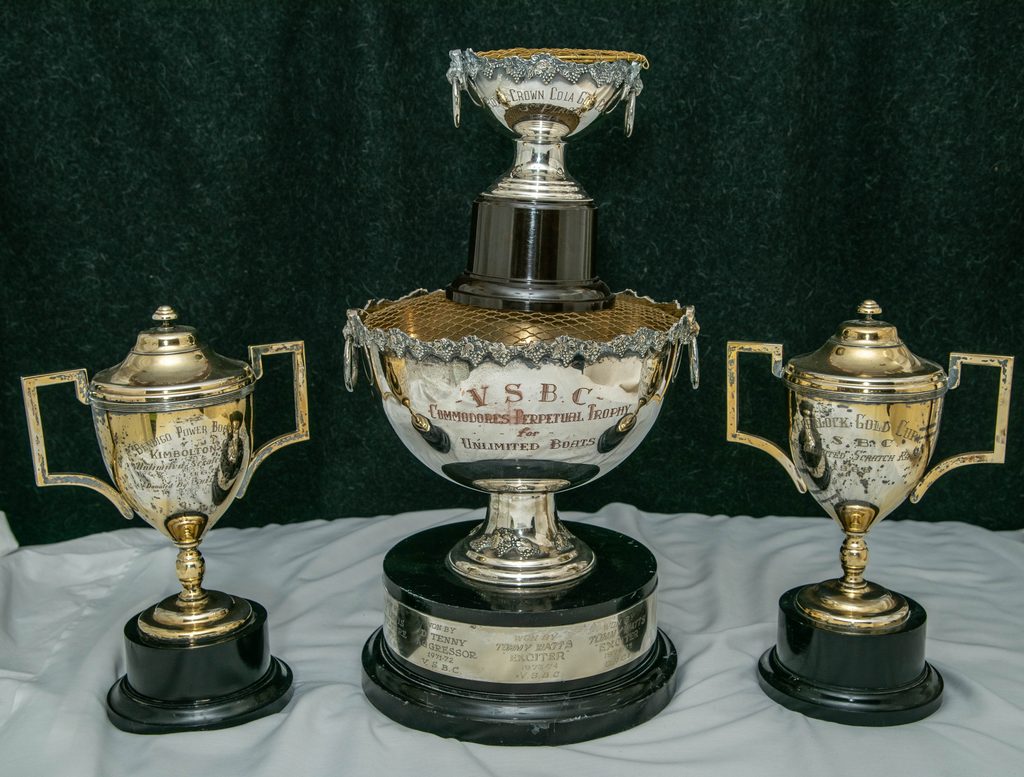




 Featuring the historic and now highly collectible Bronze EC Griffith Cup Unlimited Racing Commemoration Medallion. These medallions honor winners from 1910 to 1977, with two editions issued—some in bronze and others in silver, historically, even traveling to the USA when the Thunder-boat Solo competed abroad. Only a limited number were ever created.