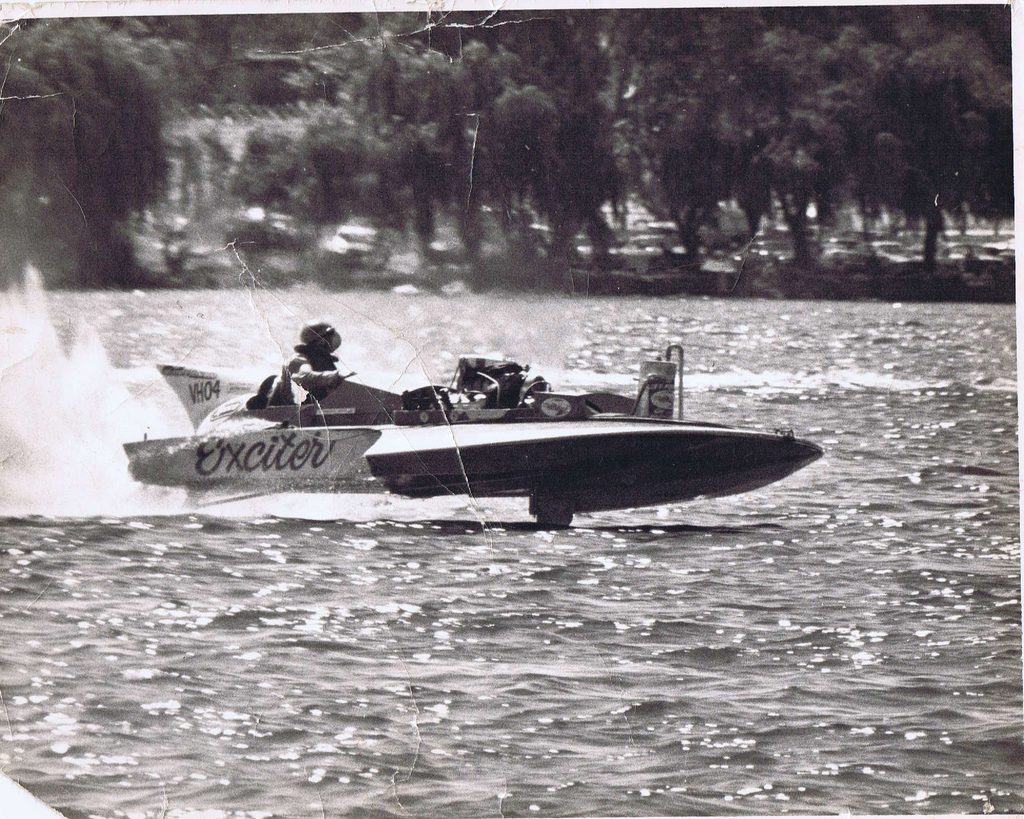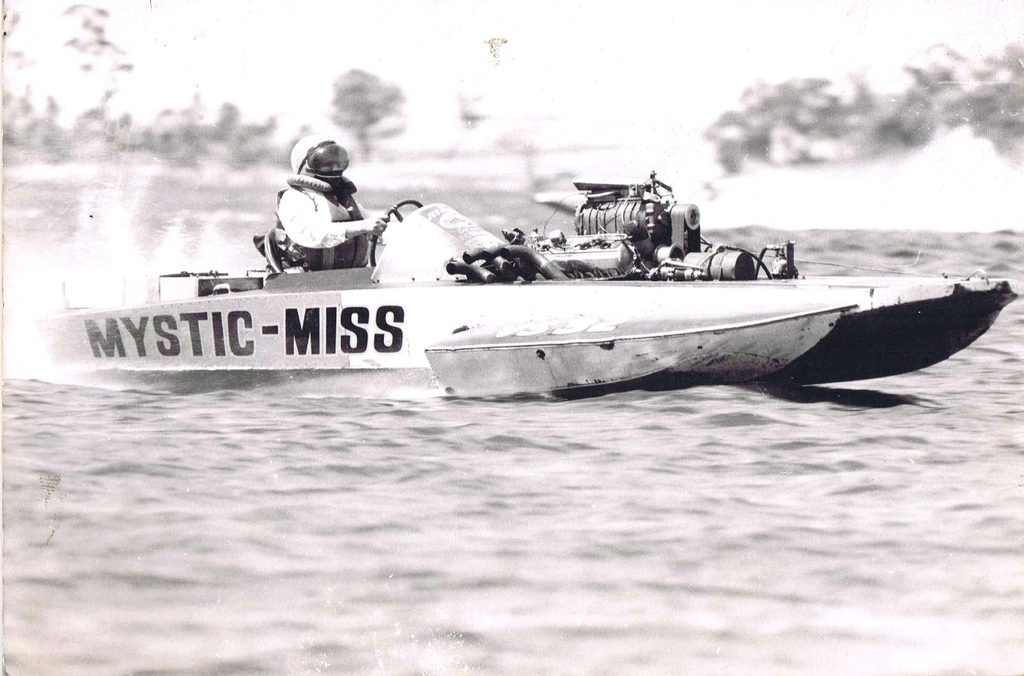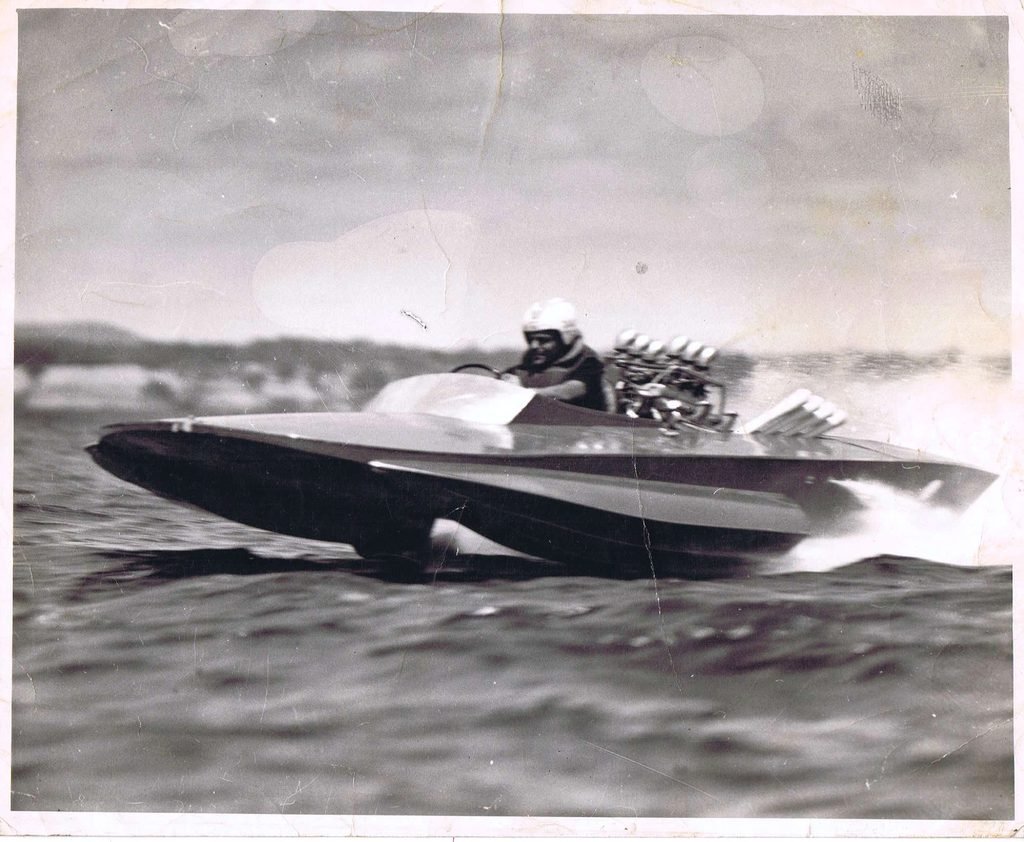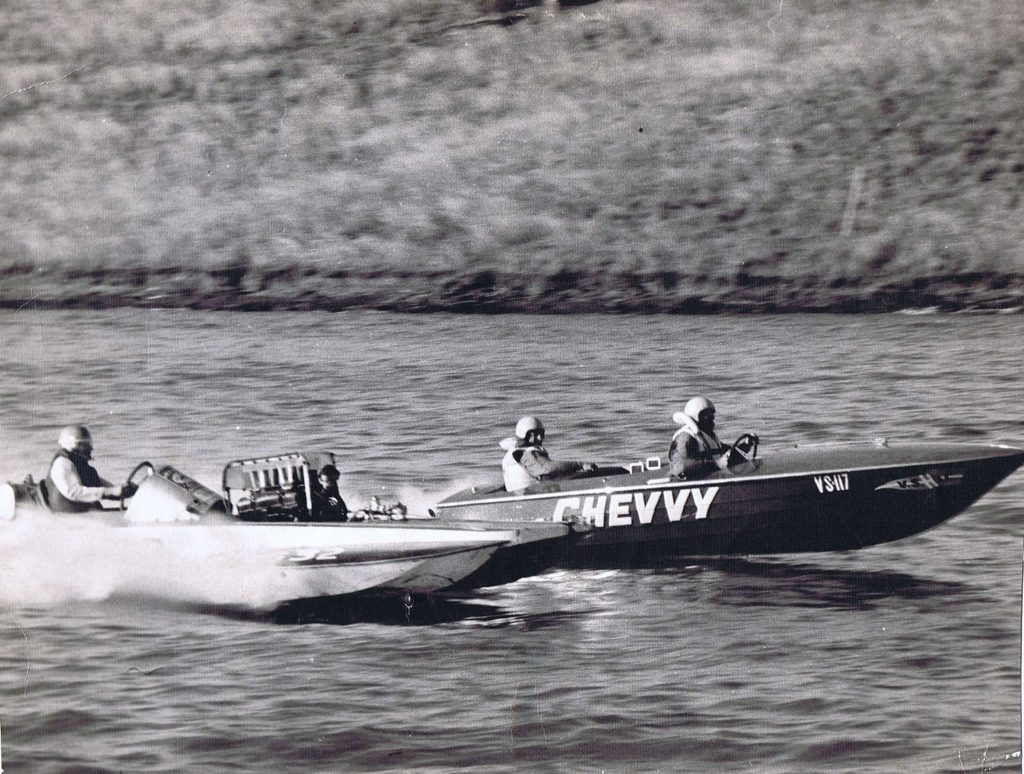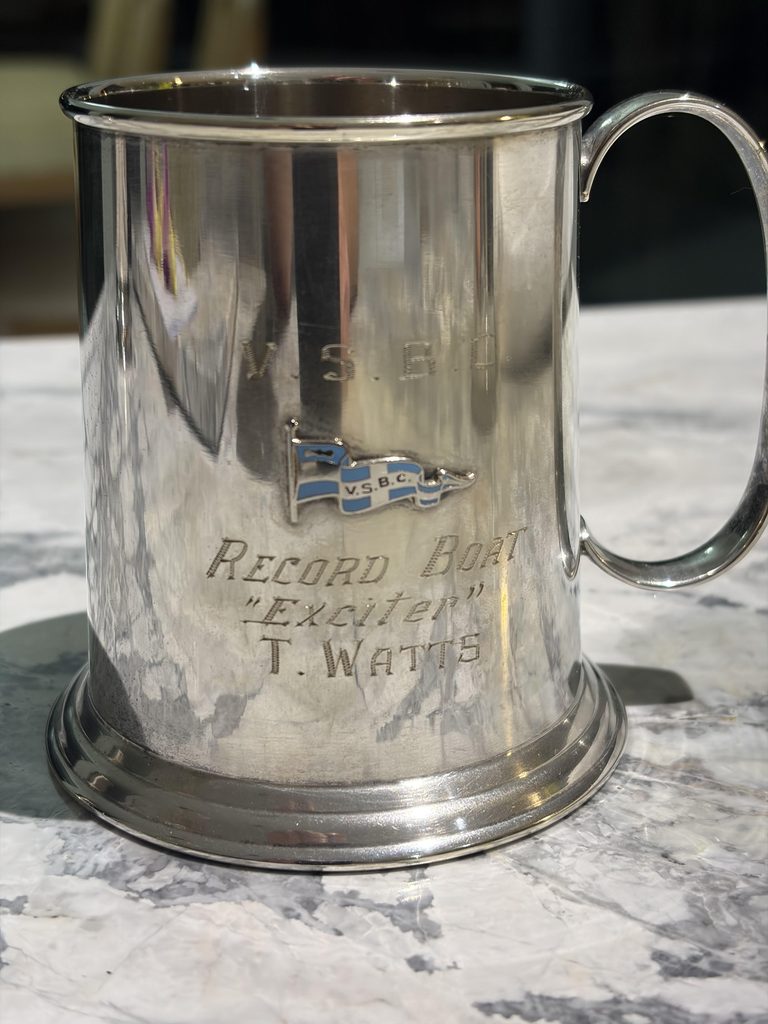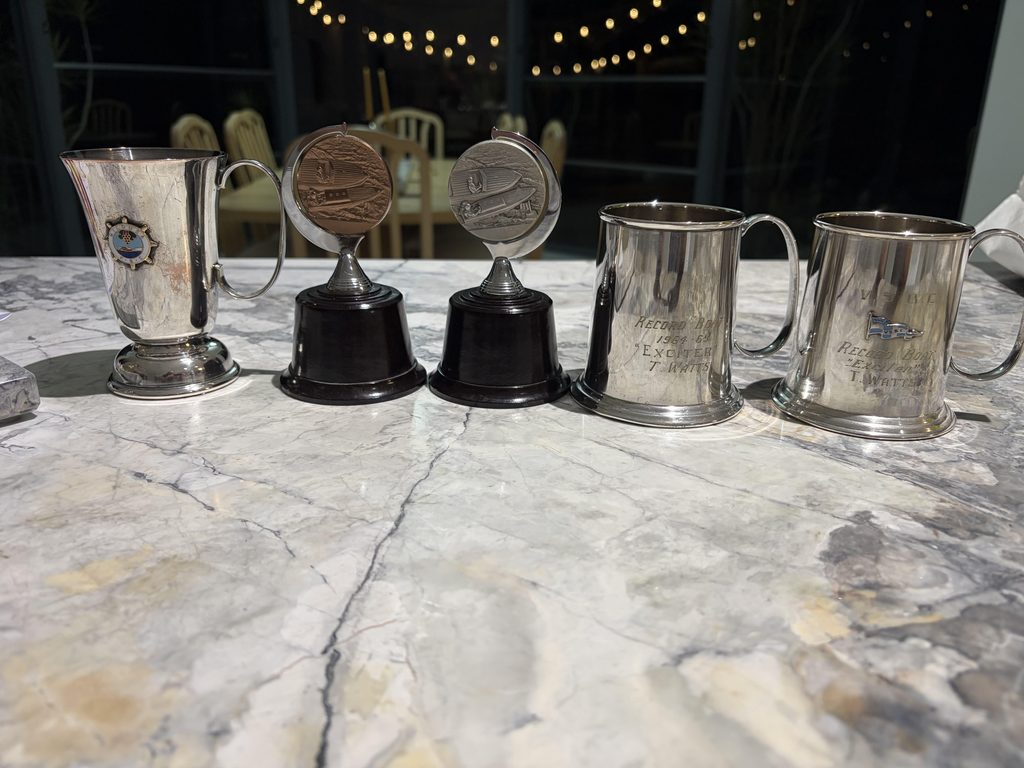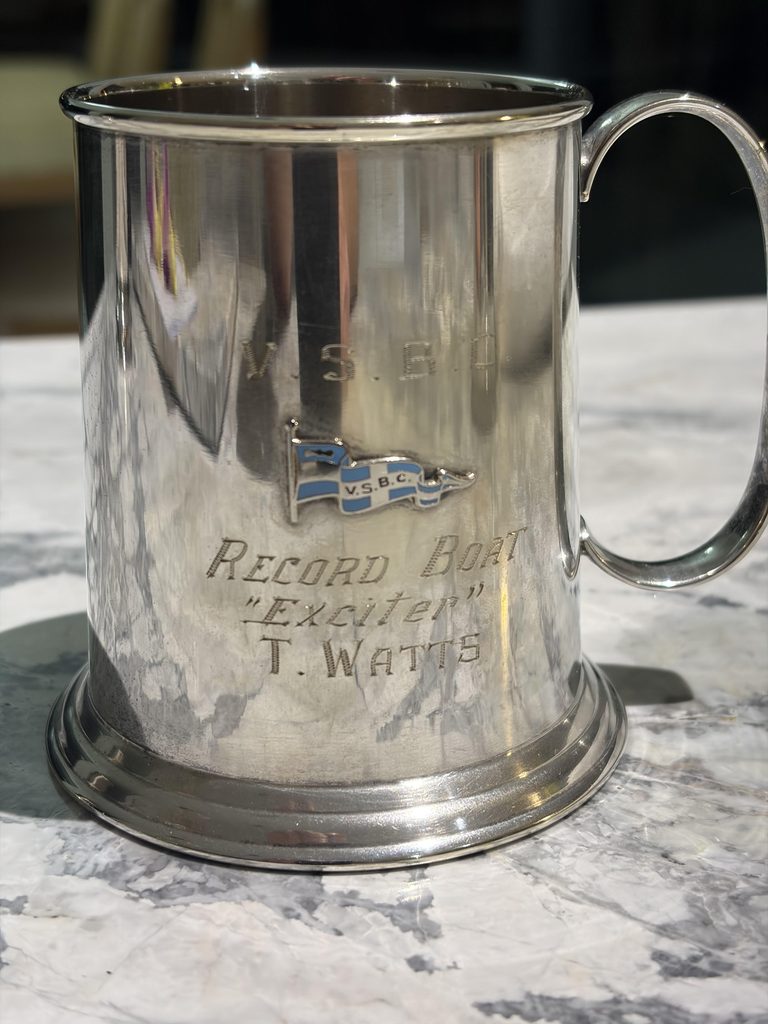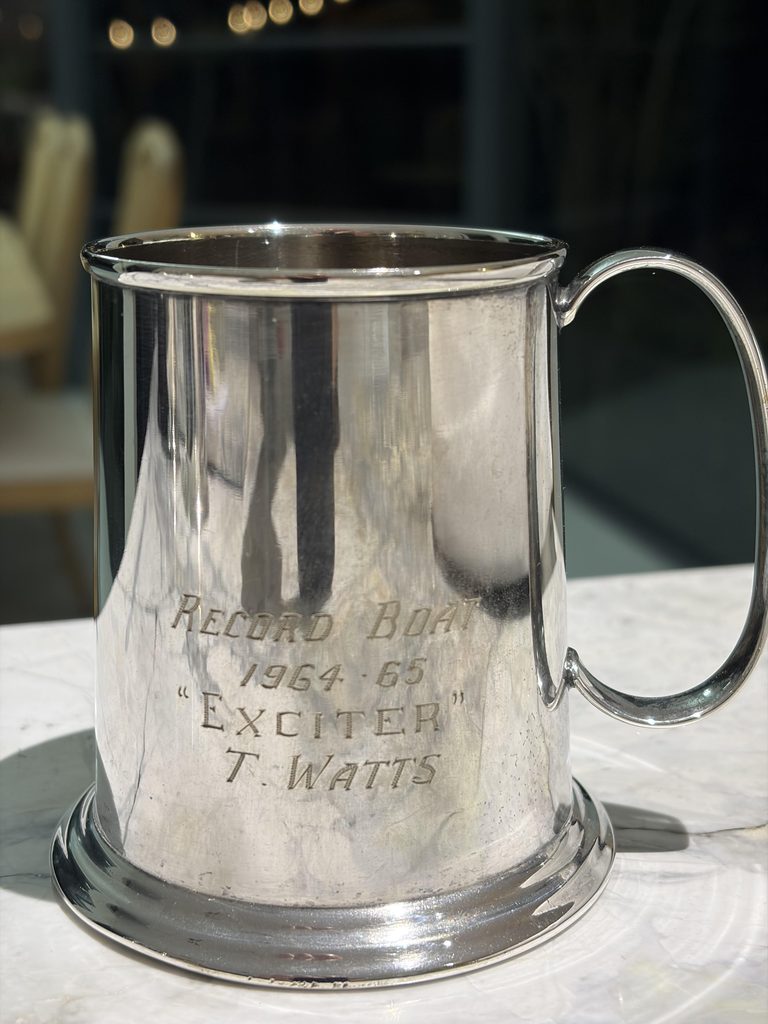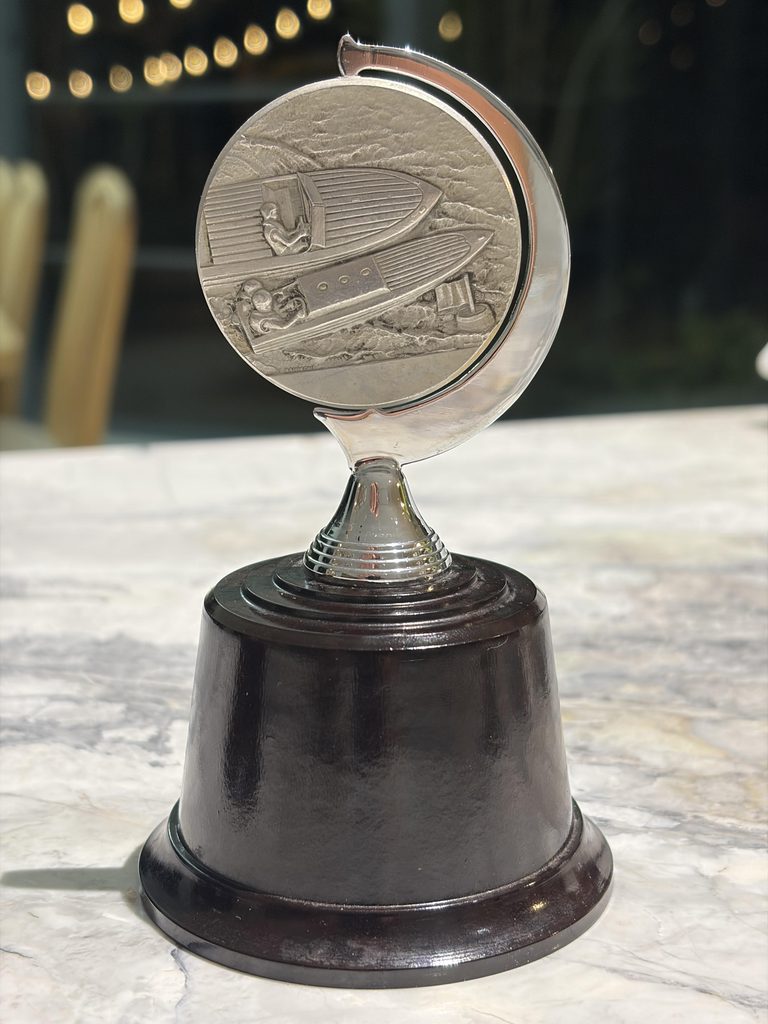
Owned and raced by Tommy Watts – here’s Tom’s story, written by his son Steven (Sept 2026)
A Man on a Mission – “At Lake Hawthorn, he pushed his jet boat until it got “up on the skeg,” becoming almost friction-free. The air speed indicator jumped from 150 MPH to approximately 190 MPH. With no parachutes or brakes, he ran out of water and traveled 200 feet onto land, clearing two trees before the rudder finally dug into the ground. A small piece of the boat remains a family heirloom to this day”.
This article has been written at the request of Paula Gill for historical purposes: ‘For the Record’ – Australian Power Boat Racing History – Volume One (circa: 1960’s – 1970’s)
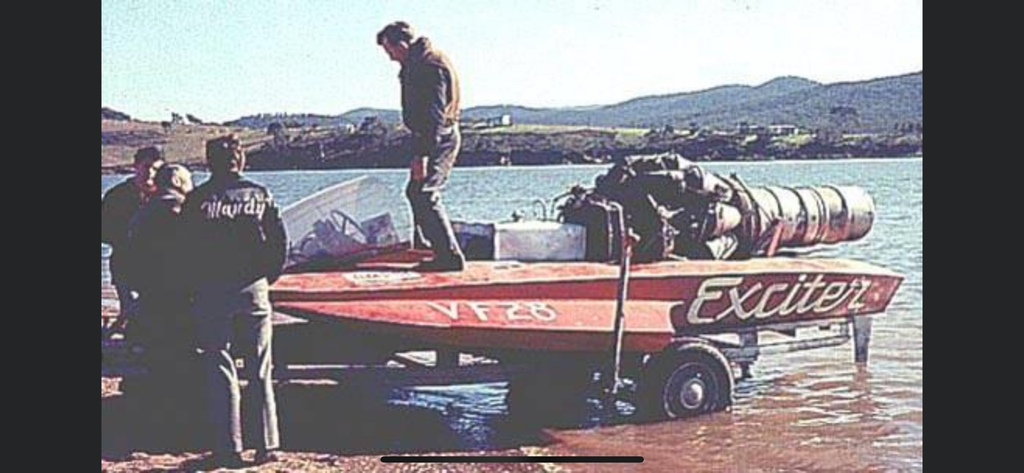
The name Exciter was first inspired by my Mother
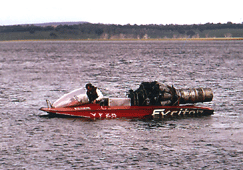
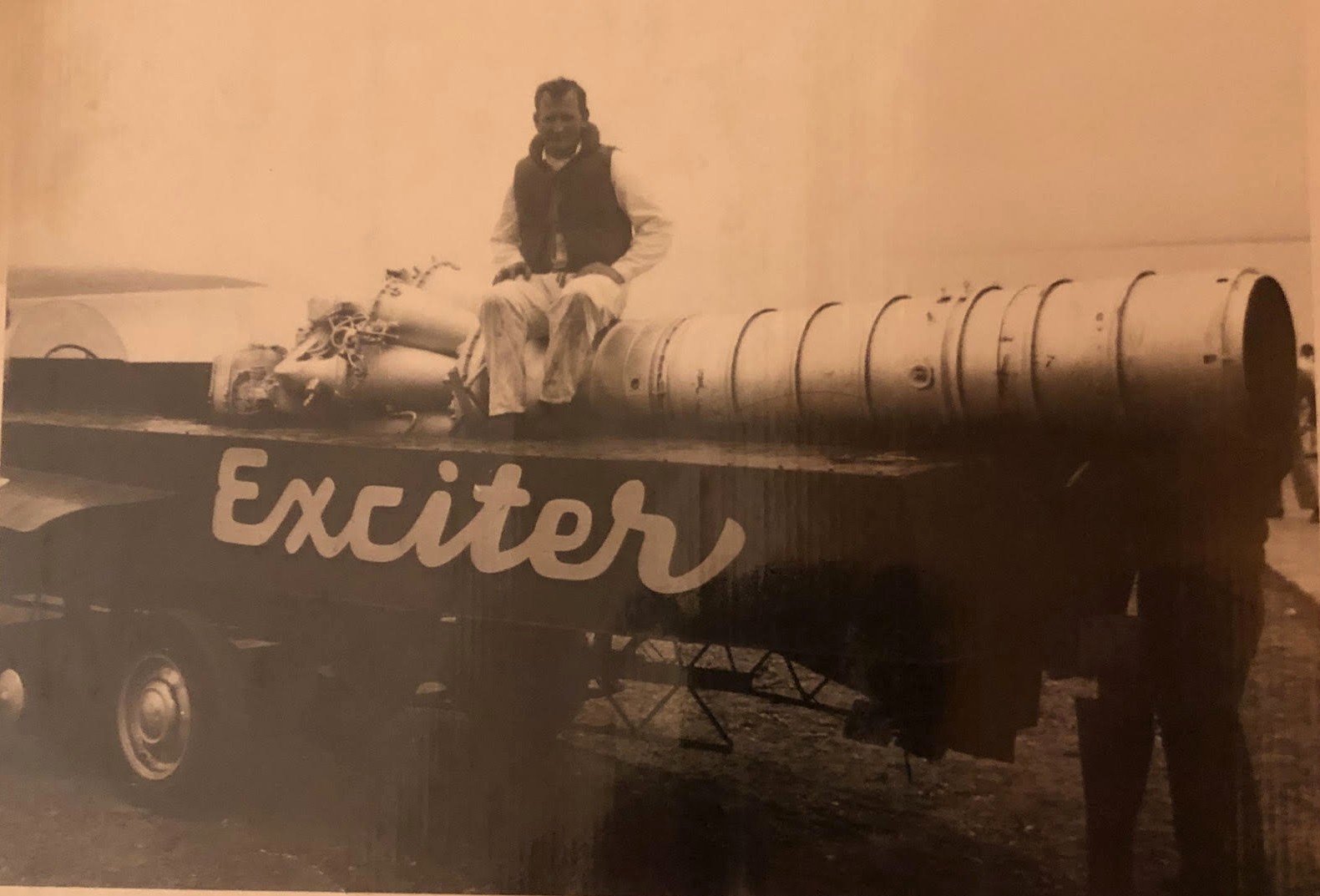
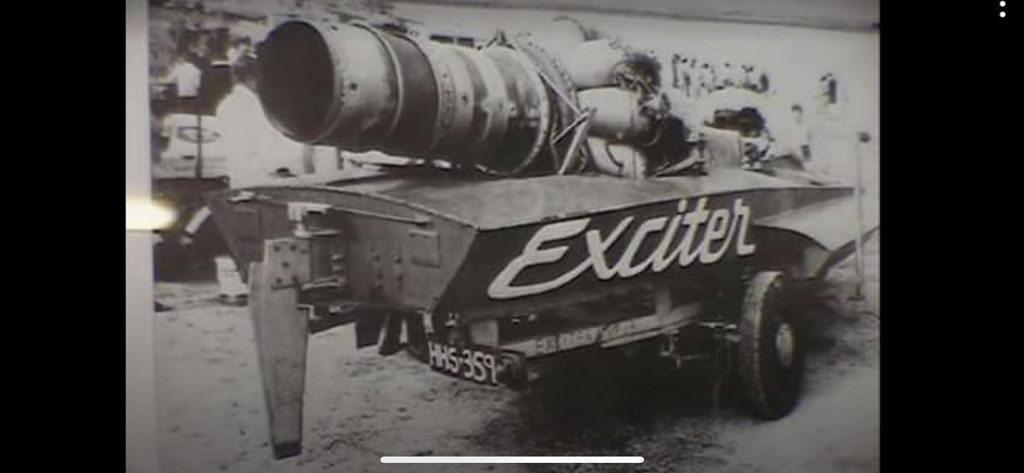
The first time dad started the Jet engine up in the boat it was facing Kororoit Creek Road in Williamstown, (Melb, Vic). The POWER of the Jet engine made all the cars stop, and all the drivers looked excited! So mum said let’s call it Exciter.
In 1965, he was the fastest boat in Australia at the time, I believe and the fastest in the world for the size and the weight of the boat,
He also had a Hydroplane called Maria which I believe was also Mystic Miss re named with a few different motors in it.
He took this boat down to Pykes Creek with my older brother Robert Watts , he remembers flames shooting out about 8 to 10 foot high.
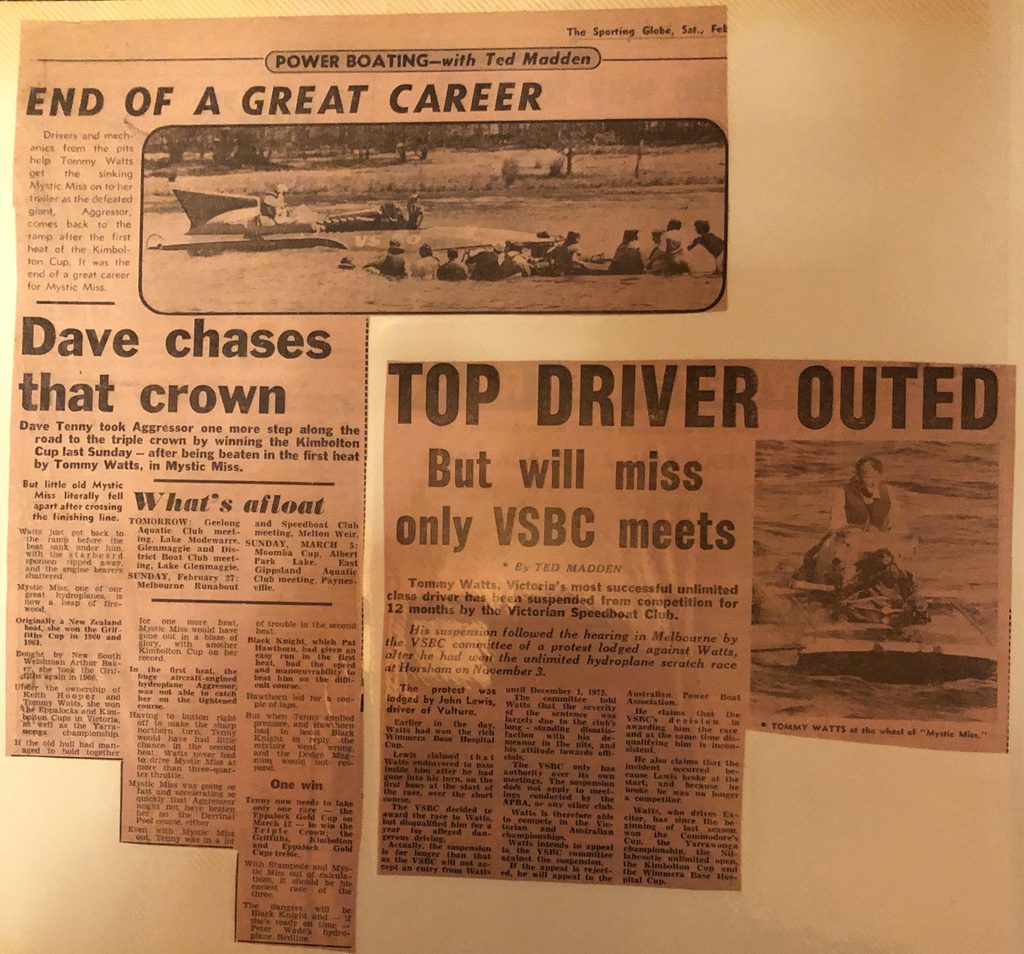
He drove this boat so hard that 1 of the sponsors fell off and he managed to drive it back to the ramp before it sunk.
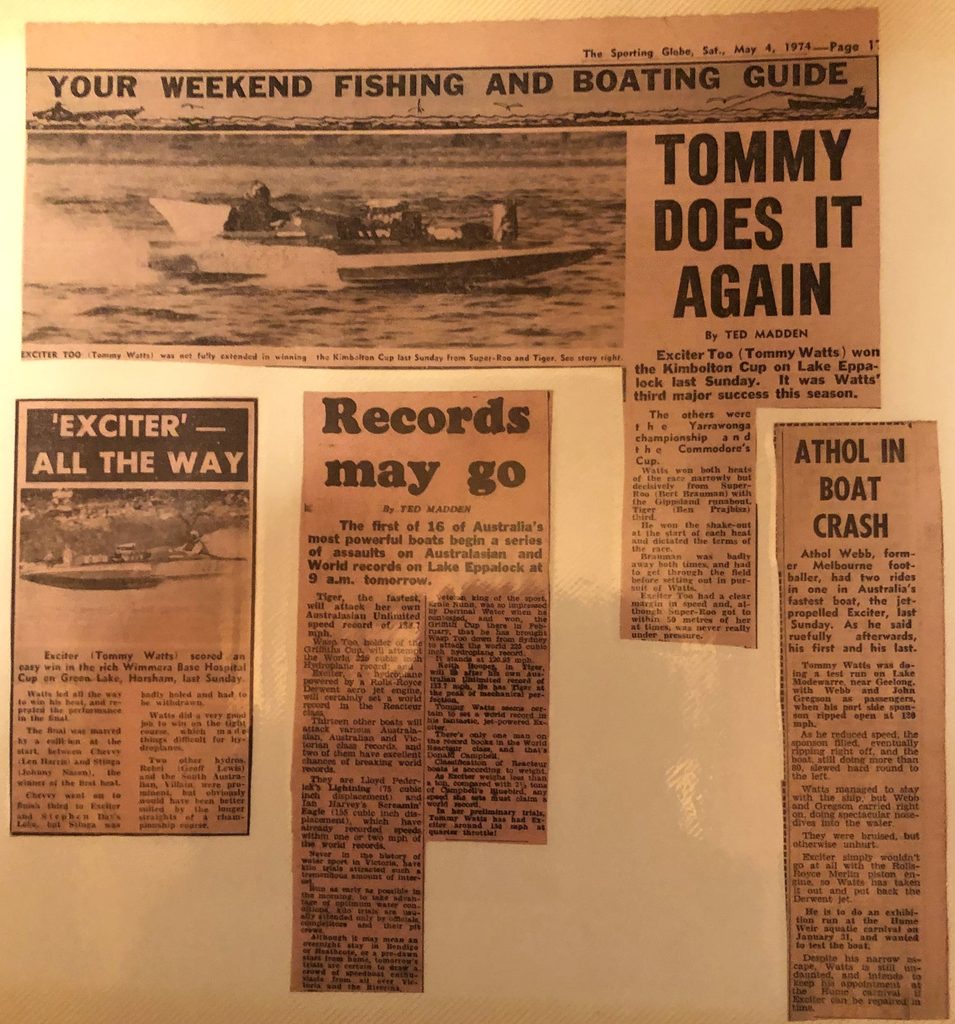
I believe this was when he beat Aggressor fair and square at the Kimbolton cup around 1972/1973.
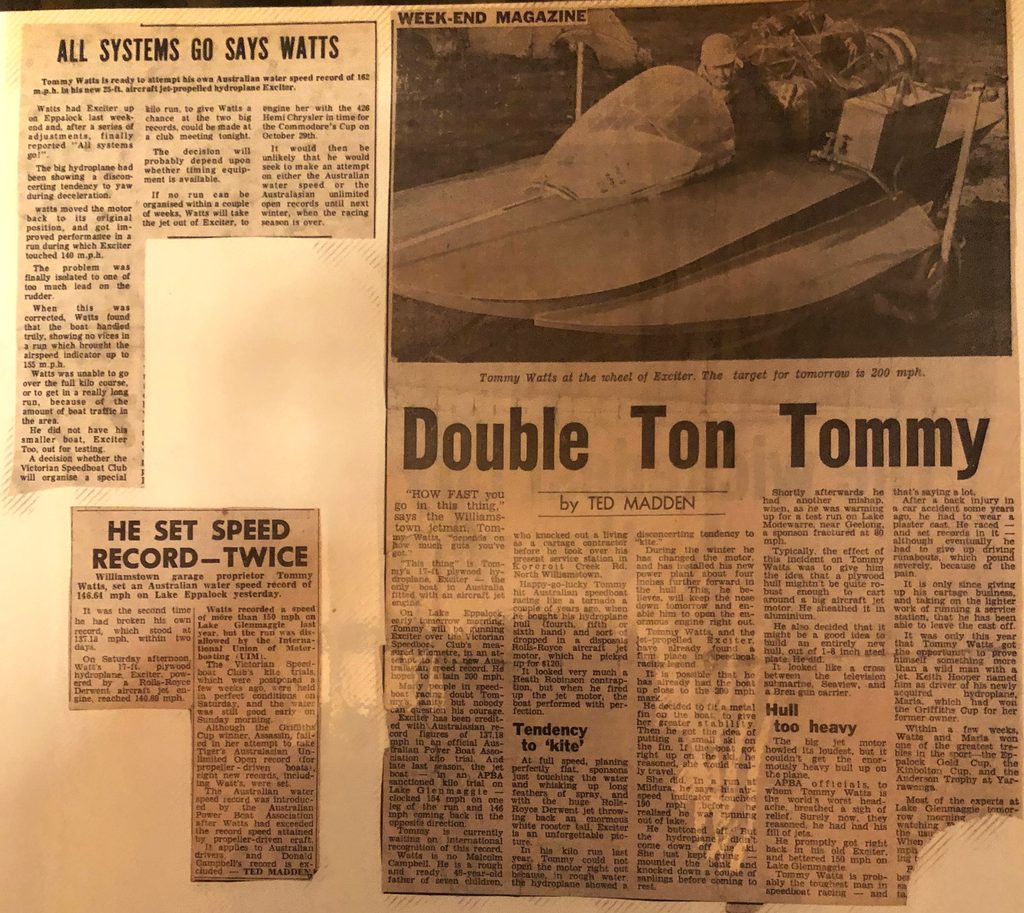
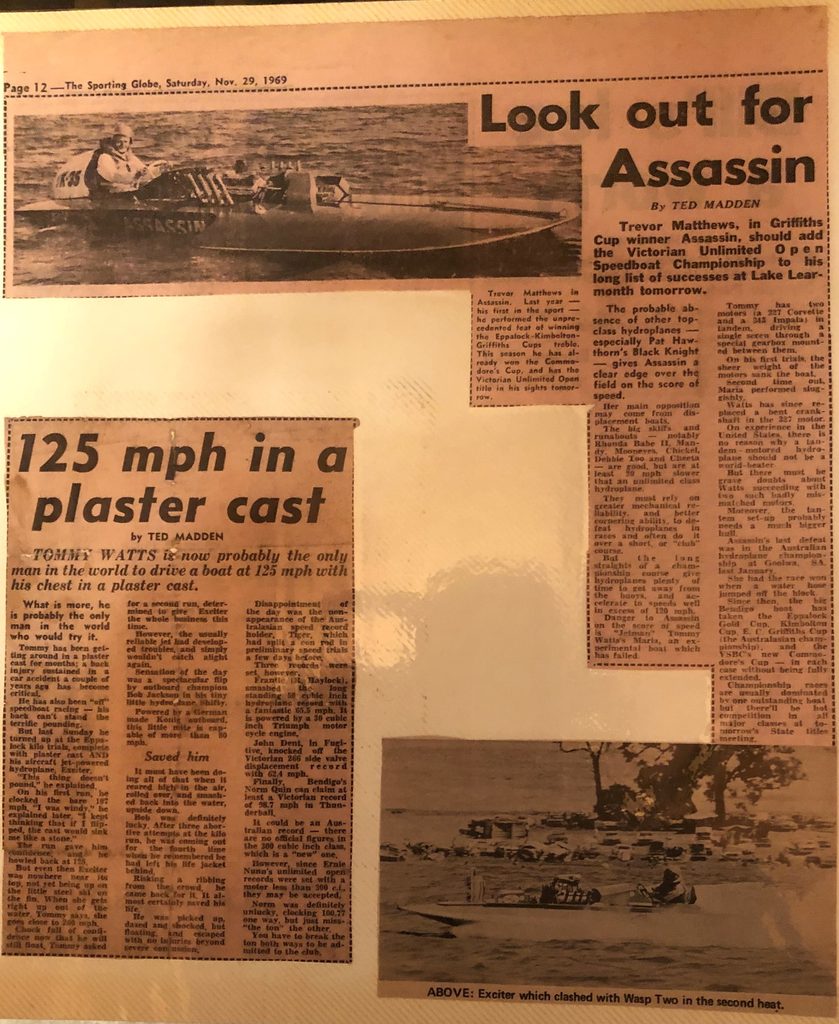
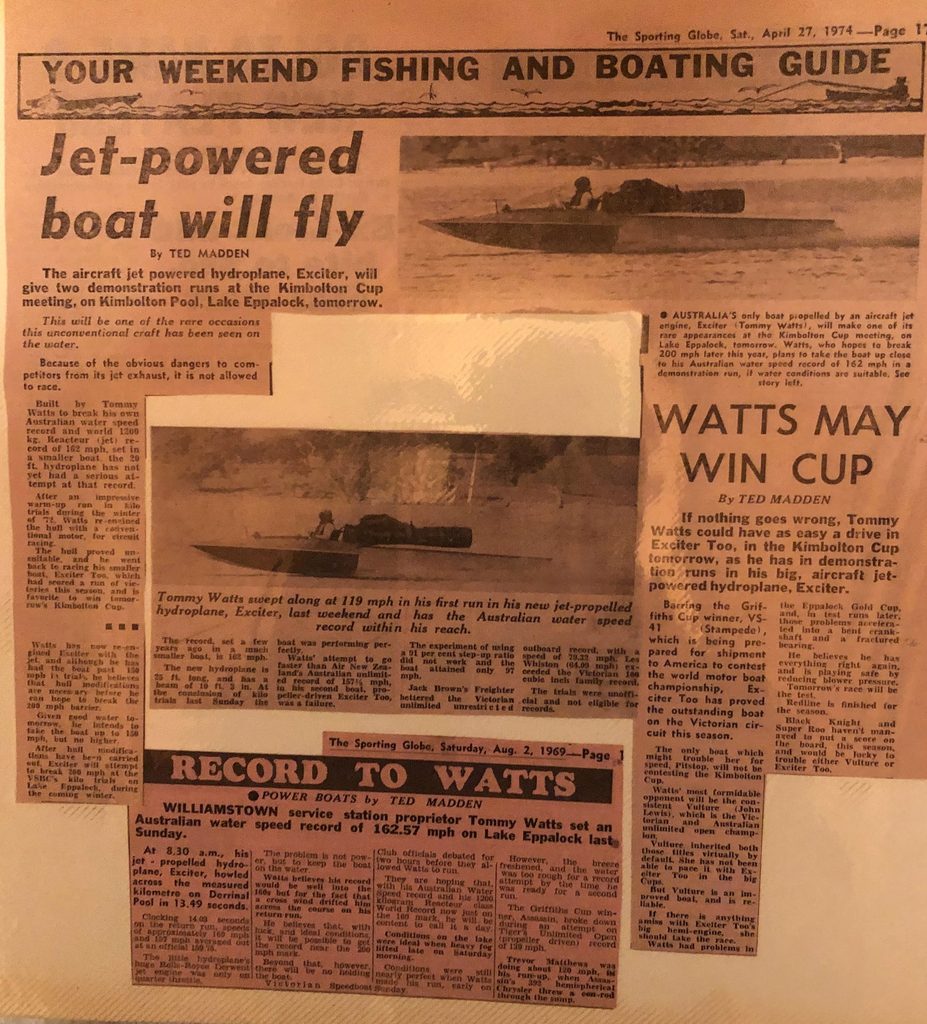
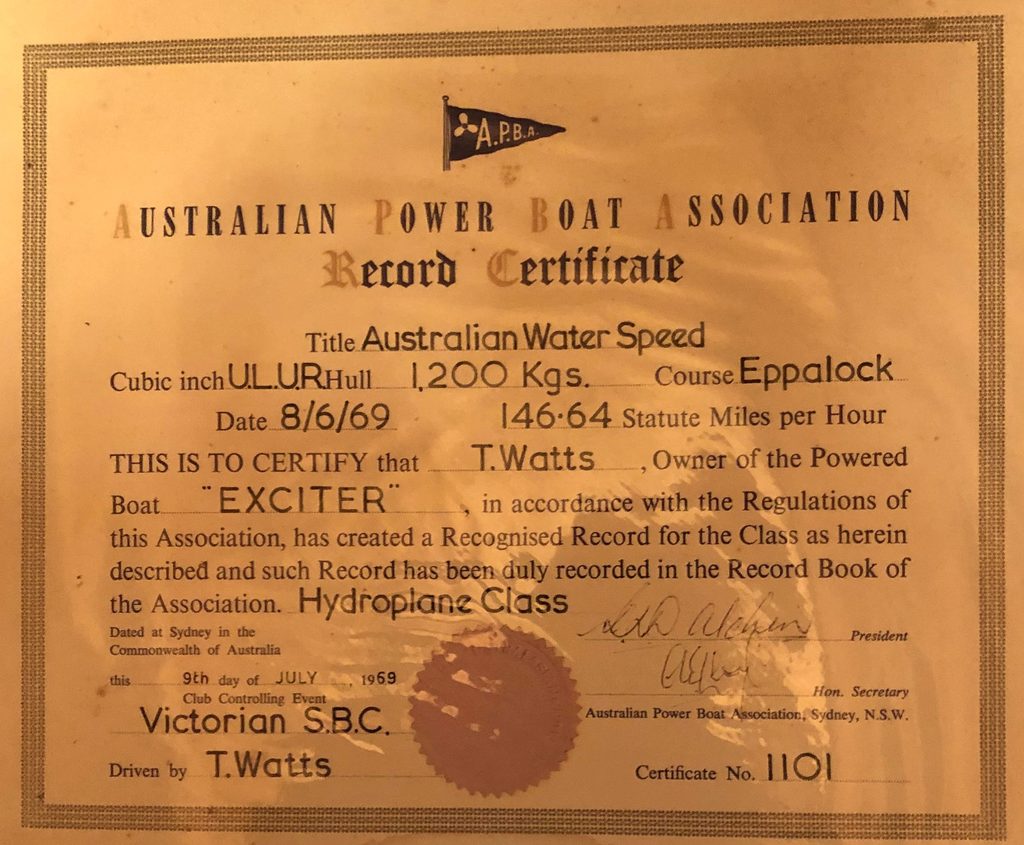
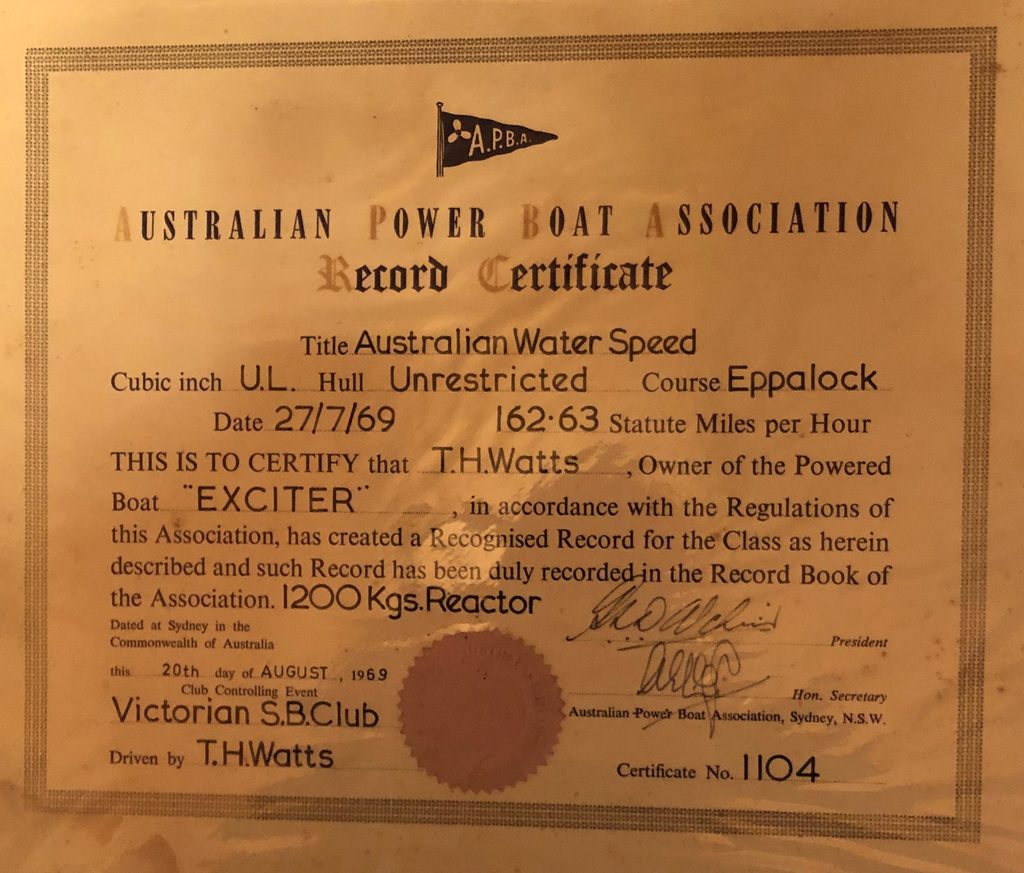
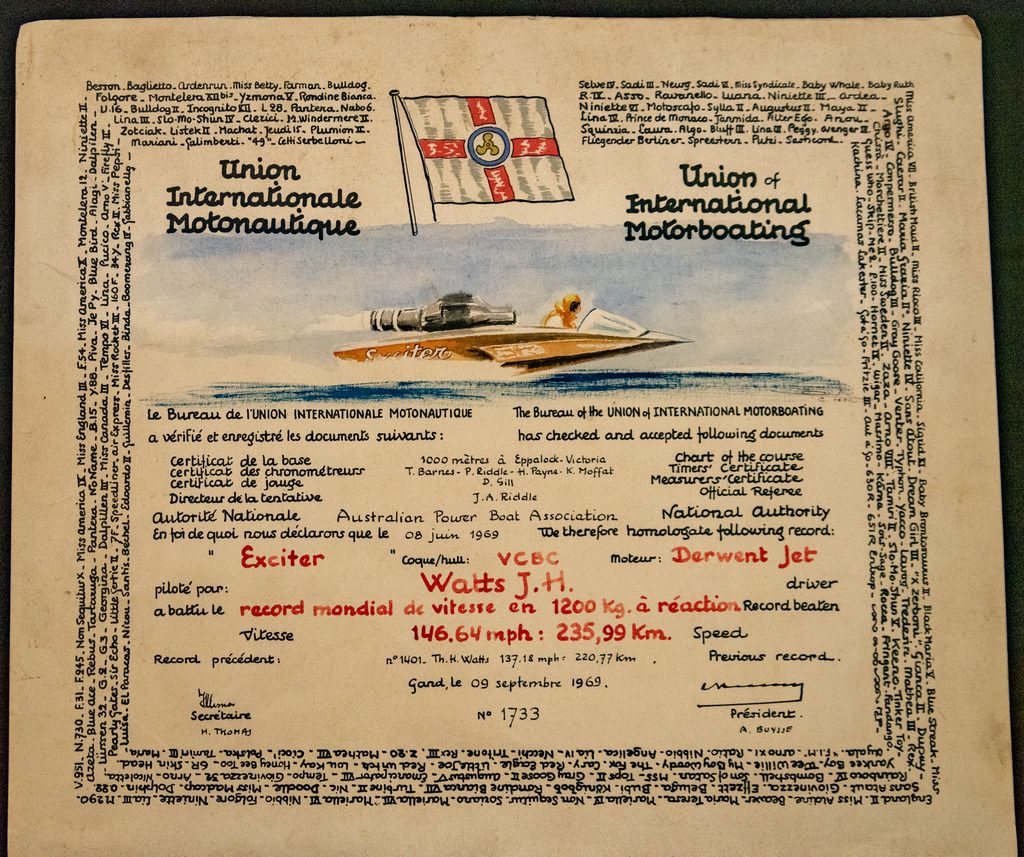
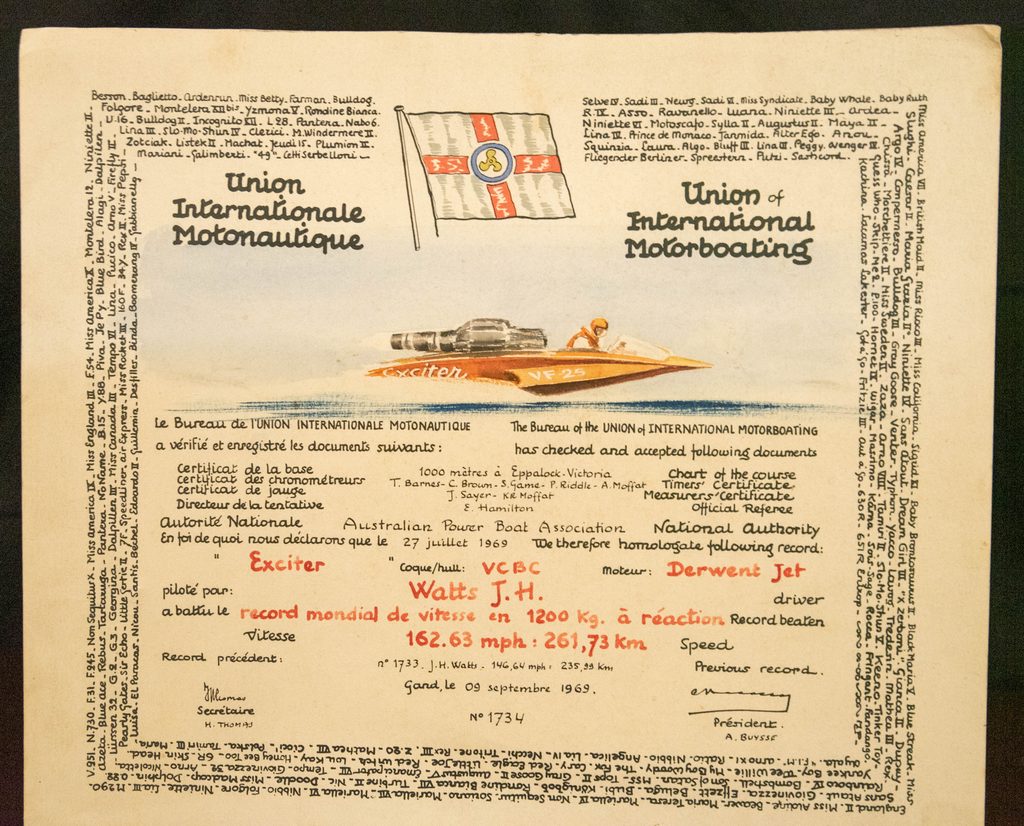
He then set 2 more world records in 1969. I at 146 MPH on the 8th of June then 162.63MPH on the 27th of July 1969. These were both recognized on the 9th of September 1969.
Full story as remembered by Steven below…..
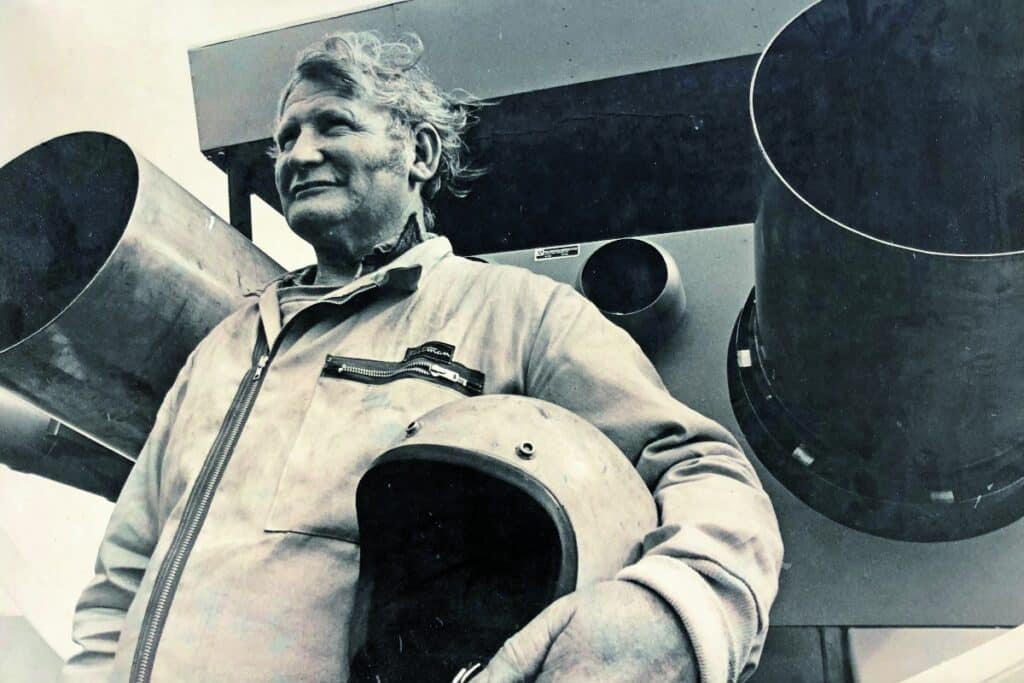
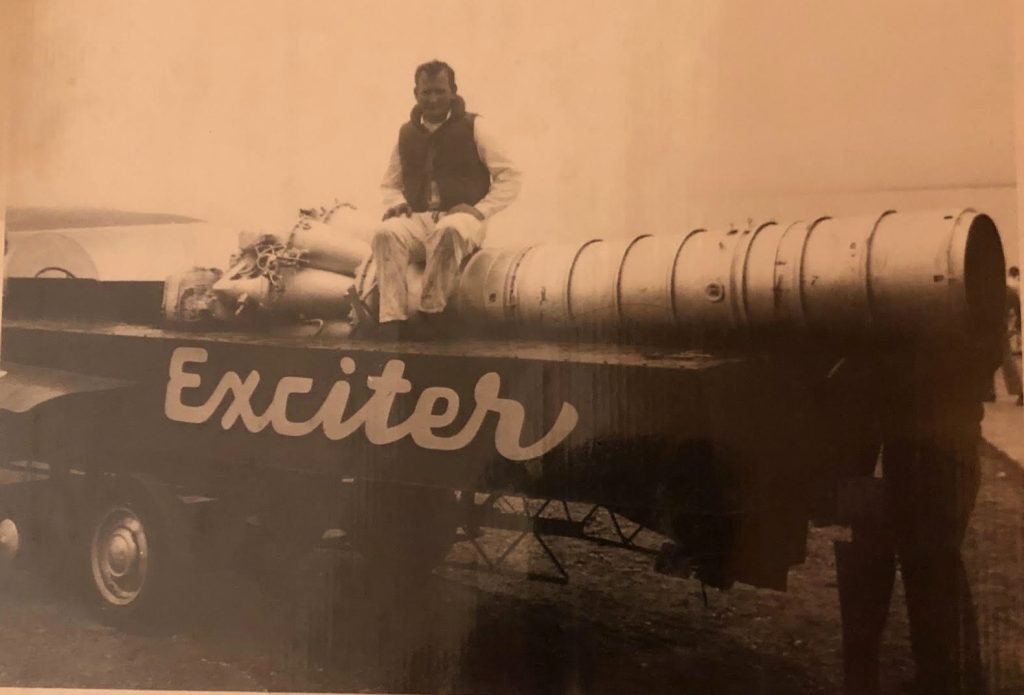
The Story of Exciter and Australian Racing Legend Tommy Watts
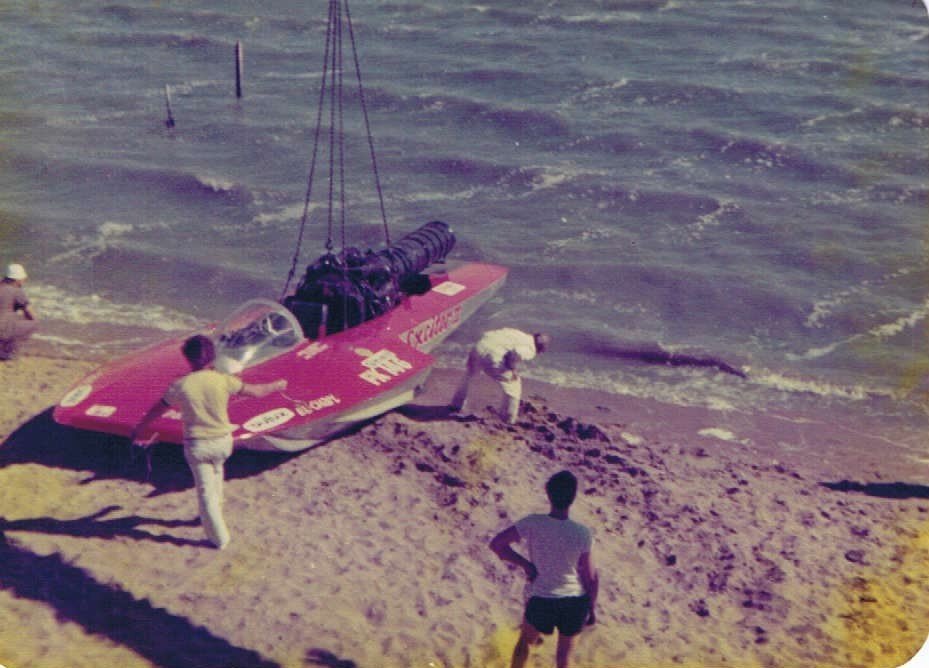
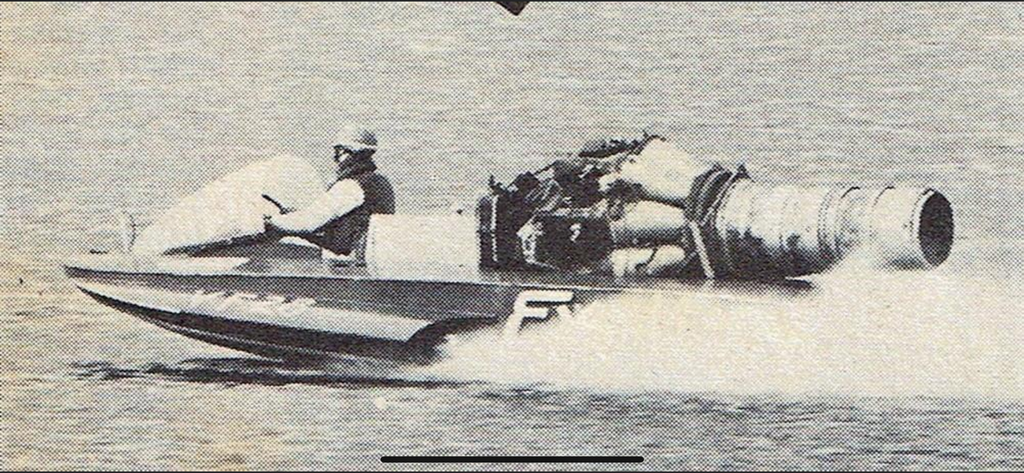
The name Exciter was born from a moment of pure adrenaline. The first time the Jet engine was started in the boat, it was facing Kororoit Creek Road in Williamstown. The sheer power of the engine brought traffic to a standstill; all the drivers stopped and looked on with excitement. Seeing their reactions, my mum said, “Let’s call it Exciter.”
Originally called Shark, the boat underwent a transformation when the Jet engine was installed. I only discovered the true origin of its name this year, though my dad had been racing long before I was born.
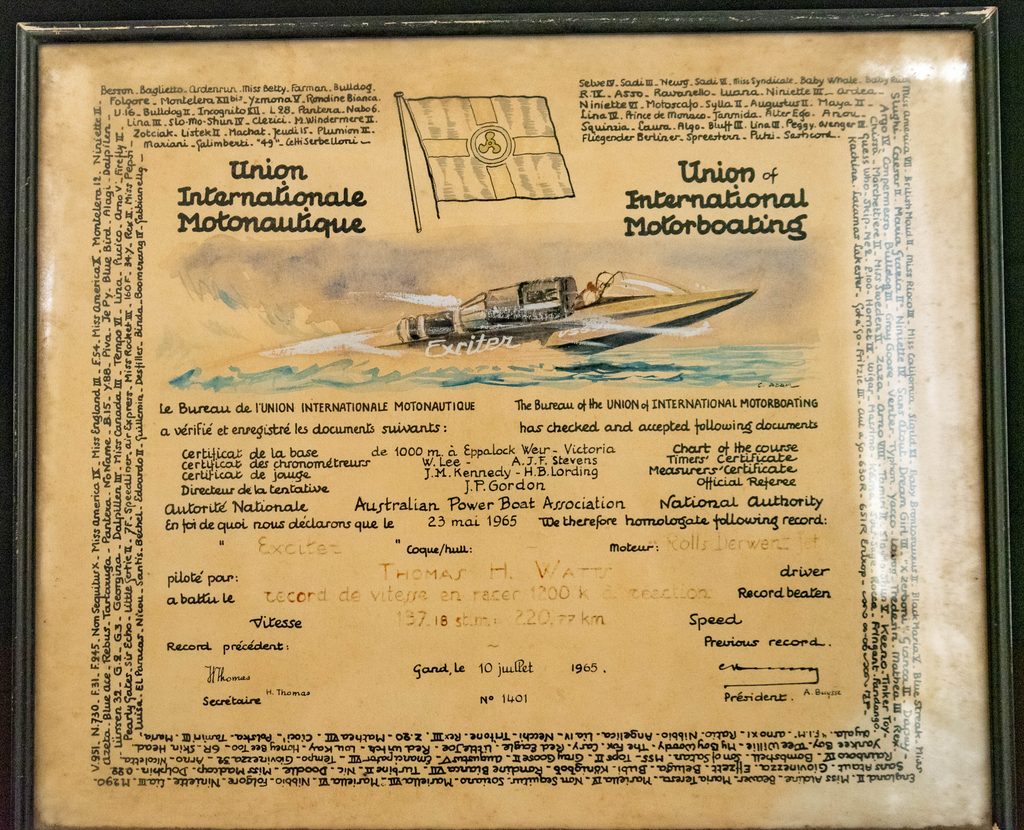
Dad achieved his first world record when I was only 2 years old. Reaching 137mph on the 23rd of May 1965. It was recognised by the Union of International Motorboating on the 10th of July 1965. This record was in a category under 1200 kgs REACTOR. He drove the fastest boat in Australia at that time, I believe, and the fastest in the world for the size and the weight of the boat, (under 1200kg’s and 17.5 foot long). The Derwent Jet Engine came from a 1944 World War II Gloster Meteior Fighter Plane, it produced 3600 IB Thrust
World Record and Specifications
- World Record: 137 MPH achieved on May 23, 1965 (Recognized July 10, 1965).
- Category: REACTOR (Under 1200 kgs).
- Dimensions: 17.5 foot long.
- Status: The fastest boat in Australia and the fastest in the world for its size and weight at the time.
Before building his own winners, dad started his journey with an old family cabin cruiser and later drove for Keith Hooper in the boat Mystic Miss. After finding success, he acquired his first hydroplane—the boat that would become the original Exciter.
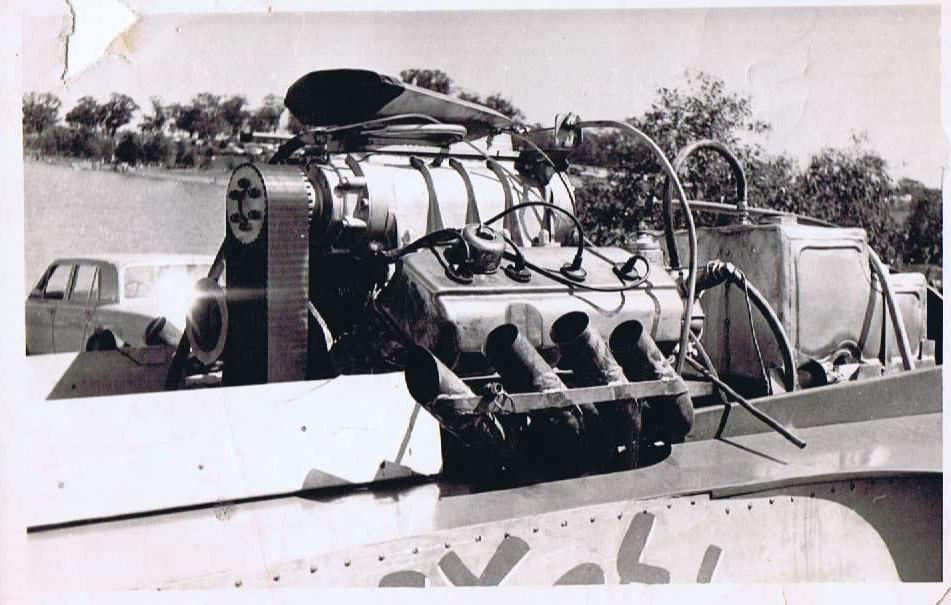
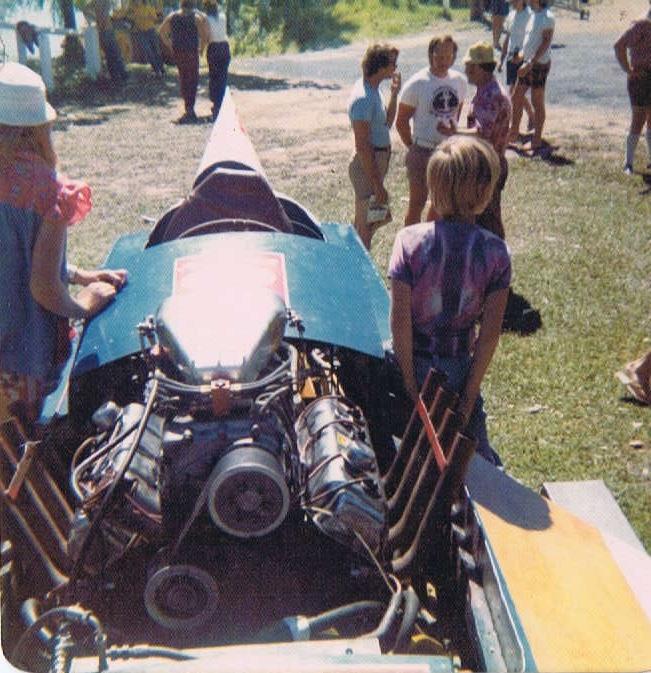
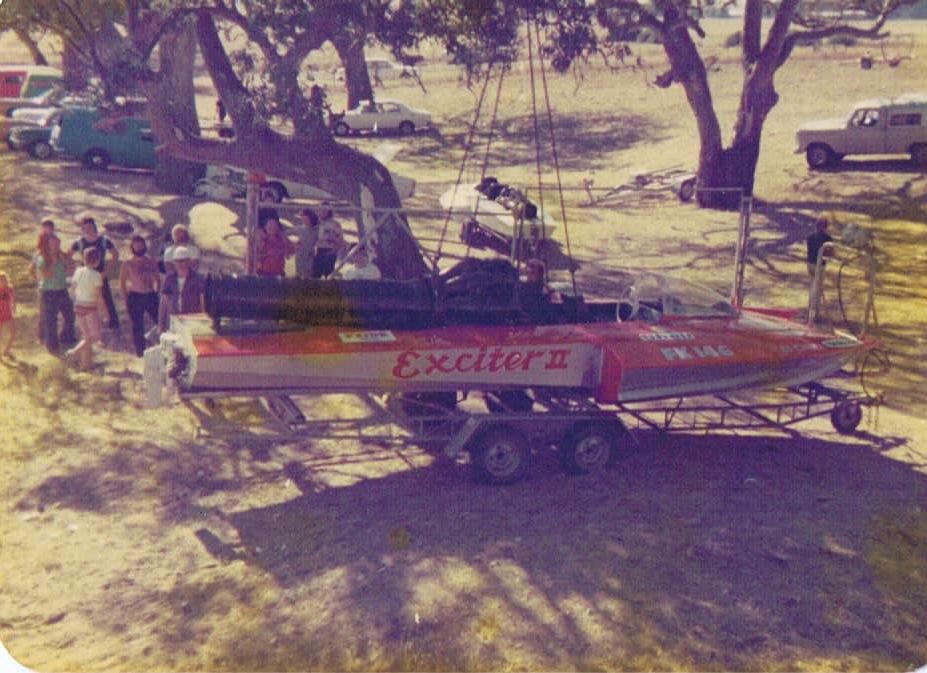
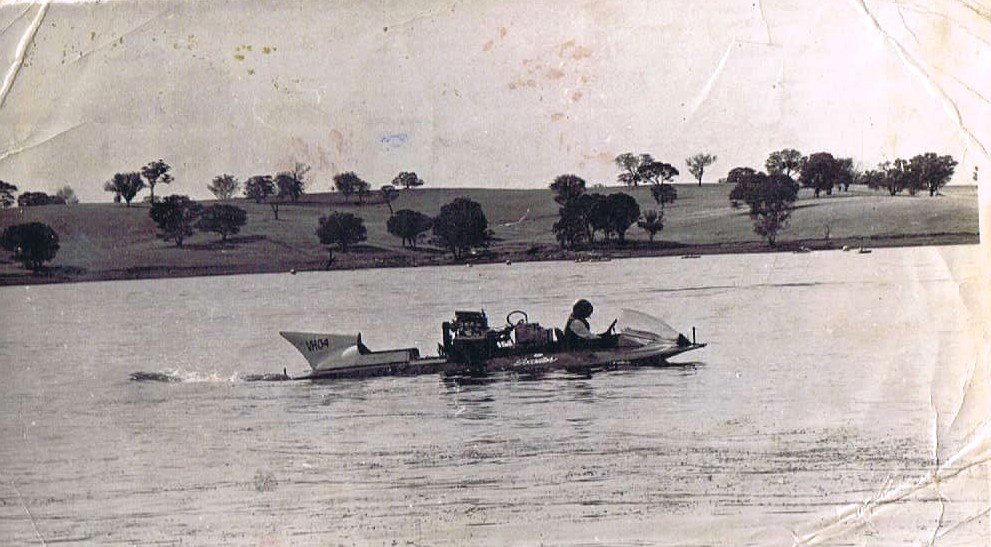
His next vessel, Exciter 2, featured a massive 426 cubic inch Hemi Chrysler engine, fuel-injected and supercharged, running on Methanol. While it was incredibly fast and would often dominate the first two laps, engine reliability issues frequently prevented it from finishing the race.
Racing Success and the EC Griffiths Cup (1972–1974)
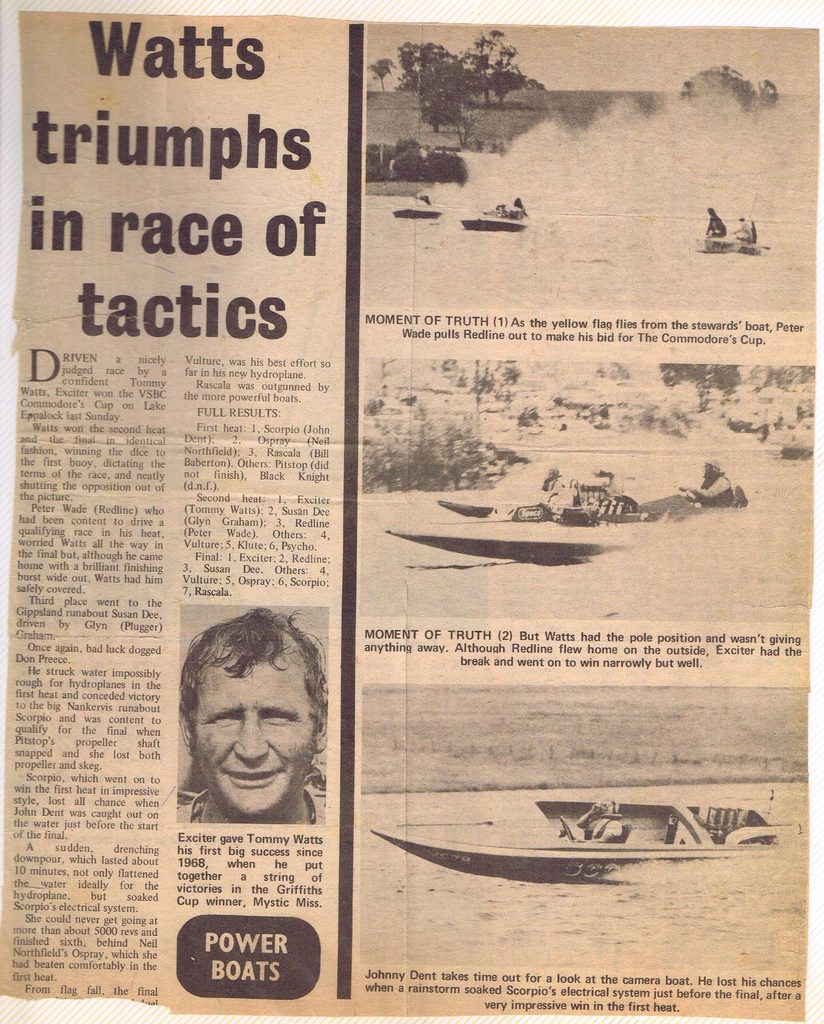
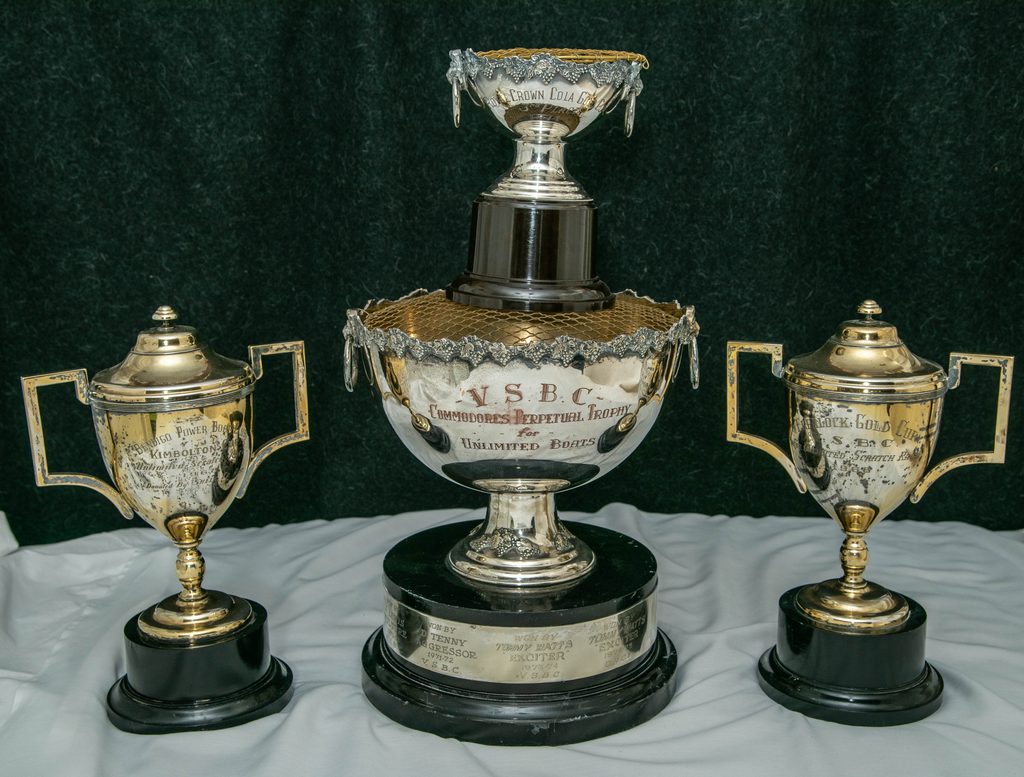
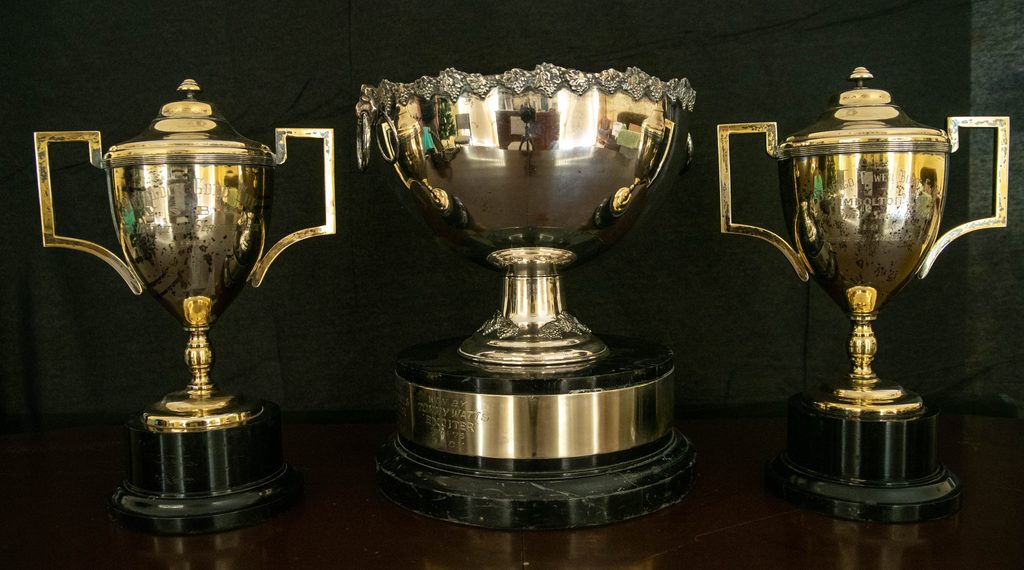
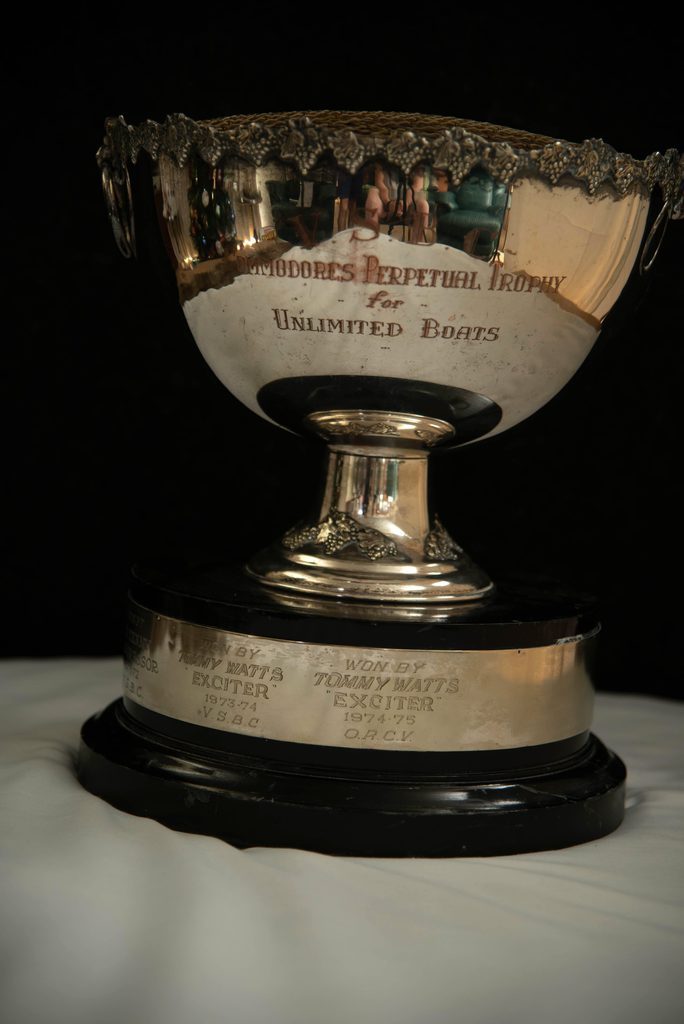
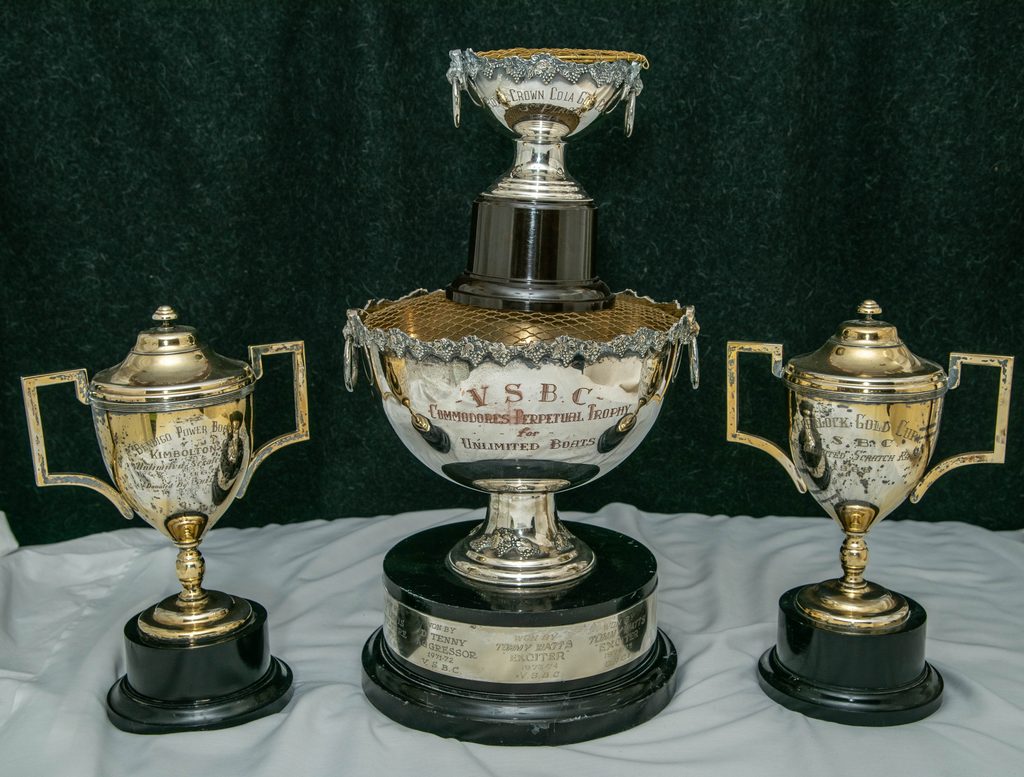
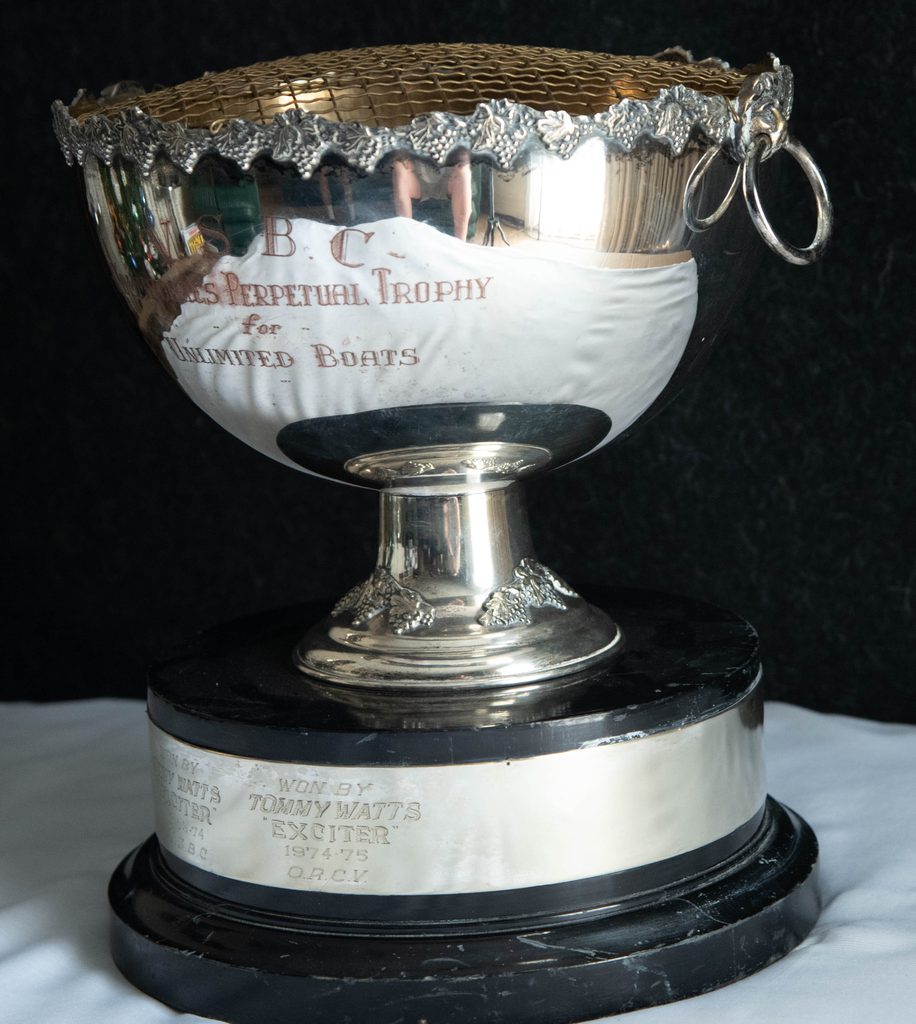
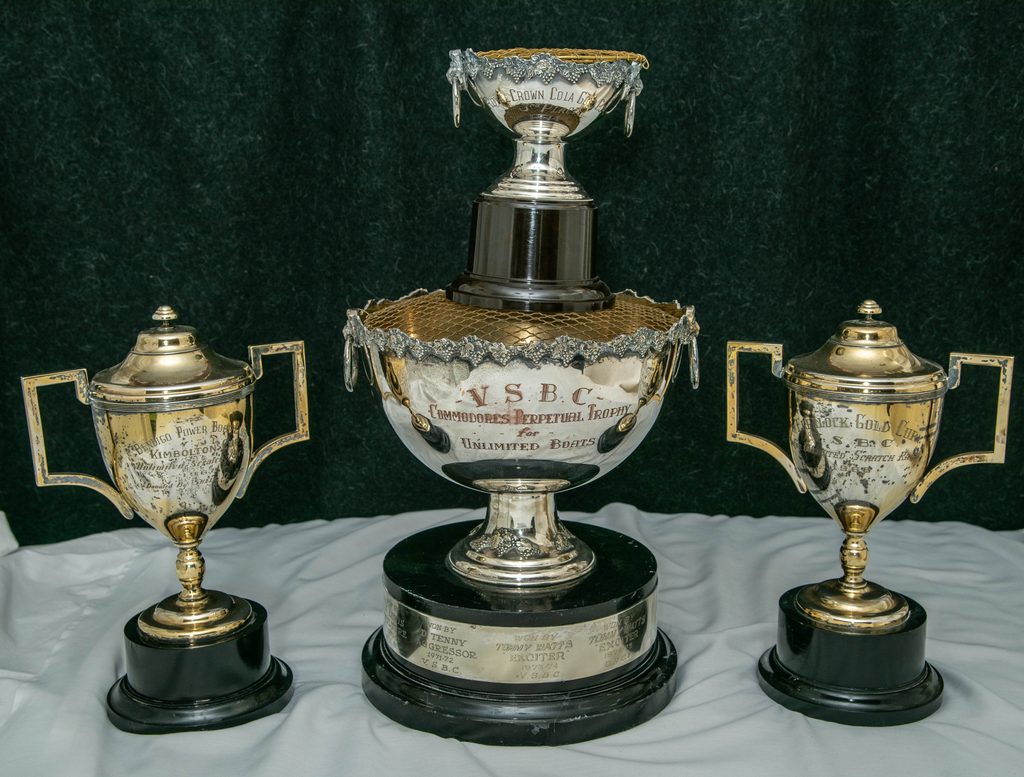
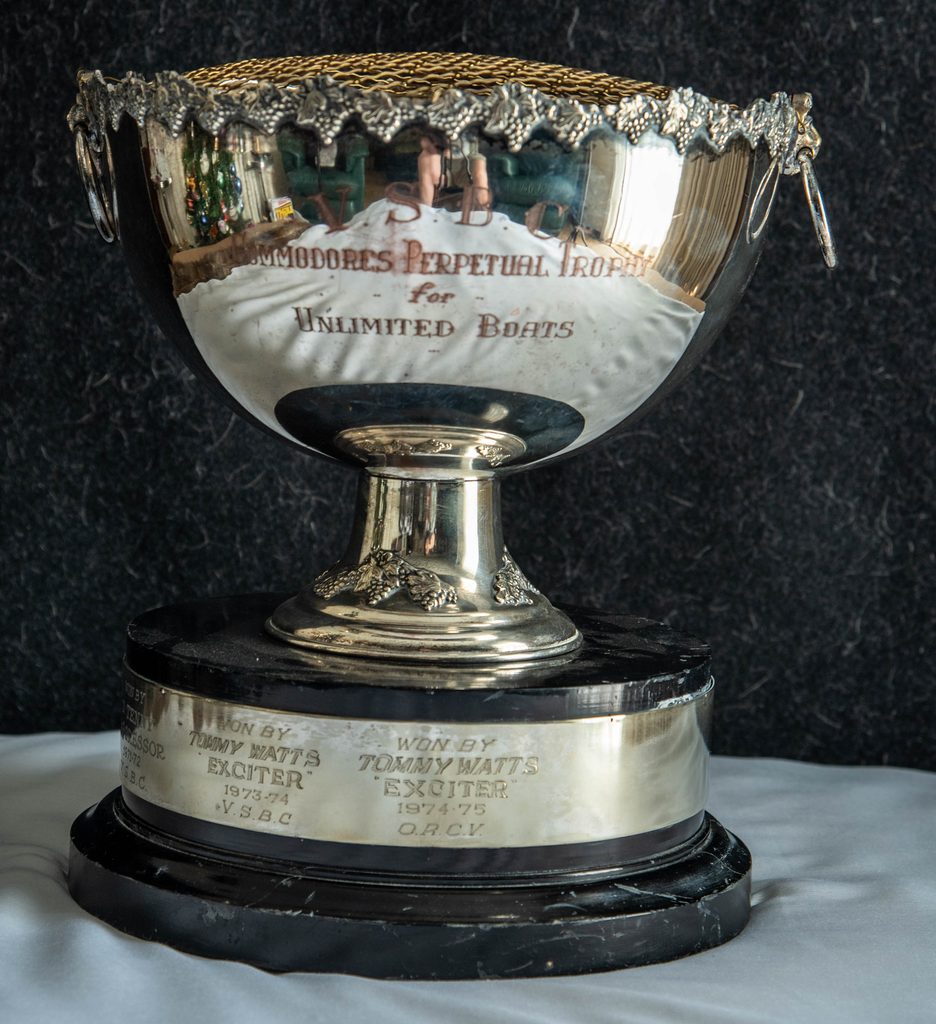
Between 1972 and 1974, a critical discovery changed the course of his racing career. He realized his supercharger had been configured for 1/4 mile drag racing—designed for 10 seconds of intensity rather than the 10 minutes required for circuit racing. Once this was corrected, he became nearly unstoppable, winning every race for the year with the sole exception of the EC Griffiths Cup in Victoria. Although Mistic Miss won the 1960 and 1966 EC Griffith Cup, at the time the boat was owned and raced by AE Baker (Arthur Baker). However, during 1972 through to 1974, Dad got Exciter II going really well, winning many races and prestigious trophies, but never got to the chequered flag first on the EC Griffith cup circuit. Here’s a confession, Dad won the V.S.B.C. Commodores Perpetual Trophy for unlimited boats in 1973 – 75, the trophy was never returned, they weren’t game to come and pick it up after he left the club.
The Evolution of ‘Maria’ and ‘Mystic Miss’
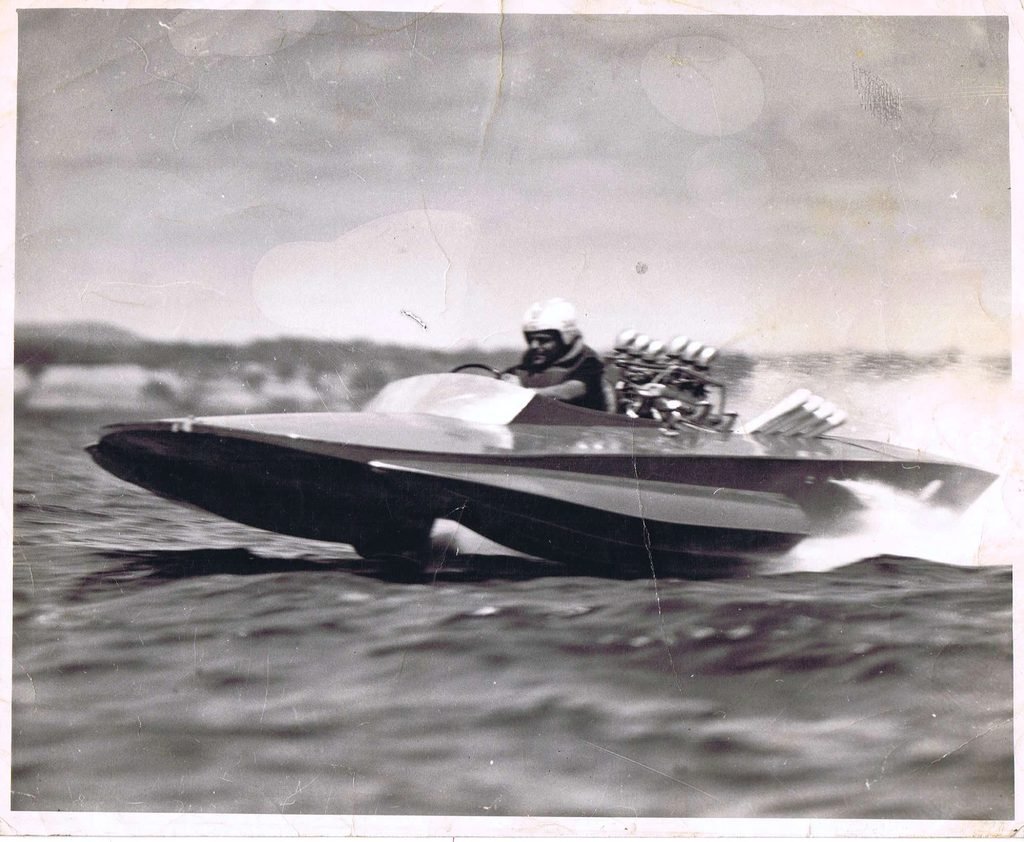
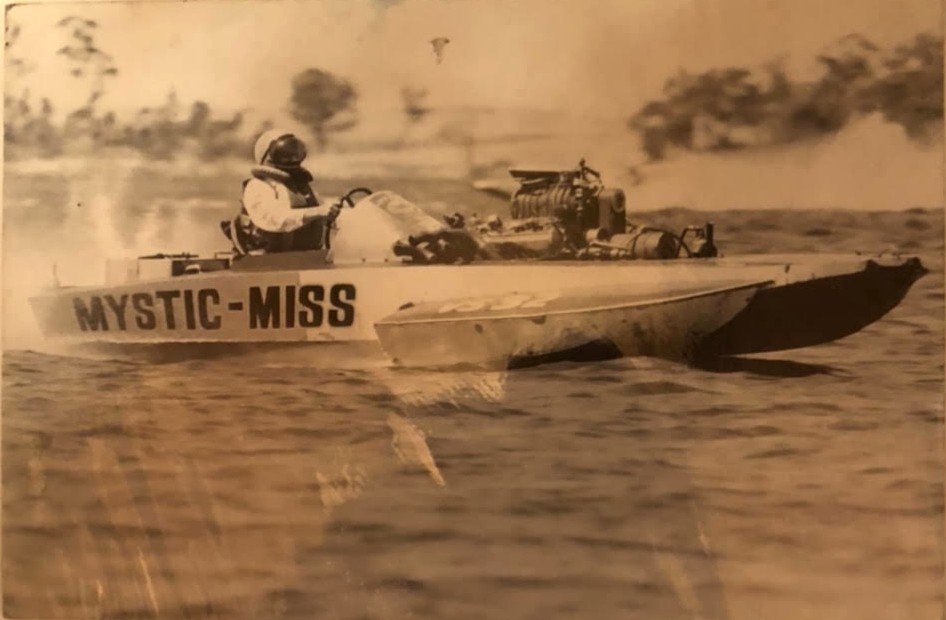
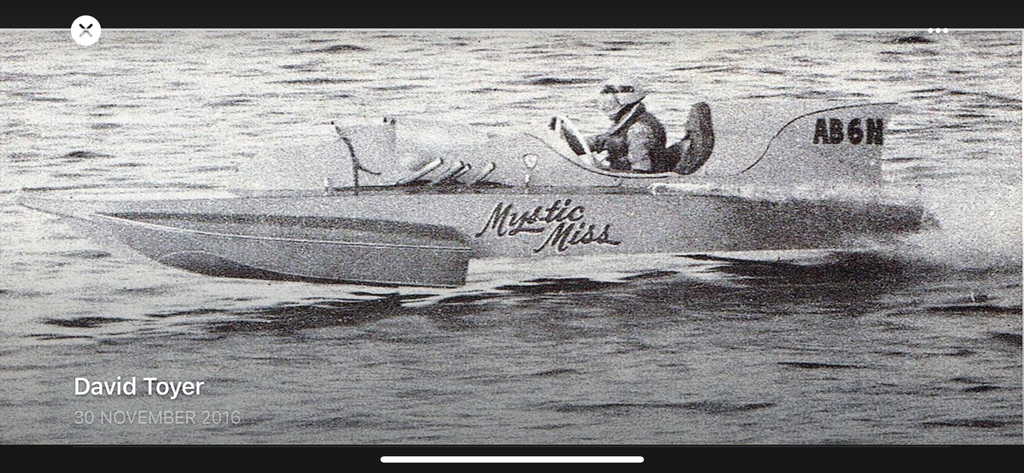
He campaigned a hydroplane called ‘Mystic Miss’, which I believe he renamed ‘Maria,’ and then renamed it again as ‘Mystic Miss’ – serving as a platform for several powerful engine configurations. From fuel-injected V8s to unique tandem setups, the boat was a testament to his mechanical experimentation.
- A fuel-injected 350 Chevrolet.
- Two motors in tandem: a 348 Impala in front and a 327 Chevrolet at the back.
- A rotary turbine engine brought back from America.
- A 392 Hemi Chrysler, fuel-injected and supercharged.
The Pykes Creek Turbine Incident
During a test at Pykes Creek with my brother Robert Watts, the rotary turbine engine produced spectacular 8 to 10-foot flames due to a fuel mismatch. While he had been using standard kerosene, the engine required a specialized fuel costing $400 for a 44-gallon drum—a small fortune roughly 55 years ago that would be astronomical by today’s standards.
David and Goliath: The Kimbolton Cup
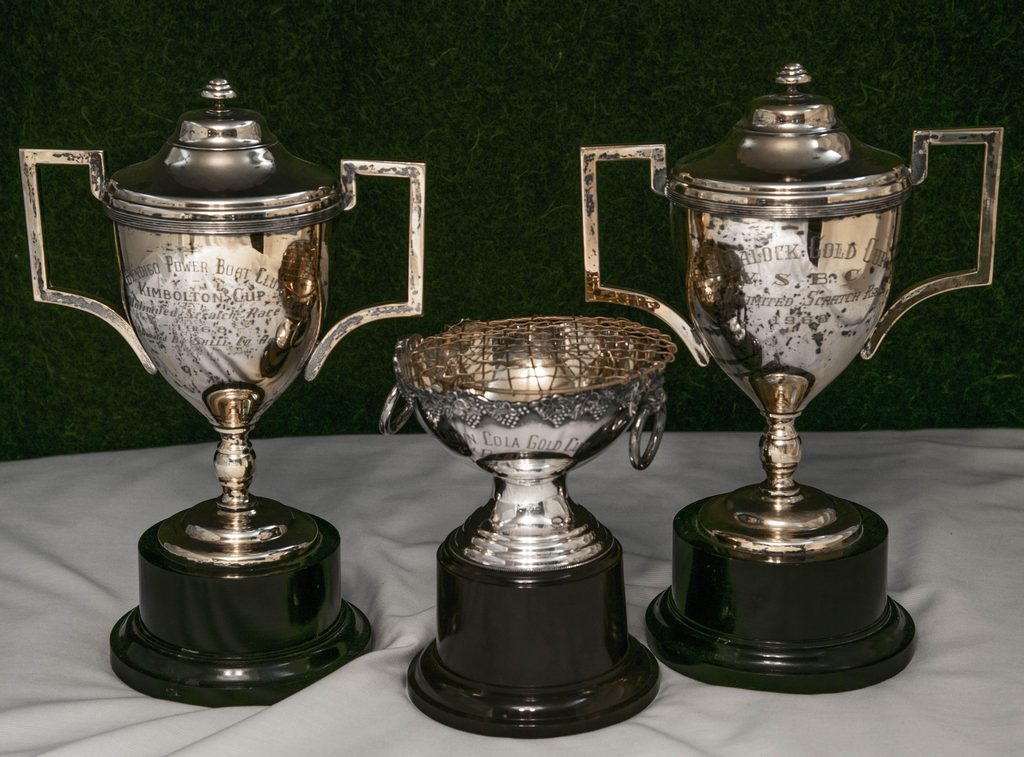
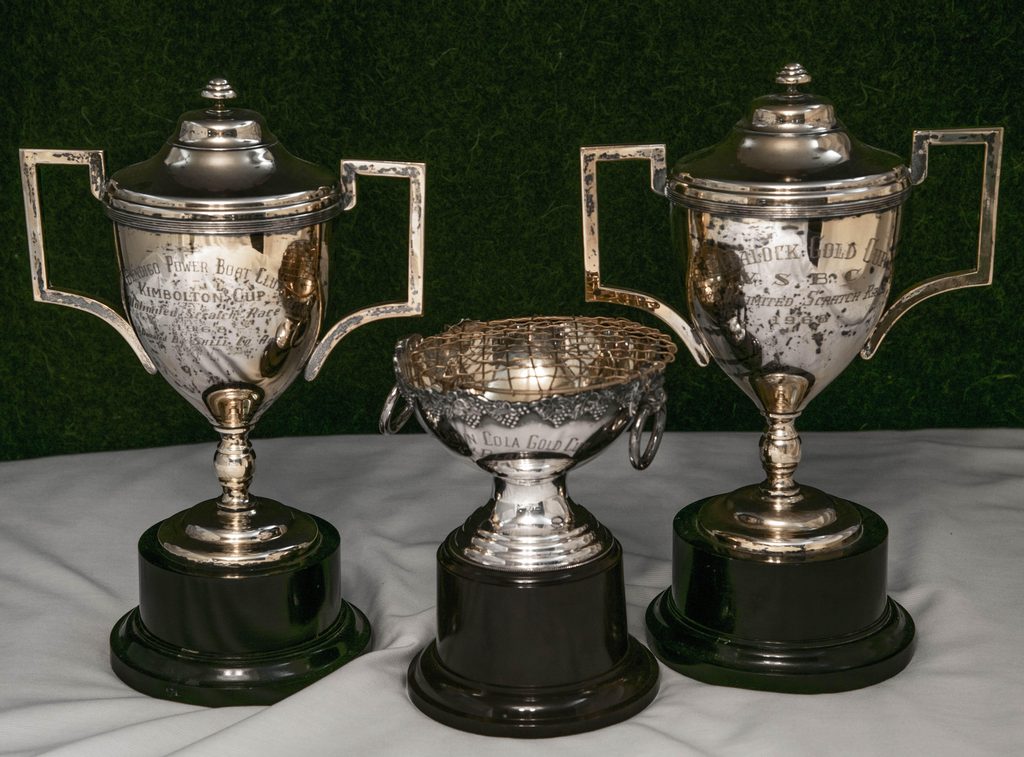
One of his most legendary victories occurred at the Kimbolton Cup around 1972/1973, in a “David and Goliath” battle against ‘Aggressor.’ While Aggressor was a massive boat powered by a V12 Merlin engine, his Mystic Miss ran a fuel-injected V8 392 Hemi Chrysler Fuel Injected and Supercharged running on Methanol. Aggressor held the advantage on the straights, but Mystic Miss took the corners tighter, ultimately breaking Aggressor’s perfect 10-start winning streak. The race was so intense that one of the boat’s sponsons fell off; he managed to drive it back to the ramp just moments before it would have sunk.
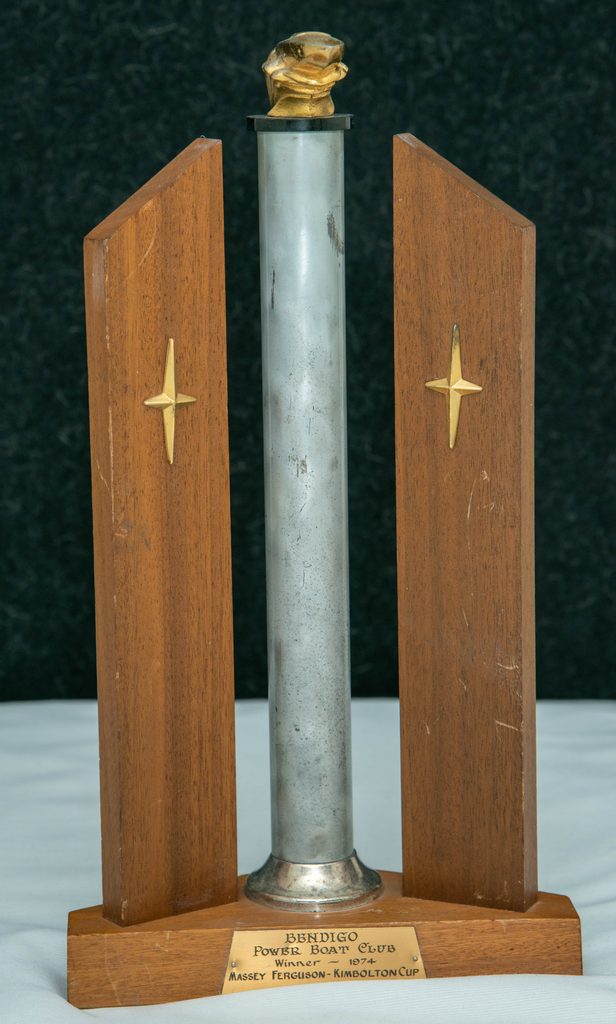
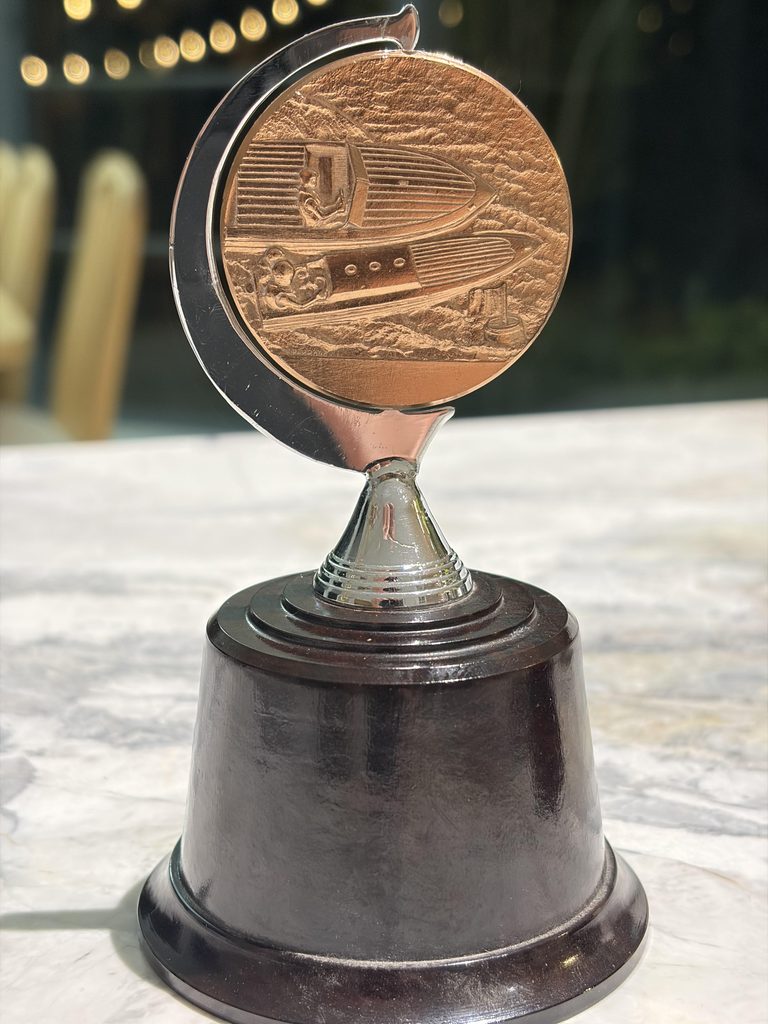
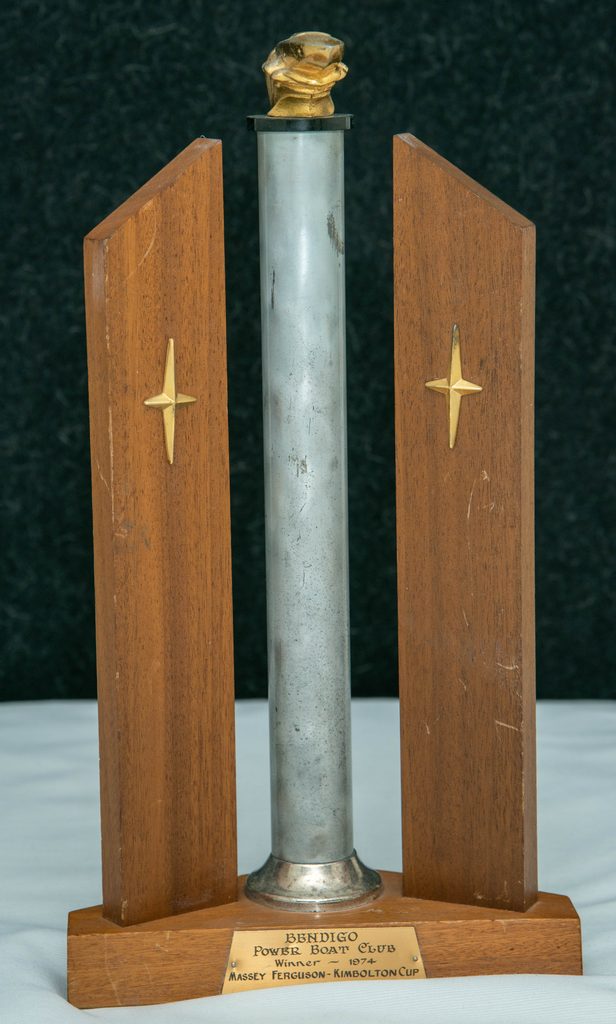
Above: The Kimbolton Cup Trophy, won by Tommy Watts driving (we believe), Mystic Miss – 1974. Beating Aggressor after Aggressors 10 starts and 10 wins!
Pushing the Limits: 190 MPH at Lake Hawthorn
Another time at Eppalock he decided it would be a good idea in the bigger Jet boat to use the thrust to pilot the Jet boat Exciter up the ramp rather than be towed by the tractor or the car. As to some stories you might of heard of him driving it round and round the car park, this was not so as I was there with the chock ready to go behind 1 wheel and my brother was on the other side with the chock for the other wheel. Also the car had a long rope still attached just incase. The crowd loved this although the club soon put a stop to this for some reason.
A Fleet of Innovation
Dad had four different Jet boats all up, including putting the Jet motor into a run about called Diana. This wasn’t to successful so it soon got removed out of that run about. He also had the idea of a bigger Jet motor called an AVON which he put in a boat that he welded together out of steel. This boat proved to be unsuccessful due to the weight of the boat.
The four Jet Boats were a acquired as follows; The first one was Exciter, this was the old boat called Shark. then the 2nd boat he built from steel with the Avon Jet motor which came out of a 1950 World War 2 Canberra Bomber with 6000 Ib Thrust. The 3rd boat was built by Neville Aitken, and also called Exciter. The fourth boat was a runabout called Diana, she was not successful and the Jet engine was soon removed.
Dad went back to his Derwent Jet Engine in his smaller Hydroplane and then set 2 more world records in 1969: one at 146 MPH on the 8th of June, then 162.63 MPH on the 27th of July 1969. These were both recognized on the 9th of September 1969.
Club Life and Controversy
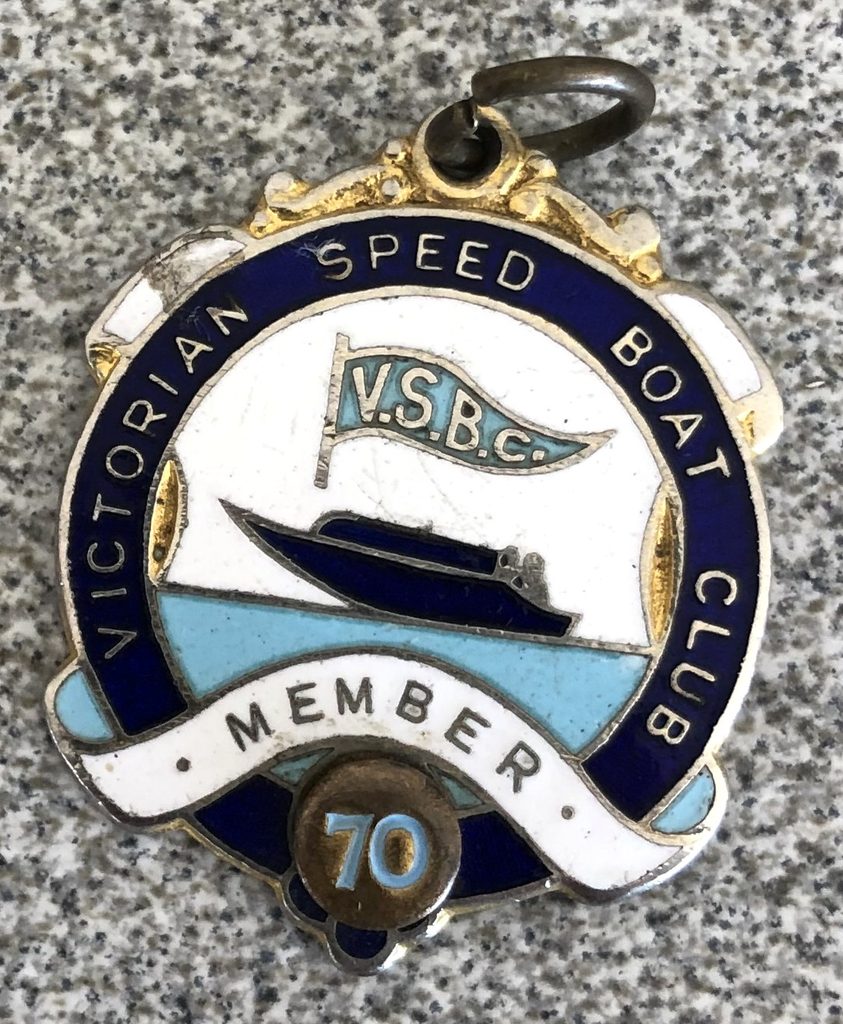
He was member no 70 of the VSBC and also got his 100 MPH badge. He didn’t get along with a few of the club members as he wasn’t an “all show no go” boat—he was a “no show all go” boat. He got suspended around the early 1970s, but only from VSBC club events, so he joined the Melton Speedboat club. He eventually gave away racing around the end of 1974 to 1975.
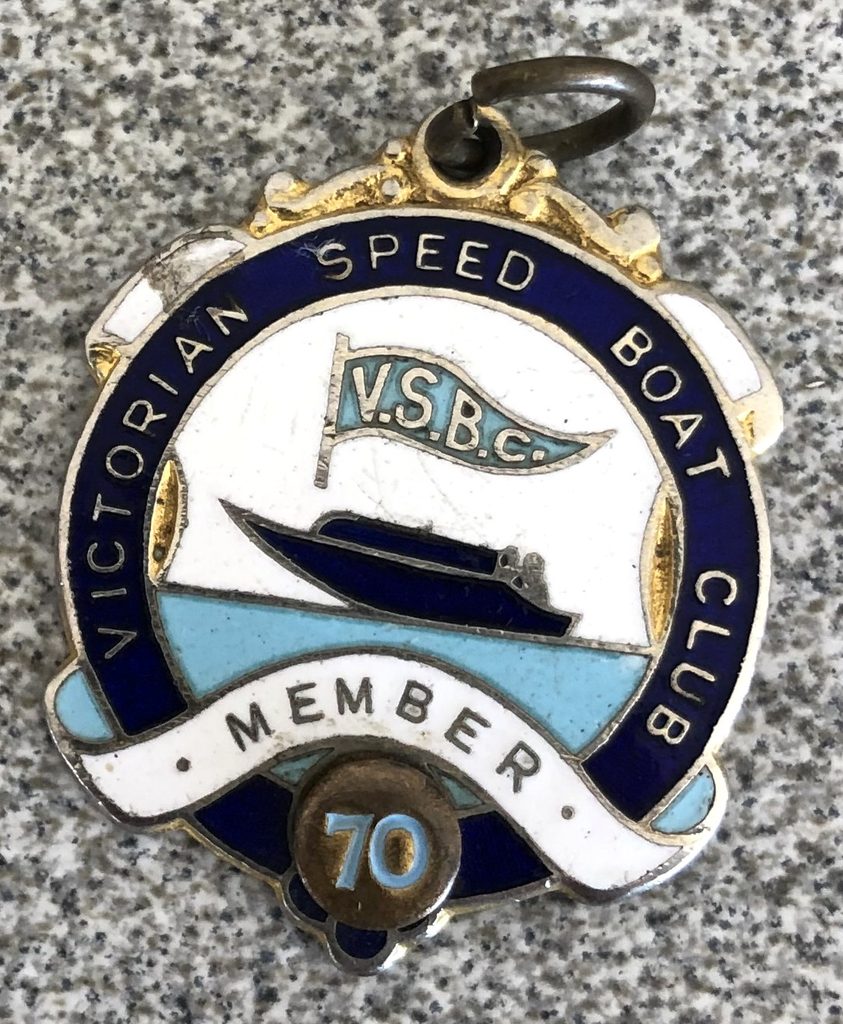
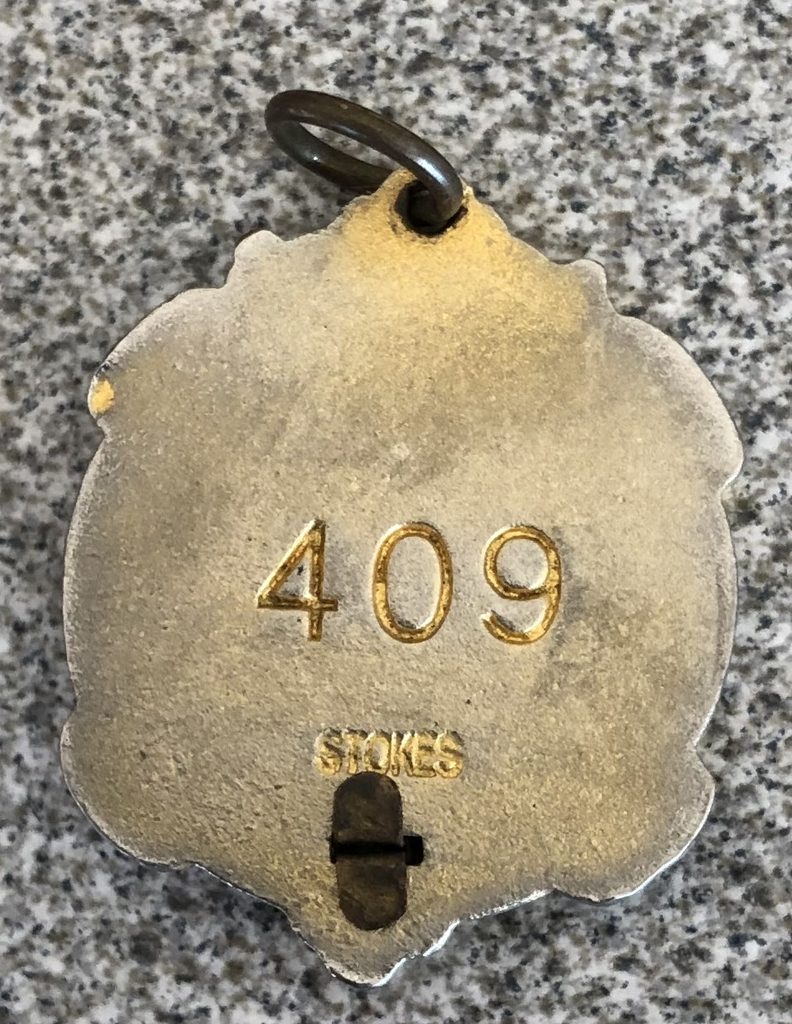
- The Jet Boat Exciter was registered as VF 28 – His speedboat Exciter with the Hemi in it was registered VH04 – Mystic Miss carried the rego numbers: VS32
- In Australian powerboat racing, VH, VS, and VF are club identification prefixes displayed alongside a race boat’s number on the hull to signify which specific club the boat is registered with under the Australian Power Boat Association (APBA).
- The letters correspond to different historical and active powerboat racing clubs within the Victorian State Council:
- VF: Victorian Outboard Club (VOC) (Historically designated as the Victorian Fleet or Outboard division
- VS: Victorian Speed Boat Club (VSBC) (e.g., the famous hydroplane Stampede raced under the boat number VS41).
- VH: Melbourne Runabout and Speed Boat Club (MRSBC) (Historically designated as the Victorian Hydroplane Club before transitioning names).
Breaking the 200 MPH Barrier
He decided to form his own speed boat club and organized a fair few boats to race at Lake Burrumbete on the 22nd of February 1976. This was the 1st time in the world where 2 Jet boats had raced side by side and also the 1st time in Australia a boat had gone over 200 MPH. This was recorded with timing lights that Tommy had bought back from the USA.
Dad had told the other 2 drivers, Colin Wynd and Russell Tidd, who were piloting his bigger Jet boat built by Neville Aitken, that they were only allowed to do 150 MPH—but dad pushed his just past 200 MPH. This was a very successful day and of course dad won his speedboat races in his speedboat Exciter Two.
Racing Grit
There were lots of times when he would rock up to the races and the officials would try and pick on his boats. One day, with one of his early boats, Col Winton or Dave Gill came up and punched a hole in the bottom where it probably had wood rot.He had to get a bit of plywood and have it fitted so he could go out on the water that day. (Story correction by David, who was scrutinising at the time. The boat had rot in it and he put his finger through the hull, scooping out rotten timber – may have been a different race but it’s what happened back in the day. apparently he didn’t race that day or he may not have survived it – David also remarked that Tom Watts was a genius at what he did).
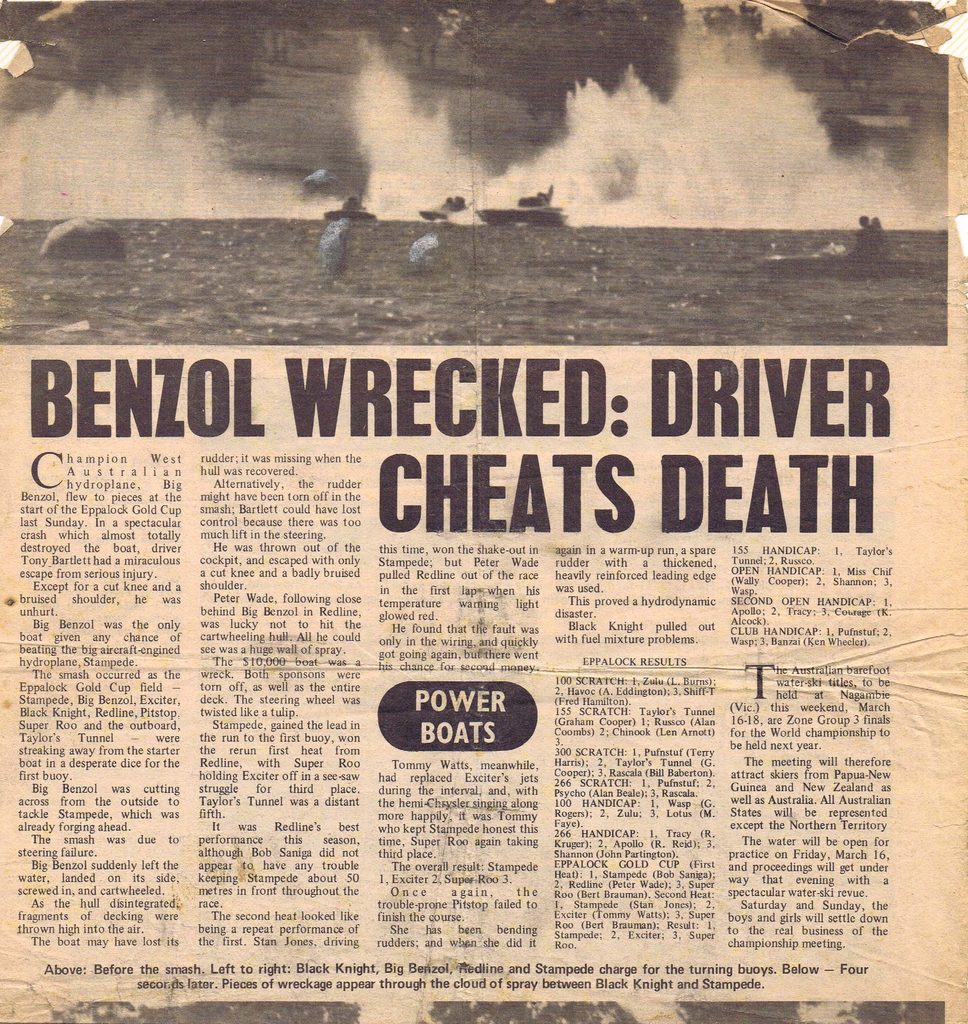
I remember with his speed boat dad would always start back a bit so as he would never get disqualified for jumping the starting line. On this day a boat called Big Benzol was in front of him and as he was catching up, Big Benzol flipped in front of dad and he drove straight under the boat as it flipped!
Legendary Hydroplanes
I can remember a lot of the Hydroplanes which were my favorite type of boats:
- Stampede
- Aggressor
- Exciter
- Mystic Miss
- Black Knight
- Super Roo
- Red Line
- Air New Zealand
- Tiger
- Vulture
- Pitstop
- Wasp Too
- Assassin
At Lake Hawthorn, he pushed his jet boat until it got “up on the skeg,” becoming almost friction-free. The air speed indicator jumped from 150 MPH to approximately 190 MPH. With no parachutes or brakes, he ran out of water and traveled 200 feet onto land, clearing two trees before the rudder finally dug into the ground. A small piece of the boat remains a family heirloom to this day.
Dad had a piece of bent up copper pipe fitted under the boat at one stage. The copper pipe came up beside his cockpit, and if there wasn’t any water coming up through the copper pipe, he knew the boat was lifting too much as the front.
The Legacy of Tommy
I still have all his Trophies and World records and news paper clippings etc, at the moment. I will end up donating them to a club.
Drag Racing & The Forklift Incident
Dad was going to go into Top fuel Dragster 1/4 mile racing. He had two of these: one from Graham Withers and also one of the first rear engine dragsters built in Australia. As he was moving this rear engine dragster around, he lifted it up with his forklift from where the parachute hooks onto and the bracket snapped off. That was the end of his proposed drag racing career.
Innovation on the Water
Over the years he bought a lot of engines and equipment back from the USA. At one stage he fitted a V12 Rolls Royce Merlin motor to his Jet boat, but I believe it was not successful. I had been told about this many years ago and just come across a photo of it last year.
At one stage when all of his speedboats were out of action, he had a very small Hydroplane called Exciters Pup. This only had a 4 cylinder motor in it and he raced it at Melton. He got the paddle out and used that as well to go a bit faster—I even have this on film.
Puff The Magic Dragger
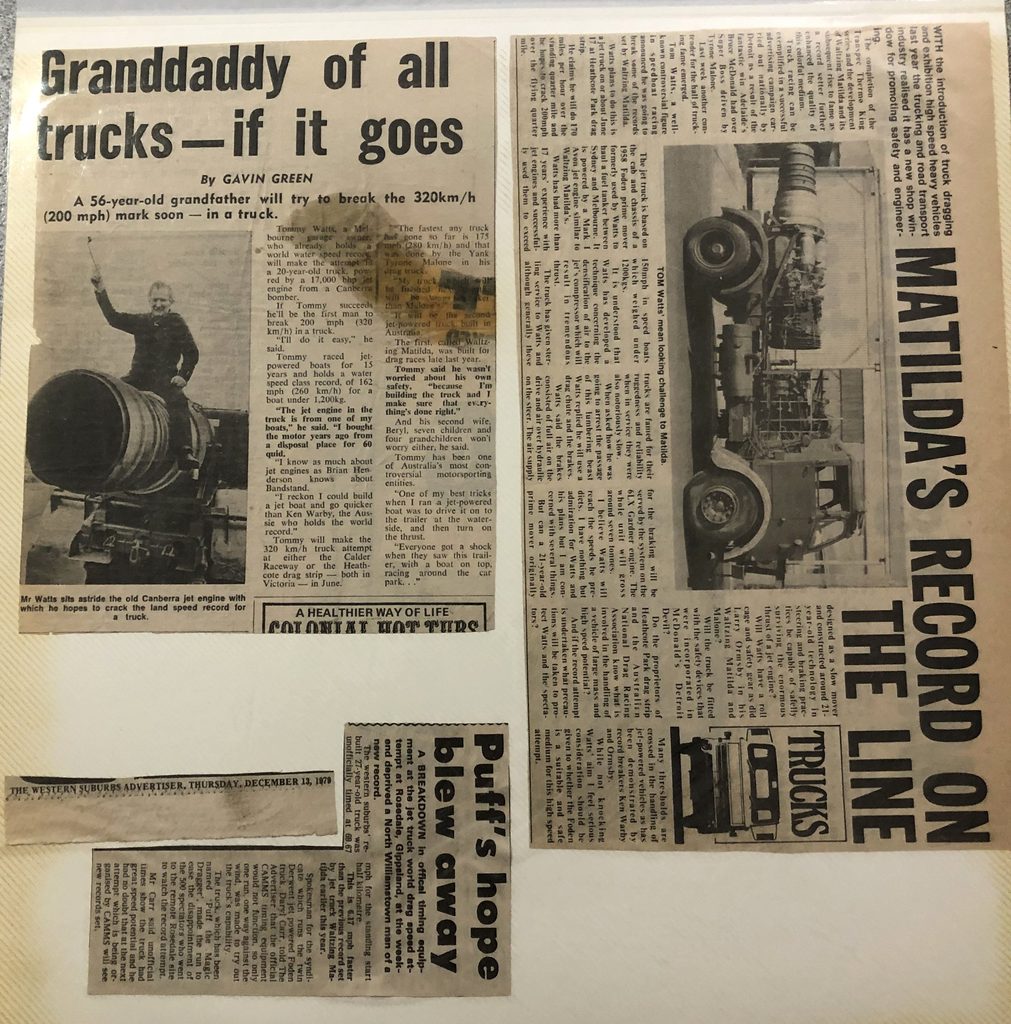
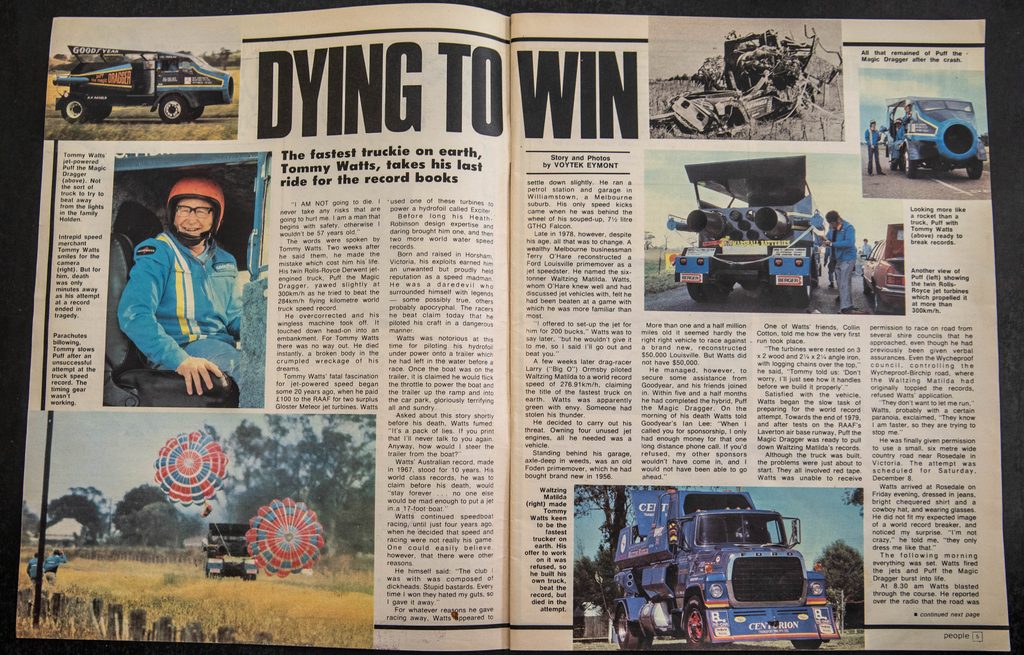
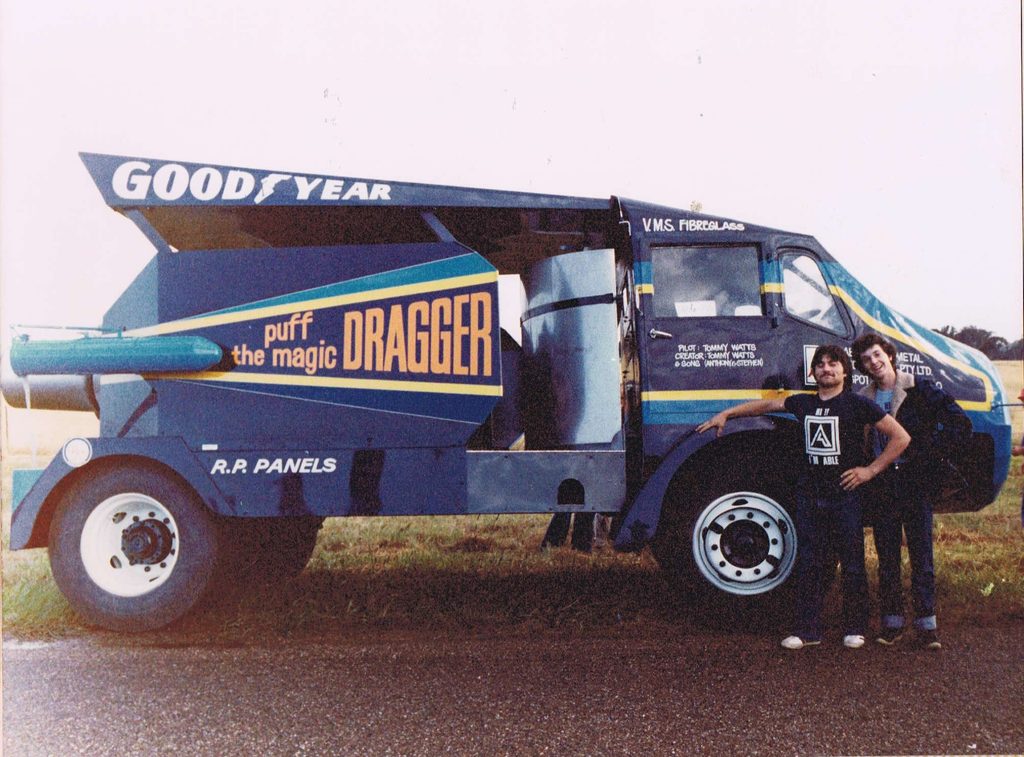
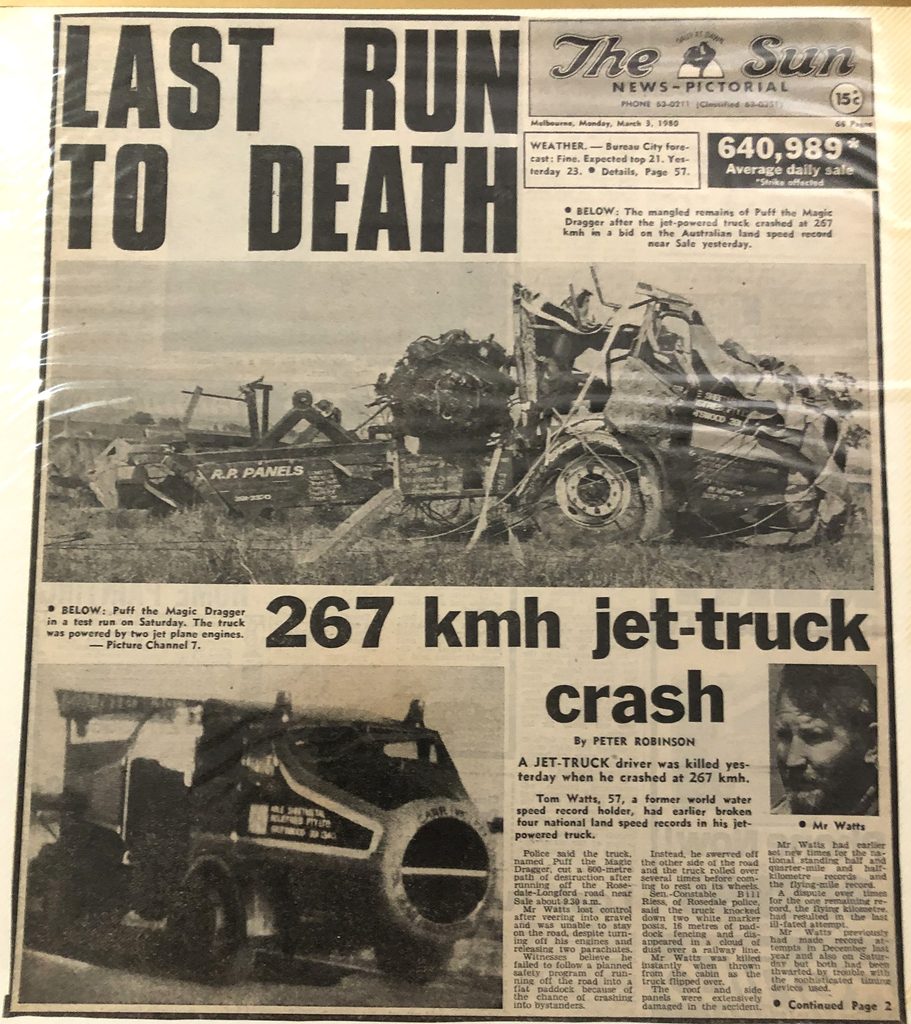
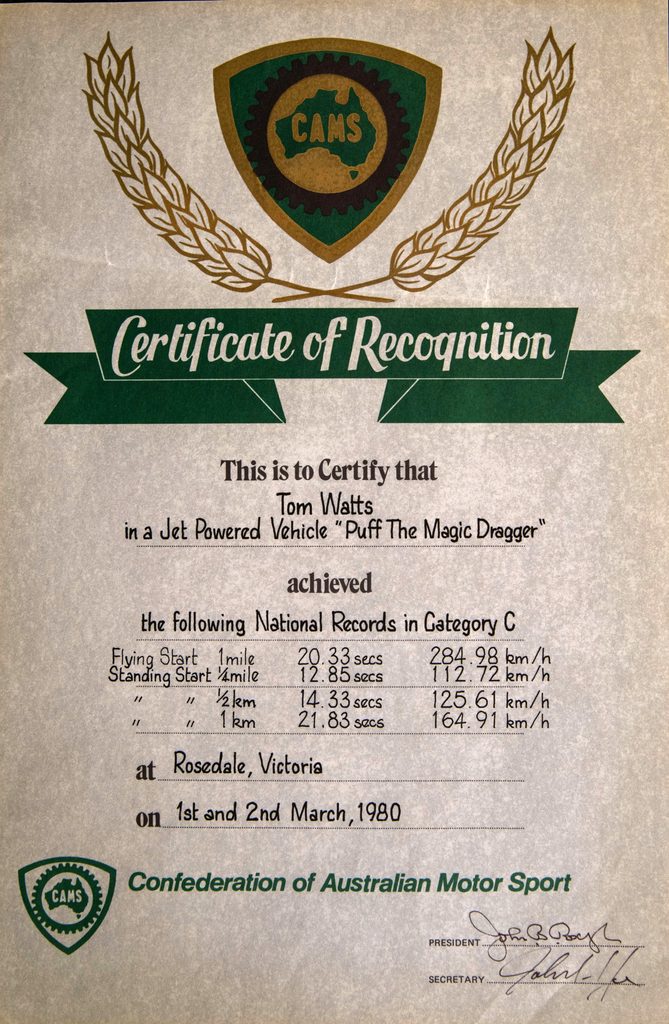
In 1979 dad decided to build his twin engine Jet truck. By 1980 he became the fastest truck driver in the world, breaking all the records of the other Jet truck, Waltzing Matilda. Unfortunately on his last run he got killed in an accident, but at least he went out doing something he loved. He was 57 years old.
Racing & Practice Locations
- Yarrawonga / Mulwala
- Lake Eppalock
- Melton Reservoir
- Lake Modewarre
- Lake Hawthorn
- Lake Nillahcootie
- Lake Glenmaggie
- Lake Burrumbete
- Lake Hume
- Pykes Creek
- Lake Learmonth
- Lake Hazelwood
- Lake Albacutta
- Albert Park
- Lake Nagambie
- Lake Green Horsham
I’m sure there’s plenty more places that he raced at and plenty more stories
Share Your Memories
Any more stories or photos would be very welcome. If you have memories of Tommy racing at any of these locations, please reach out.
Regards
Steven Watts (Author)
- The story of Tom Watts written by son Steven Watts
- Photos and news clippings courtesy of Steven Watts
Published by: GillGirl media – GILFLITE Boats website ‘Boat Talk’ – For the History of Australian Power Boat Racing – Volume One – ‘For the Record’
Copyright © Paula Gill/Steven Watts 2026
Below: News clippings and photos from Stevens collection of scrapbooks and albums
From the archives – authors and photographers where known are noted in print, otherwise author is unknown